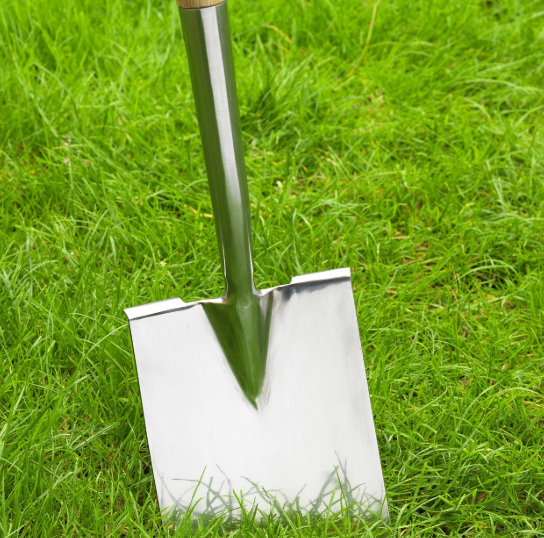
Sometimes my best source of inspiration comes from you — my loyal readers and followers. Believe me when I say I read every comment and appreciate the time and thought you put into them. So when Grooves or Grammar commented on my post Say What? A Stroll Through American Slang, I paid attention.
Grooves wrote:
“I sometimes wonder about ‘let’s call a spade a spade’. I think the meaning is clear, but why a spade, rather than anything else? The phrase would have been just as clear with pretty much any other item. Very useful phrase, though, especially when I’m having conversations with students who are trying to come up with increasingly unlikely excuses for homework not being done…”
And I thought, Wow — that’s a great expression and I’d totally forgotten it. So I did a little digging (pun intended), and here’s what I discovered.
This may sound as American as apple pie these days, but it actually goes all the way back to ancient Greece. The earliest version appears in classical Greek writings. Plutarch used a phrase meaning “call a fig a fig and a trough a trough,” which was all about speaking plainly.
Centuries later, the scholar Erasmus translated that Greek phrase into Latin — but he made a mistake. He swapped the Greek word for “trough” with a similar‑sounding word meaning “spade.” That mistranslation stuck.
Then in 1542, Nicholas Udall, an English (not American!) playwright, schoolmaster, and scholar, translated Erasmus’s Latin into English — and that’s how the phrase entered English exactly as we know it today. It could’ve been almost any object, but thanks to a translation quirk, we all ended up with spades that have nothing to do with gardening.
So Keep those cards and letters coming (Dean Martin)
Keep those comments coming (or as the old saying goes, those “cards and letters”). I love when they make me think — or make me “dig” for answers.

Share this:
- Share on Tumblr (Opens in new window) Tumblr
- Print (Opens in new window) Print
- Share on X (Opens in new window) X
- Share on Facebook (Opens in new window) Facebook
- Share on Pinterest (Opens in new window) Pinterest
- Share on Reddit (Opens in new window) Reddit
- Share on LinkedIn (Opens in new window) LinkedIn