More Reality Behind the Shot- The One that Almost Got Away


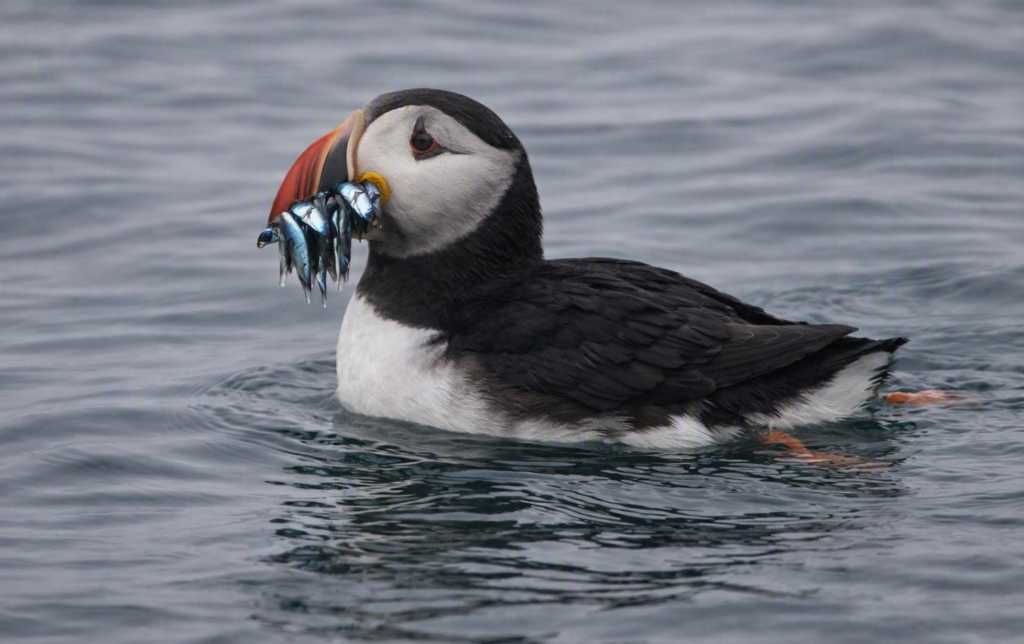
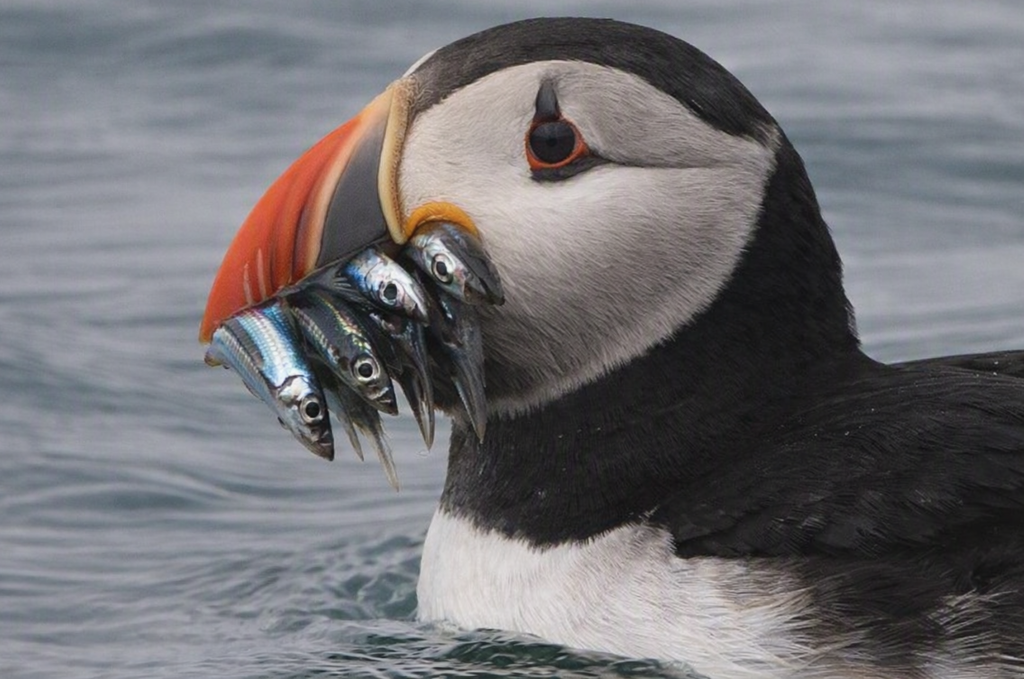
A small Atlantic puffin floating on calm gray-blue ocean water, holding several silver fish crosswise in its colorful beak.

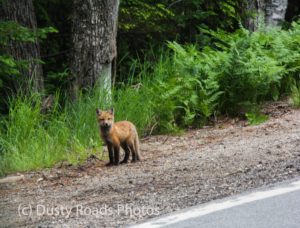
Red fox kit Monday afternoonFinding Gems in the Tedious Work

This photo‑tagging project can be tedious, but every so often it hands me a little miracle. That special shot I thought I’d missed.

I’ve been digging through older folders — the ones full of “not bad, but not good enough” pictures I skipped over during my first sort — and I’m finding gems I never appreciated at the time.

Why I Take So Many Photos

When I’m out on a photography excursion, I take tons of pictures. Way more than anyone needs. Birds and animals don’t pose on purpose, and sometimes I’ll see “The Money Shot”… only for the lighting to shift or the subject to wiggle out of frame. It’s hard work, but it’s also exciting. My adrenaline spikes, my heart races, and I’m basically running on pure wildlife‑photographer joy.

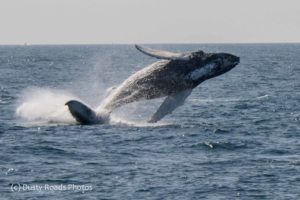
The Not‑So‑Fun Part: SortingBreaching Whale

Then I come home, load 200+ images into Lightroom, and the real work begins. I do a quick pass to eliminate the truly blah or out‑of‑focus ones, narrowing it down to the handful worth polishing. This part isn’t fun, but I do get lost in the art of “imaging.”

Why I Keep the “Almost” Photos

The good news? I rarely delete those second‑tier pictures. Time changes my perspective, and sometimes one of those “almost” shots ends up being exactly what I need for a post.

And that’s how I found him — my little puffin with a beakful of fish.


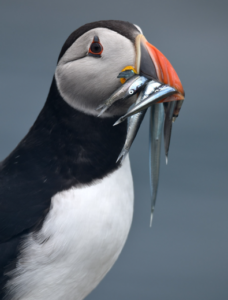
Award Winning Photo from the Internet

The Inspiration Behind the Shot

This photo earned an international award years ago and was one of the inspirations behind my puffin photography trips. If you do a Google search for puffins with fish, the web is full of these photos. On Machias Seal Island, I saw puffins returning with their catch, but the best I managed was a mouthful of shrimp. That was my last puffin trip.

Shrimp, Its what’s for dinner

A Foggy Day, a Rocking Boat, and a Forgotten Puffin

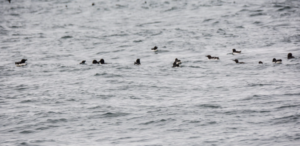
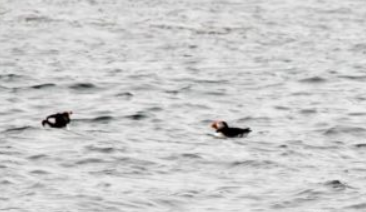
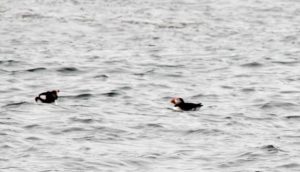
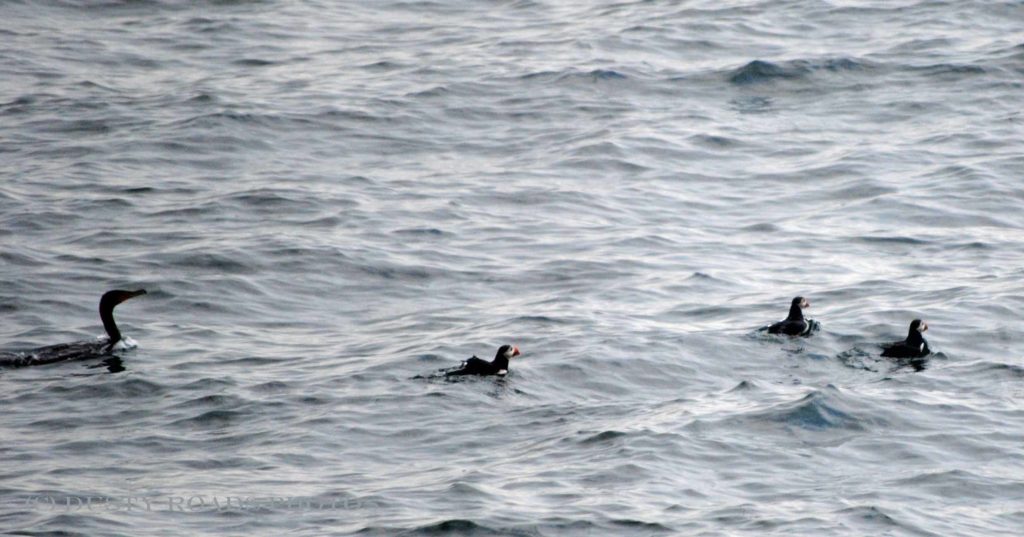
But while reviewing older shots from the Egg Island tour — yes, the foggy day on the rocking boat — I found a picture I’d kept only because it showed how tiny puffins look in the vast open ocean. This time, though, something caught my eye. A tiny detail. A shape.

It wasn’t so much “How did I miss that?” as “How did I see it now?” Sheer luck, maybe. Or just the magic of looking at a photo years later with fresh eyes.

Zoom… Zoom… Zoom

I zoomed in. And zoomed. And zoomed.

There they were. Fish.

My little puffin had a mouthful of fish after all.

Polishing the Shot That Waited for Me

I sharpened, cleaned up the color, and cropped the heck out of it. It will never be a gallery‑sized 16×20, but a small 5×7 will work beautifully. And sure, it would never pass even the first round of a photo contest — I had to zoom in way too far — but I don’t care.

I love my little puffin. I thought this was going to be “the one that got away.” Turns out he was waiting for me all along.


A Puffin Adventure 10 years Later


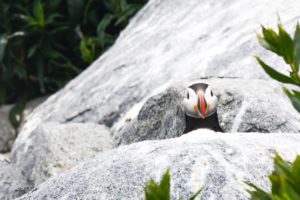
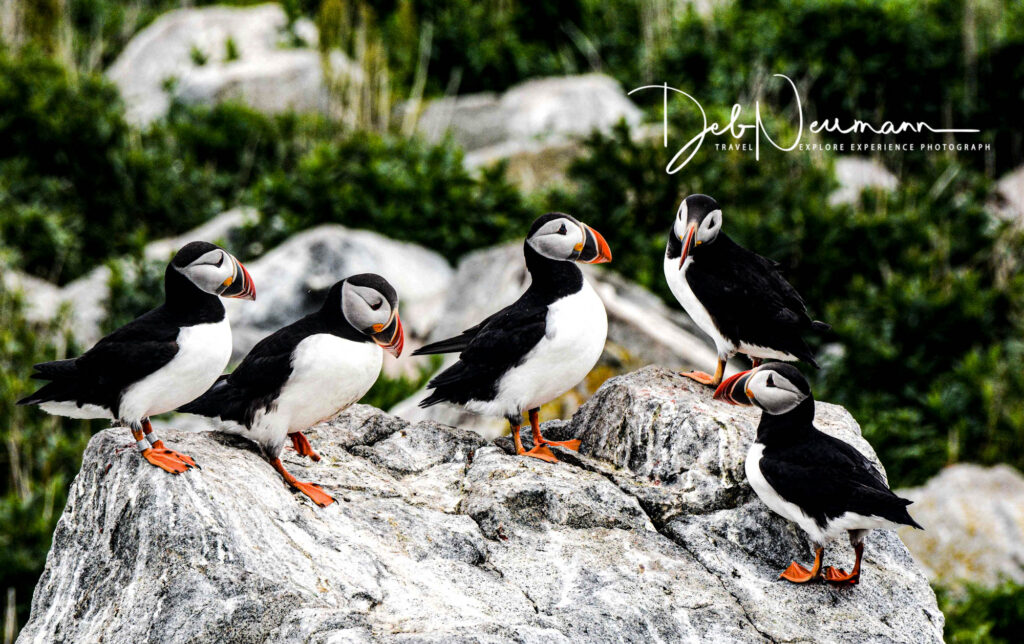
Five Atlantic puffins standing on rocky coastal terrain with green vegetation, photographed on Machias Seal Island by Deb Neumann.

A Puffin Flashback Adventure

I fancy myself a wildlife photographer in my dreams. In my imagination, I’m off on Nat Geo expeditions, trekking through jungles and tundra, capturing rare animals in perfect light. Maybe I’m practicing for my next life, when I finally get to take great safaris to exotic places and photograph creatures in all their glory.

But in real life, I’m just regular old me — and yet there was one trip that did feel like a true adventure. One trip where I actually got to photograph amazing wildlife. Yes, they were birds… but very special birds. I got to see puffins.

You don’t find puffins in your neighbor’s backyard. You have to work for puffins, and believe me, I did.

Attempt #1: Eastern Egg Rock — Fog, Waves, and Bumblebees With Wings

My first attempt was a boat tour out of Bar Harbor, Maine, to Eastern Egg Rock in 2015. The entire trip was on a boat, and once we left the harbor, the ocean turned rough. As we neared the island, the fog rolled in — thick, cold, and absolutely relentless. A wet blanket in every sense.

But the puffins didn’t care. They were all around us, tiny little bumblebees with feathers. Round bodies, small wings, and yet these miniature sea birds spend most of the year at sea. They only come ashore during their breeding season, which in Maine is July.

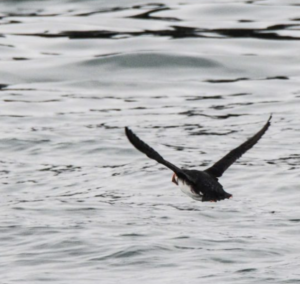
I spent most of the trip flattened on the bow, trying to steady my camera with a 600mm lens while the boat rocked and rolled under me. The puffins were tiny specks in the distance, and most of my photos ended up soft or blurry. It was exhilarating — no question — but from a photography standpoint, it was more “experience” than “results.”

I was disappointed, but not defeated.

Attempt #2: Machias Seal Island — A True Adventure

I’d been a Mass Audubon member for years, mostly for access to their wildlife sanctuaries. Shortly after my Egg Rock trip, I heard about their annual July bird‑watching trip. I’d missed it in 2015, but I had almost a year to prepare for 2016 — if they held it again.

I became the biggest nuisance in the history of the local chapter. I called. I emailed. I checked in constantly. And when they finally announced the trip, I was the first person to sign up.

This trip was farther north, deep into the disputed waters between the Bay of Fundy and the Gulf of Maine. Machias Seal Island is jointly managed by the U.S. and Canada, and access is extremely limited. Most tours depart from New Brunswick, but there is one U.S. operator — and that’s who Audubon contracted with.

It was a true adventure‑style trip, the kind that stays with you. Cold weather even in July, rocking boats and tenders that made you hold onto your hat, and wildlife everywhere. Eagles overhead, seals on the rocks, and of course the puffins — those little clowns of the sea.

And although I didn’t get to witness it firsthand, the Bay of Fundy is home to the highest tides on earth, often reaching around 40 feet. Just knowing I was in a place with that kind of natural power added to the feeling of being somewhere wild and extraordinary.

The Crossing

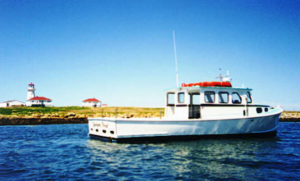
We boarded the tiny boat at dawn for a very cold, rough, windy trip from Cutler, Maine. The crossing is about an hour — a very long hour when your seat is out in the open. The only warmth was in the wheelhouse, where the captain and mate stayed tucked away.

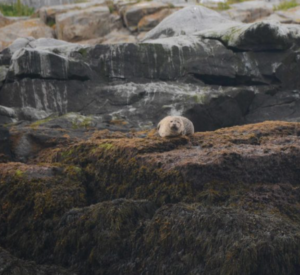
As soon as we reached the island, we saw birds everywhere: gannets, razorbills, and even a seal stranded high on a ledge, left behind by the receding tide. But the puffins ruled the day. They were everywhere.

Into the Blinds

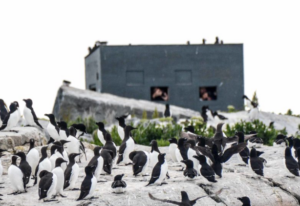
Once off the rocking boat and into a tender, we were ferried to a long boardwalk that snaked up toward the lighthouse. The organizers assigned us to blinds — tiny wooden huts where we’d spend the next two hours. We couldn’t leave, and we could only open the windows on one side at a time. The restrictions were for the puffins’ comfort and safety, but even so, it was an incredible show.

Birds were landing on the roof of the blind. Their feet made strange scratching sounds  mixed with the thumps of thier landings. It was surreal. It would make a great horror sound track.

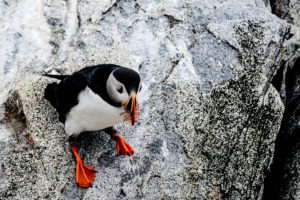
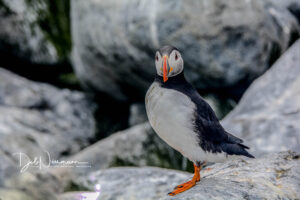
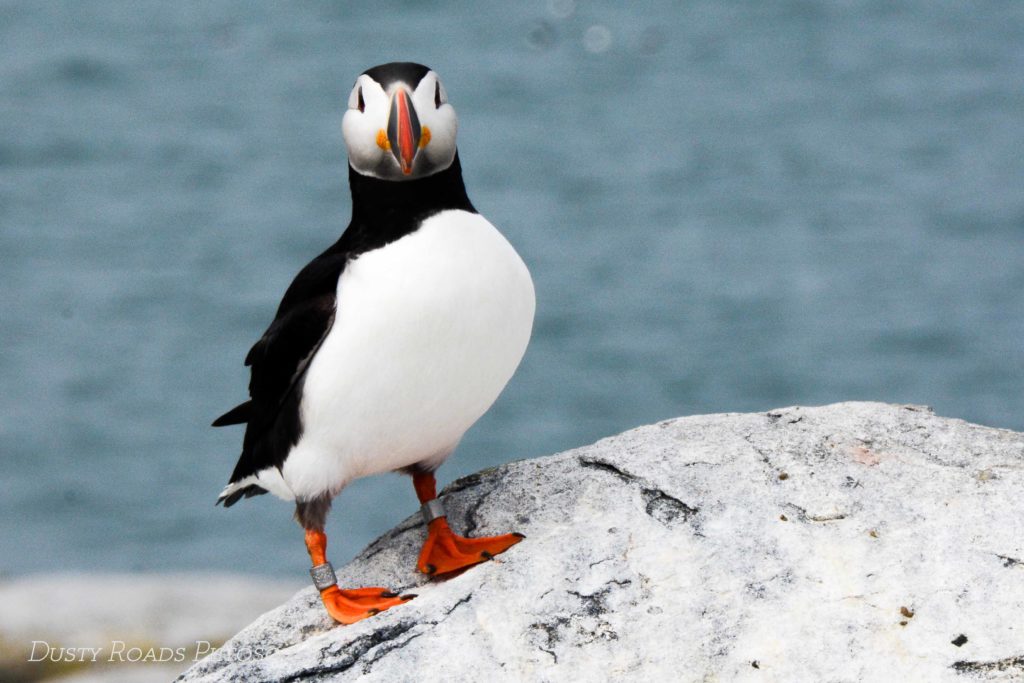
The puffins were in their courting colors — bright orange beaks and matching feet. They were beautiful. Clumsy little birds flying in with beaks full of shrimp and fish. Two hops and they disappeared into their rock burrows.

The time passed quickly, and too soon we were escorted back to our little boat for the long, cold trip to Cutler. It was even colder in the late afternoon, but as miserable as the weather was, I would repeat that trip in a heartbeat.

For those two hours, I really felt like a wildlife photographer — living my dream.

Ten Years Later

Machias Seal Island was 2016. Ten years ago. Audubon still runs puffin trips in July — mostly the gentler Eastern Egg Rock style ones — but Machias Seal Island remains the same rugged, wild adventure it’s always been. Tiny boats. Rocking tenders. Cold winds. A landing that requires balance, grit, and a good sense of humor.

And I’ll be honest: I’m not entirely sure I could manage the rocking boats and tenders now, ten years later. Even if I could I’d still have the climb to the lighthouse that nearly did me in 10 years ago.

But I’d sure like to try.


Clowns of the Sea

Puffins, Clowns of the Sea

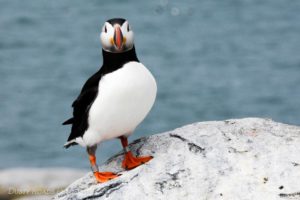
I love Puffins. Often called Clowns of the Sea, these charming seabirds earn their nickname thanks to their bright, multi-colored beaks, expressive facial markings, and pudgy little bodies. Add in their frantic wing-flapping and you’ve got a heartwarming, almost comical image that’s impossible not to adore. I love them so much that I embarked on a quest to see them live and in person—a surprisingly tricky endeavor on the East Coast of the USA.

Eastern Egg Rock, Maine – 2012

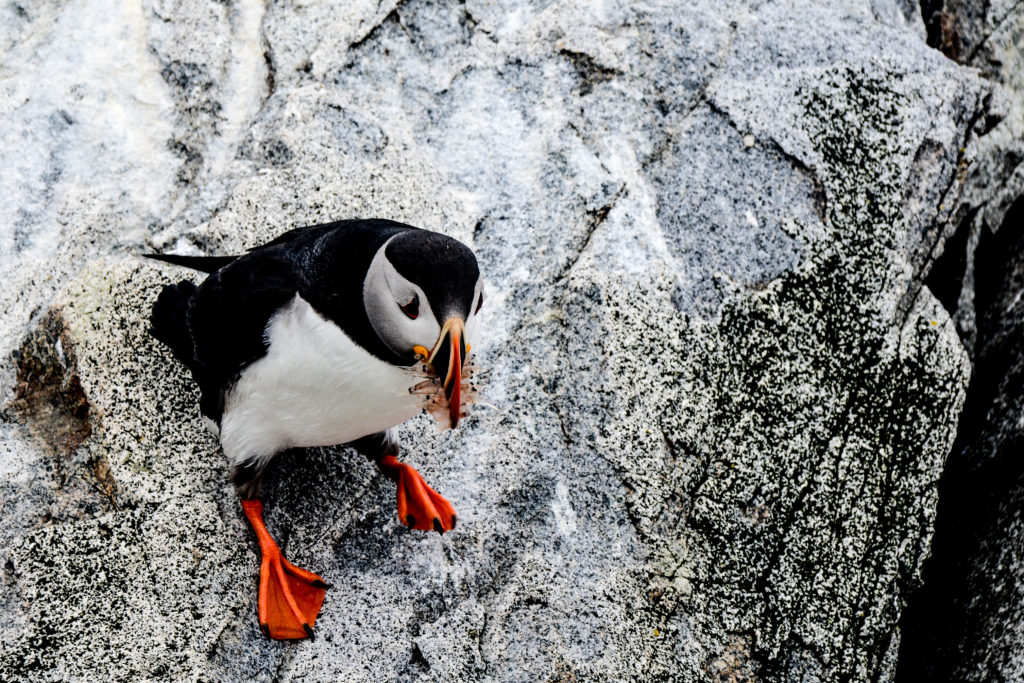
My first attempt was in 2012, when I joined an excursion to Eastern Egg Rock, a 7-acre island in Muscongus Bay, Maine, located about six miles east of New Harbor. It’s home to the world’s first restored seabird colony, including Atlantic Puffins. And it’s where I spotted my very first Puffin. They’re so little! Seeing one in the wild was a thrill, even if fleeting.

Puffin- Egg Island Maine 2012 photo credit Deb Neumann


Alaska – 2013

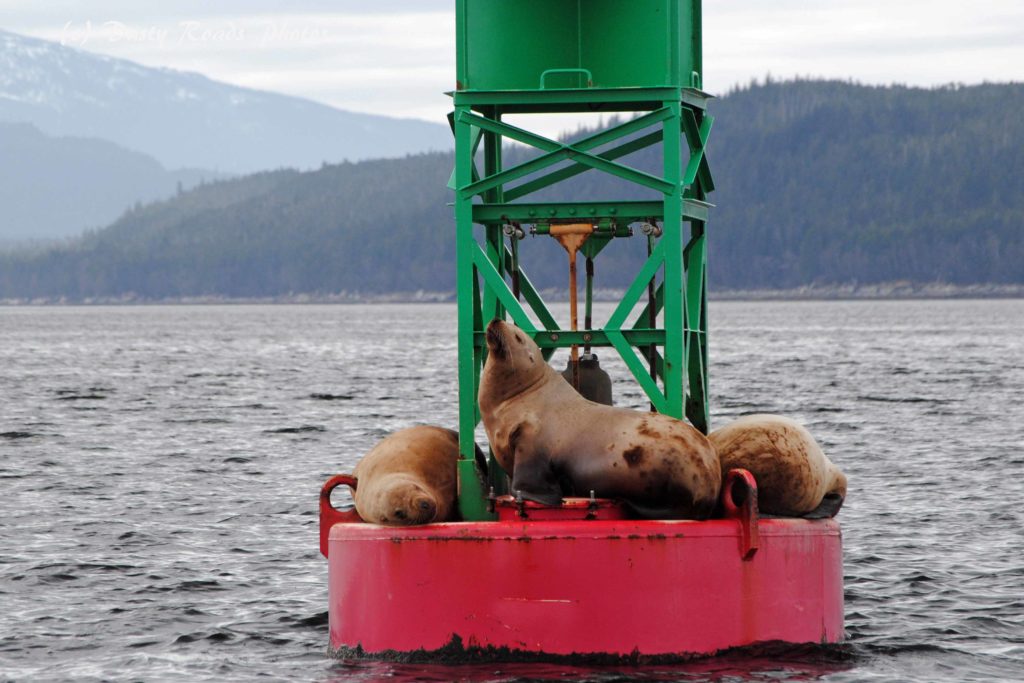
In 2013, I took a cruise to Alaska. I saw whales and sea lions, moose and caribou—even a couple of bears. But when the ship cruised past a raft of Puffins in Prince William Sound, I was curled up in my bunk, battling a bout of seasickness. Strike two on my Puffin quest.

Sea Lions Alaska 2013 Photo credit Deb Neumann

Machias Seal Island, Maine – 2016

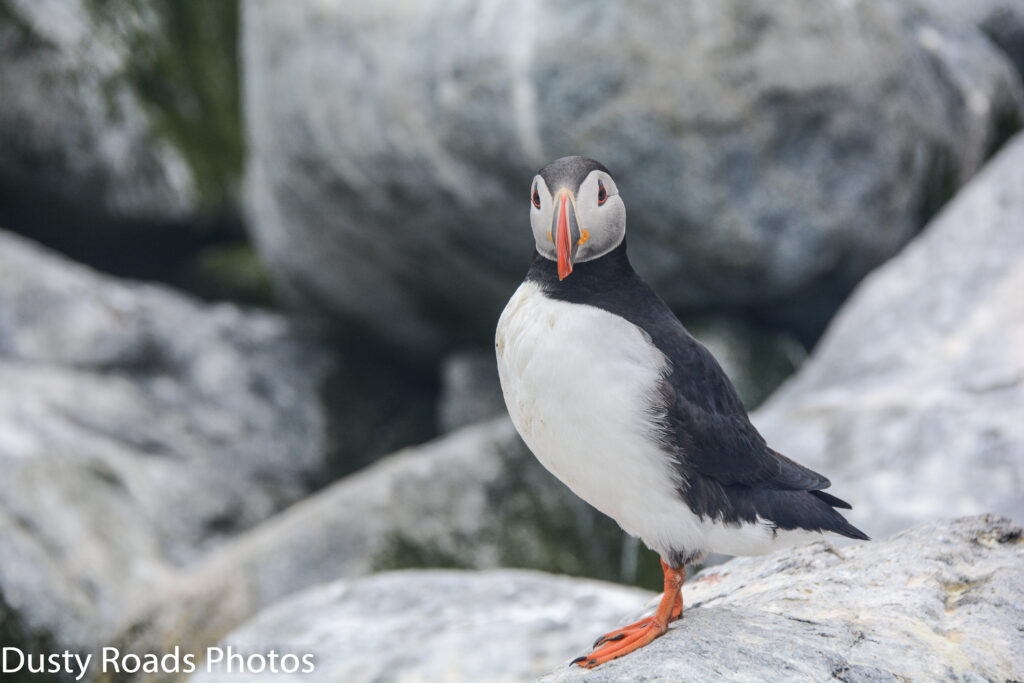
Then in 2016, I heard about a National Audubon trip to Machias Seal Island in the Bay of Fundy. Puffins? Yes, please—sign me up! This time, success. The trip was everything I’d hoped for. You can read all about it in my Around Dusty Roads post [linked here].

Machia Seal Island Puffin 2016 photo credit Deb Neumann


Puffling Season

So what got me thinking about Puffins today? I stumbled across a story from Iceland, where residents of a seaside town were reportedly throwing baby Puffins into the sea. The headline was alarming, so of course I had to dig deeper. Turns out, the town’s streetlights confuse fledgling Puffins—called Pufflings—making it difficult for them to find the ocean when they leave the nest. Since Puffins spend the next 3–4 years at sea before returning to land to mate, this disorientation could be disastrous. Thankfully, the townspeople created a Puffling Patrol, gently collecting the confused chicks and helping them reach the water safely. A beautiful example of community compassion and wildlife stewardship.

Puffin Photo credit Deb Neumann

Conclusion

From Maine’s rocky islands to Iceland’s glowing coastlines, Puffins have a way of capturing hearts and stirring wonder. My journey to see them has been filled with detours, discoveries, and a deepening appreciation for these quirky little seabirds. Whether flapping frantically through the air or bobbing serenely on the waves, Puffins remind us that joy often comes in small, feathered packages—and that sometimes, the best adventures begin with a little obsession and a lot of heart.


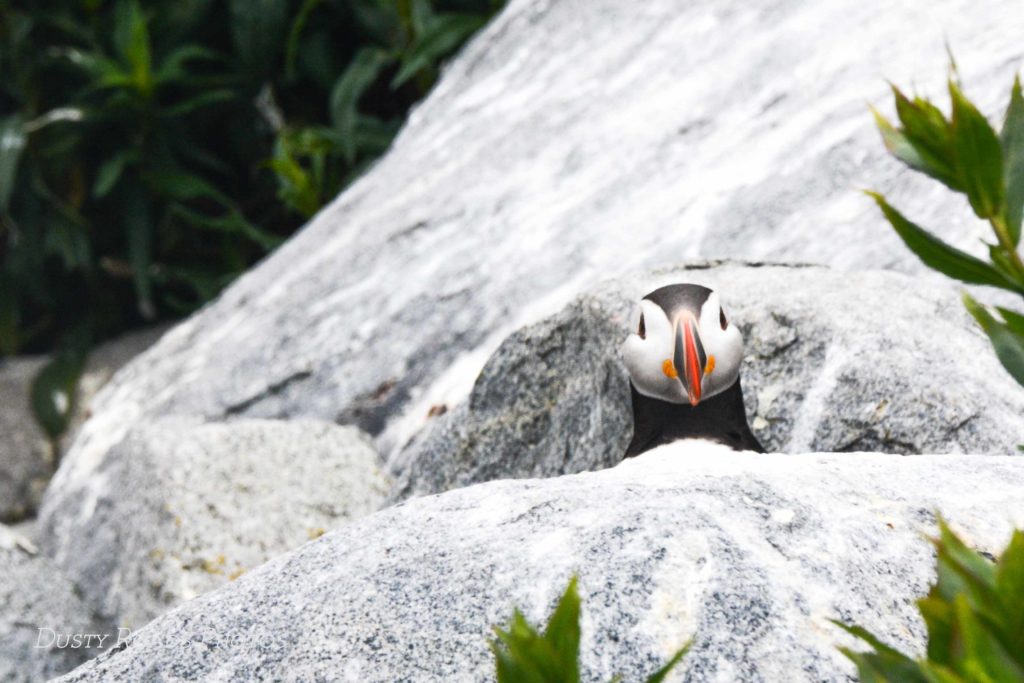
Puffin Hide and Seek- photo credit Deb Neumann


Natural Wonders of the USA part 4

Natural Wonders List Continues

We’ve got 50 Natural Wonders to go through and we’ve only covered 12 so time to continue on. Besides, My life is boring. Who wants to hear about my issues with Medicare and unemployment.  Beautiful sights to see are far more interesting.

13. MAINE – Cadillac Mountain

Maine is one of my favorite states. It’s got lighthouses and rugged , scenic coastline. It’s even got Puffins but you need to take a special trip across the Bay of Fundy to see them.  Fun fact- tides in the Bay of Fundy are the highest in the world! They can reach an incredible 53 ft.! Now which thing is the Natural Wonder for Maine? 

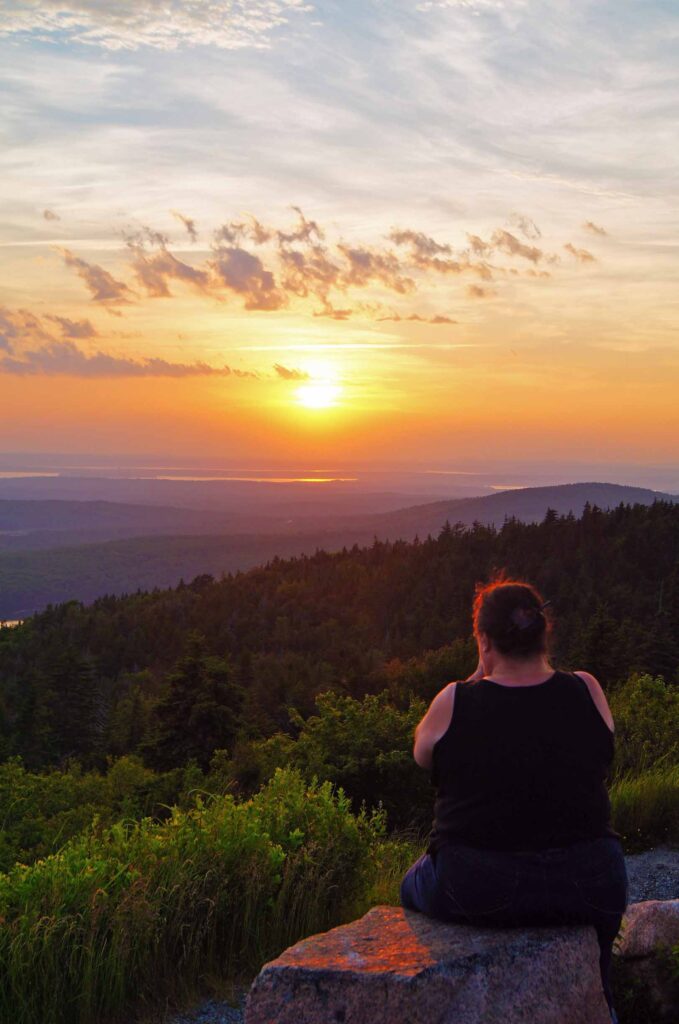
Photo credit- Deb Neumann 2016


According to the list its Cadillac Mountain at Acadia National Park . During certain times of the year, it is the first place to see the sunrise in the US.

Photo credit- Joe St Jean- 2012

14. New Hampshire – Flume Gorge

Staying on the East Coast we’ll head to New Hampshire. That’s the Live Free or Die State. Another excellent state to explore with the beautiful White Mountains, The Kancamagus Highway and lovely lakes, streams and waterfalls.  The Flume Gorge is located in Franconia Notch State Park , Lincoln NH. Yes I’ve been there. Its an uphill walk with lots of stairs but I survived it and so can you. It’s beautiful. Very primal.

Photo Credit Deb Neumann 2011

15. Hawaii – Diamond Head

You are talking my language now. I love Hawaii although Diamond Head is on Oahu which is my least favorite of the main Hawaiian Islands. It’s the most cosmopolitan. If you miss crazy traffic and City life then Oahu is the island for you. Diamond head is the image everyone has of Hawaii. You know that post card image with high rises, white sand and a mountain.

28,842 Diamond Head Images, Stock Photos & Vectors ...

We drove up into the crater but did not climb the stairs to the top. I liked snorkeling in  Hanauma Bay more than I liked Diamond Head. 

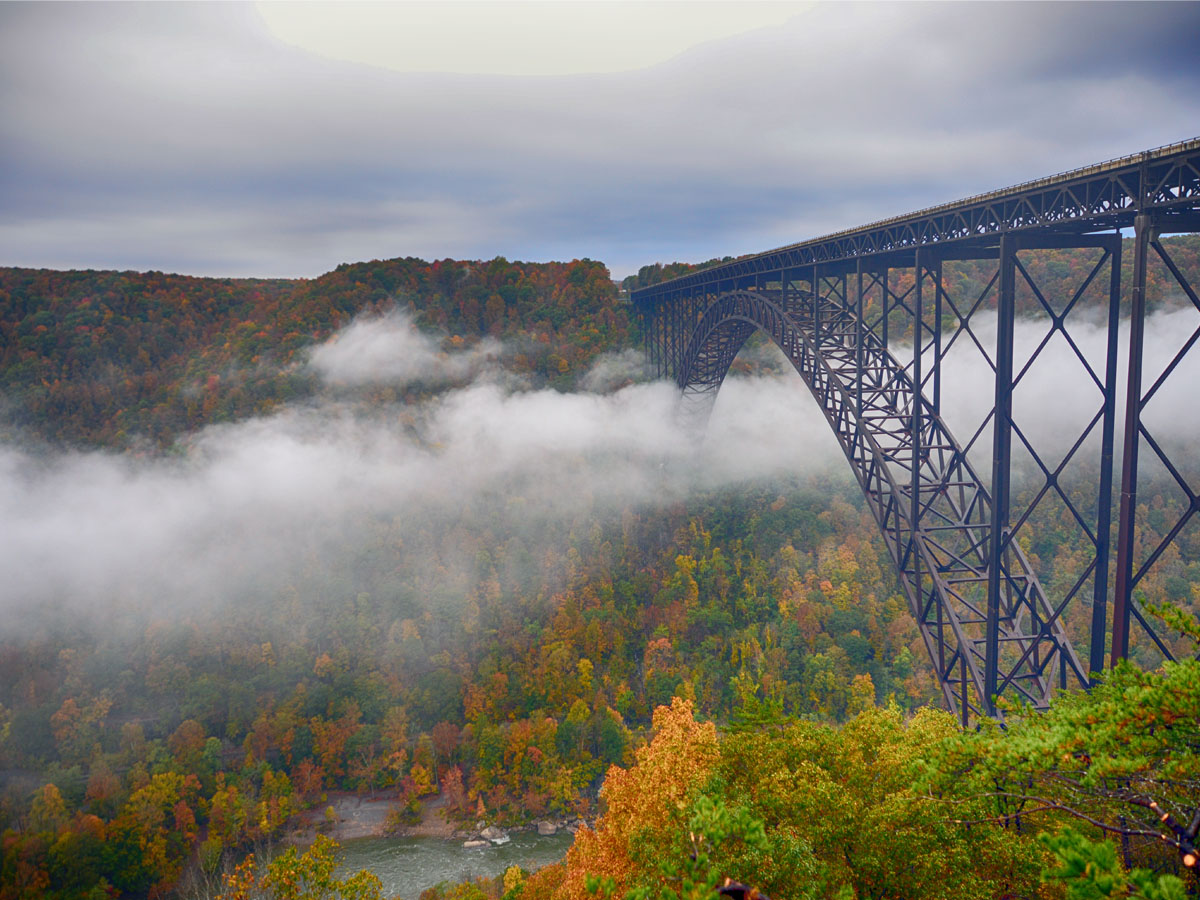
16. West Virginia – New River Gorge

You got me on this one. I haven’t been to West Virginia so I haven’t been to New River Gorge.

The picture is gorgeous and I’d love to capture something similar but when I googled the New River Gorge Bridge it seems the thrill seekers have taken over. They banned bungee jumping after an accidental death deemed bungee jumping as unsafe but they still allow base jumping and rappelling!  No thanks. I admit I like an adrenaline rush as much as the next person but I still want to be safe!

That about wraps up todays post. More to come next time.

Birds, Birds and more Birds

Birds, Birds and more Birds

Hawaiian NeNe (Goose)

Birds are a popular photo subject with me. My friends often tell me it’s time to stretch my wings and get a new subject and I do. I chase all kinds of wildlife. But sometimes the birds are just there. They are an easy subject because I don’t have to search for them. I can spend days trying to locate a fox or a moose or even a deer to photograph but birds are always around me.

Bird on a wire

I was near a pond in Norton taking shots of the fall foliage. Birds were the farthest thing from my mind when a hawk settled right above my head on a wire. How could I not take his picture?   Besides birds are a challenge to get a good shot. Although the hawk was right on a wire near me the background was filled with tree leaves. He also spend quite a bit of his time on the wire with his back to me. Not much of a picture if you can only get the back of a head!  So I continue to take pictures of birds.


Birds in Florida

Some of my best photos were in Florida. I always seem to have good luck there. I try to take most of my bird pictures in the wild. I may be at a wildlife sanctuary but the birds are wild and free to fly away. I got a second class photo of a very rare bird from an airboat. It’s called a snail kite and I didn’t realize how rare it was until I returned home and saw a special on the bird on PBS. The photo is blurry so I’m not going to share but the odds of me going back for a better one are pretty slim. 

Egret with Hot Dog

Accepted in Nat Geo “I Shot It” Contest

Maine Puffins

Another great bird trip was with the Audubon Society, I joined them for a trip to see the Maine Puffin Colony. What a trip! Who knew it could be so cold in the middle of July! We were in the Bay of Fundy where we could see the evidence of the 12 ft tides the area is known for.  I may have to think about doing it again because I’ve improved my photography skills since then. But I did get a few  ‘Braggable” shots.

Loons of New England

So now I have a new Bird Challenge. I need to get a decent photo of a common loon. Loons can be found in Maine, New Hampshire, Vermont and now the Lake George area of New York. I’ve seen them. I’ve heard them but always at a distance. So now my goal is to get close enough to get a good photo because I can do better than this!


I have some locations and ideas in mind but I think spring nesting season will be my best chance. I will keep you posted on my progress.

Puzzle update

No update this week. I’ve moved into the browns and purples and they are harder to match and I haven’t had much time to work on it.