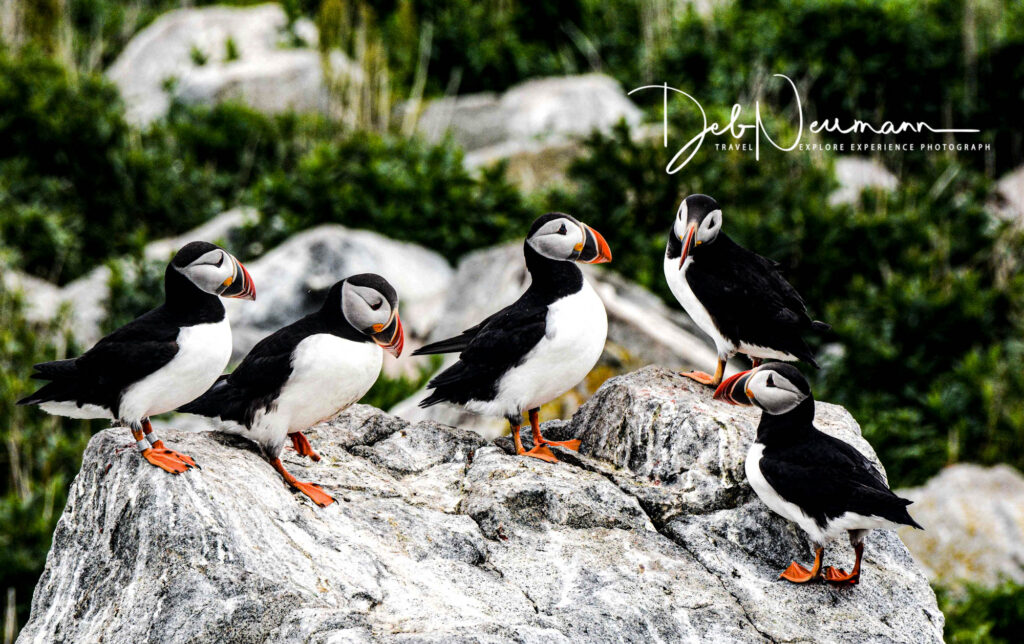
A Personal Puffin Prelude
 I’ve shared my own puffin‑chasing adventures in Maine — from the fog‑soaked boat ride to Eastern Egg Rock to the wild, wind‑whipped journey out to Machias Seal Island in Canadian waters. Those trips were unforgettable, and they gave me the chance to photograph the clowns of the sea up close.
But I don’t think I’ve ever told the story behind why puffins disappeared from Maine in the first place, or how they eventually came home. It’s a tale equal parts heartbreaking and hopeful — and a reminder that humans can cause great harm, but also great healing.
When Feathers Became Fashion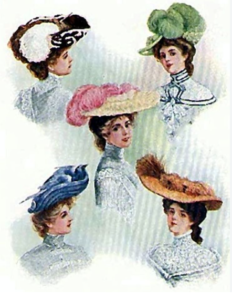
To understand the puffins’ disappearance, we have to step back to the late 1800s, when extravagant feathered hats were the height of fashion. Women’s hats weren’t just decorated — they were practically entire bird displays. Egrets were especially prized, but they weren’t the only victims.
A feather census in New York City once documented more than 700 women wearing hats adorned with feathers from roughly 40 native bird species. Herons, owls, woodpeckers — all were hunted, plucked, and sold to meet the demand.
Feathers became a global commodity. When the Titanic sailed on its maiden voyage, it carried more than 40 cases of millinery feathers destined for New York. Adjusted for today’s value, those crates were insured for over $2.3 million. In 1912, only diamonds were worth more pound for pound.
The Puffins Pay the Price
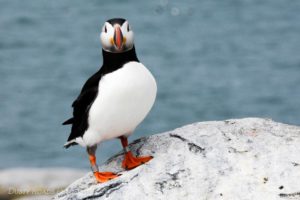 Atlantic puffins once thrived on islands throughout the Gulf of Maine. But the feather trade wasn’t their only threat. Puffins were also hunted for meat and eggs, and their colonies were systematically wiped out.
At the same time, humans were destroying tern colonies — not realizing that terns acted as natural security guards. Without terns to chase off gulls, eagles, and other predators, puffins had no protection. They abandoned their nesting islands.
By the early 1900s, puffins had vanished entirely from the United States.
A Graduate Student With a Big Idea
Fast‑forward to 1971. Stephen Kress, then a young ornithology graduate student from Cornell, was working as a wildlife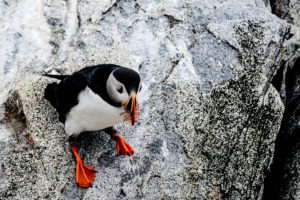 instructor in Maine. He learned that puffins once bred on Eastern Egg Rock, just six miles away — but hadn’t returned in nearly a century.
That discovery lit a fire in him.
Kress launched what became known as Project Puffin, an ambitious effort to reestablish a breeding colony on Eastern Egg Rock. Because puffins spend most of the year floating on the open ocean and only return to land to breed, he had a narrow window — April through August — to make the island feel like home.
The Early Experiments
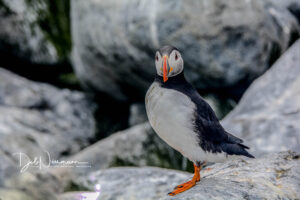
Kress and his team built artificial burrows and hand‑raised puffin chicks brought from Newfoundland. Between 1973 and 1981, they transplanted 954 pufflings to Eastern Egg Rock.
The chicks fledged successfully… but none returned to breed.
Mirrors, decoys, artificial burrows — nothing convinced the puffins to stay. For years, Egg Rock was a place to visit, not a place to raise a family.
The Turning Point
Everything changed in 1980 when terns — absent since 1936 — suddenly began nesting on Eastern Egg Rock again. Their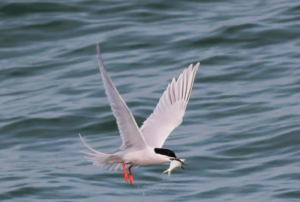 return created the protective environment puffins needed.
And then, in 1981, the miracle happened: the first puffling was raised on Egg Rock by puffin parents.
That single chick marked the beginning of a comeback no one had thought possible.
 A Colony Reborn
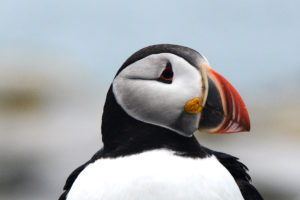
Today, Eastern Egg Rock hosts a thriving puffin colony along with roseate terns, black guillemots, razorbills, and other seabirds. Across five Maine islands, there are now roughly 1,300 breeding pairs of Atlantic puffins.
A species once wiped out from U.S. waters is now restored — thanks to persistence, science, and a whole lot of hope.
A Welcome Home
It’s one of the greatest conservation success stories in North America. The puffins — those bright‑beaked, clumsy, wonderful little birds — are back where they belong.
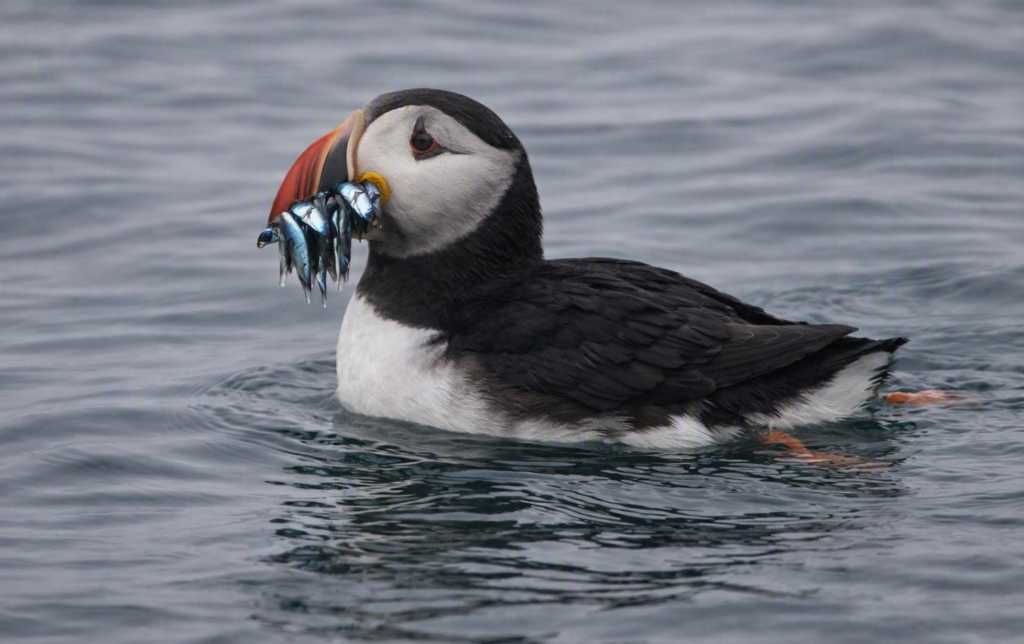
And every time I see them, whether bobbing on the waves or hopping into their burrows with a beak full of fish, I’m reminded that sometimes humans really can fix what humans broke.
Share this:
- Share on Tumblr (Opens in new window) Tumblr
- Print (Opens in new window) Print
- Share on X (Opens in new window) X
- Share on Facebook (Opens in new window) Facebook
- Share on Pinterest (Opens in new window) Pinterest
- Share on Reddit (Opens in new window) Reddit
- Share on LinkedIn (Opens in new window) LinkedIn