WMEO 9 BREAKING NEWS- Back Bay Braces for… Elephants?

Filed by Anchors Banner & Balboa Dateline: Commonwealth Avenue Mall, Boston.. WMEO 9  We Meow-You Listen
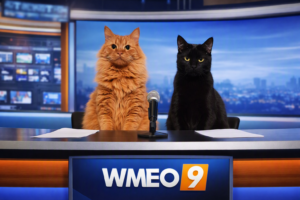
🎙️ Banner (Orange, Overcaffeinated, Zero Chill):

LADIES, GENTLEMEN, AND ALL WHO APPRECIATE A GOOD PARADE OF ABSURDITY— We interrupt your regularly scheduled bird‑watching to report that Boston has officially lost its mind.
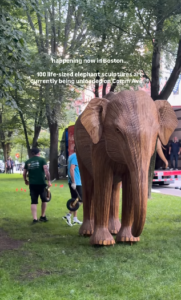
Moving trucks are clogging Back Bay again, but instead of college kids hauling futons, they’re unloading elephants. Not real ones. But 100 life‑sized elephant sculptures, which is somehow even more chaotic because you can’t bribe them with peanuts to move.

I repeat: ONE HUNDRED ELEPHANTS. FIVE BLOCKS. This is the greatest thing to happen to Boston since someone finally fixed the Green Line.

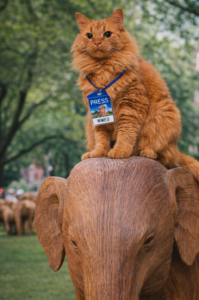
I attempted to climb one for “journalistic purposes” but was removed by a volunteer who said, and I quote, “Sir, please stop narrating loudly.” I regret nothing.
🎙️ Balboa (Black, Soft‑Spoken, Perpetually Worried):
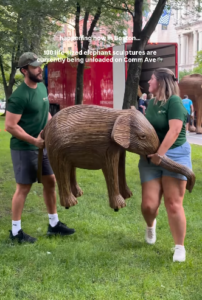
Thank you, Banner. I would like to reassure viewers that these elephants are friendly, quiet, and unlikely to bite—unlike some anchors I could name.

The installation is part of The Great Elephant Migration, a global fundraising initiative bringing awareness to conservation efforts. The sculptures will line the Commonwealth Avenue Mall, creating a peaceful, tree‑lined corridor of gentle giants.

I personally inspected the scene. The elephants appear sturdy, respectful, and uninterested in stealing anyone’s kitty grass. I approve this event.

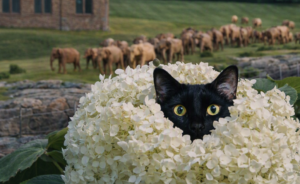
However, I must note that the moving trucks were loud, and I hid behind a hydrangea for several minutes. This is normal. This is fine.

🎙️ Banner (interrupting):

BALBOA HID BEHIND A HYDRANGEA. THIS IS THE BEST DAY OF MY LIFE.
🎙️ Balboa:

Please ignore him. We encourage all residents to visit the installation, take photos, and appreciate the artistry—while also remembering that climbing the elephants is not allowed, even if you are a very handsome orange cat with a press badge.
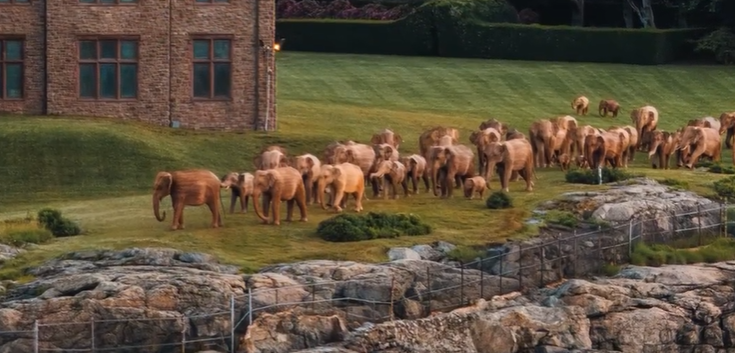
A grassy slope in front of a large brick building is filled with dozens of life‑sized elephant sculptures. The sculptures vary in size and pose, arranged across the lawn and near rocky areas at the bottom of the hill. The scene looks like a herd moving together, but the elephants are clearly art installations rather than real animals. The contrast between the realistic sculptures and the formal building behind them creates a striking, surreal visual.

WMEO 9 SIGN‑OFF

This has been Banner & Balboa reporting live from Back Bay. End of bulletin. Please resume your regularly scheduled scrolling.


A Mustang Like No Other

Returning to Arounddustyroads roots of travel stories and the approach of Halloween seems a good time to touch on the mysterious Blue Mustang of Denver International Airport. “Blue Mustang”—a towering sculpture steeped in tragedy, controversy, and conspiracy—has become one of the most iconic and unsettling landmarks in Colorado.


The Beast at the Gate: A Mustang Like No Other

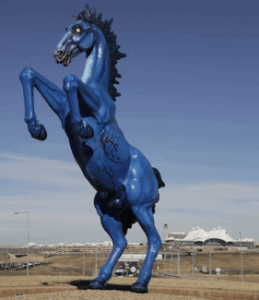
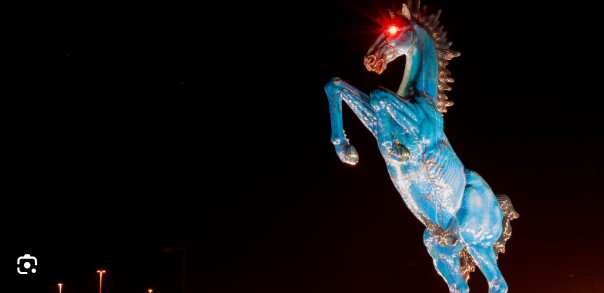
Standing 32 feet tall and weighing approximately 9,000 pounds, the cast-fiberglass sculpture known as Blue Mustang greets travelers along Peña Boulevard leading to Denver International Airport (DIA). Its electric-blue body and glowing red eyes have earned it the ominous nickname Blucifer, a moniker that reflects both its dramatic appearance and the dark tale behind its creation.

A Vision Cut Short: Luis Jiménez’s Final Work

Commissioned in 1992 as part of Denver’s public art initiative, artist Luis Jiménez envisioned the mustang as a tribute to the spirit of the American West. Drawing inspiration from his own Appaloosa stallion, Blackjack, Jiménez poured years of effort into the sculpture. Tragically, in 2006, a section of the statue broke loose during studio work and fatally severed an artery in his leg. After his death, the piece was completed by his family and fellow artists, including Camillo Nuñez and Richard LaVato, and finally installed in 2008.

Blucifer’s Glow and the Public’s Unease


The sculpture’s glowing red eyes—an homage to the neon signs crafted by Jiménez’s father—have fueled eerie interpretations. Some locals view the mustang as demonic or cursed, while others admire its bold presence and artistic merit. Despite initial backlash and calls for its removal, Blucifer has become a permanent fixture and a symbol of Denver’s unconventional approach to public art.

DIA: A Hotbed of Conspiracy

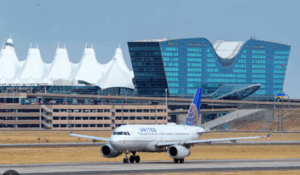
Denver International Airport itself is no stranger to mystery. Since its opening in 1995, DIA has been the subject of countless conspiracy theories. From alleged underground bunkers and secret societies to murals with supposed subliminal messages, the airport has inspired speculation about hidden agendas and paranormal activity. The mustang’s deadly backstory only adds fuel to the fire, with some theorists claiming it’s part of a larger narrative involving alien coordinates and apocalyptic symbolism.

A Legacy of Awe and Intrigue

Though born of tragedy and surrounded by controversy, Blue Mustang endures as a striking piece of public art. It stands not just as a gateway to Denver, but as a testament to Jiménez’s vision and the airport’s embrace of the bizarre. Whether seen as a protector of travelers or a harbinger of mystery, Blucifer continues to captivate and unsettle in equal measure.