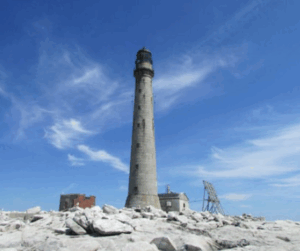
Rising from the waves like a sentinel of stone, Boon Island Light is New England’s tallest lighthouse—and one of its most haunting maritime landmarks. With a nod to my sister’s enduring love of lighthouses and a dash of wanderlust, I invite you to explore the story of this remote Maine beacon, where history, hardship, and the sea converge.
 🌊 A Tower in the Sea: Introduction to Boon Island Light
Located 6.5 miles off the coast of York, Maine, Boon Island Light is the tallest lighthouse in New England, rising 133 feet from a barren outcrop in the Atlantic. Its isolated perch and storm-battered silhouette have made it a symbol of resilience and maritime vigilance.
🕰️ From Shipwrecks to Signals: A Storied Past

Drawing of the Nottingham Galley shipwreck
The island’s name may stem from early fishermen who left provisions for shipwrecked sailors—a “boon” in desperate times. But its most infamous tale is the 1710 wreck of the Nottingham Galley, whose crew resorted to cannibalism to survive. This tragedy sparked calls for a permanent warning beacon.
Builders erected the first lighthouse in 1811, but relentless storms repeatedly tore down those early structures. In 1855, they completed the current granite tower, outfitting it with a second-order Fresnel lens and a fog horn that still sounds every 10 seconds.
🛠️ Automation and Preservation
After a devastating blizzard in 1978 washed away all keeper dwellings, the station was automated in 1980. Today, Boon Island Light remains an active aid to navigation, owned by the U.S. Coast Guard and leased to the American Lighthouse Foundation, though it’s in need of major restoration.
🚫 Remote and Inaccessible—Yet Irresistible
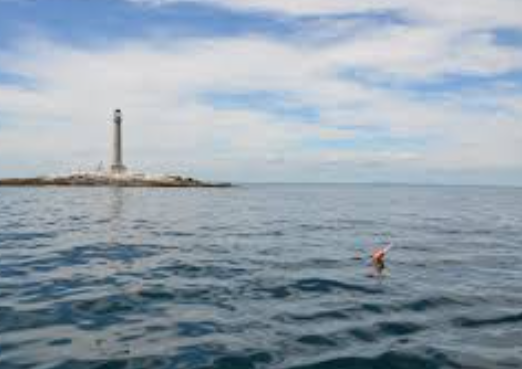
Boon Island is not open to the public, and its rocky terrain makes landings treacherous. Still, its allure draws lighthouse enthusiasts and historians. Scenic boat tours occasionally pass by, offering distant glimpses of this stoic sentinel.
📚 Legacy in Literature and Lore
The lighthouse’s grim history inspired Kenneth Roberts’ novel “Boon Island”, and its stark beauty has been described as “an eternal exclamation mark” by 19th-century writer Samuel Adams Drake. It’s a place where nature, history, and human endurance collide.