Happy Labor Day!

Honoring Hard Work: Celebrating Labor Day

Each year on the first Monday in September, Americans take a well-deserved pause to celebrate Labor Day. For many, it signals the unofficial end of summer, complete with barbecues, parades, and one last beach trip. But beyond the backyard gatherings and retail sales, Labor Day holds a deeper meaning—it’s a day to honor the contributions of workers who helped shape our country.

Barbecue Clipart transparent PNG - StickPNG

The History Behind Labor Day

Labor Day was first celebrated in the late 19th century, born out of the labor movement. During a time when long hours, unsafe conditions, and low wages were the norm, hardworking men and women stood together to demand fairness and dignity in the workplace. Their efforts led to reforms we often take for granted today—such as the 40-hour workweek, better wages, and safer environments. In 1894, Labor Day was officially recognized as a federal holiday, giving Americans a day to reflect on the value of hard work.

A Day to Reflect and Recharge

In today’s fast-paced world, Labor Day is not only about honoring workers of the past, but also about acknowledging the efforts of those who keep our communities running every day. Teachers, healthcare workers, farmers, service employees, and countless others deserve appreciation for the vital roles they play.

Philadelphia celebrates workers rights and unity - WHYY

Stock photo

It’s also a chance to recharge. Whether you spend the day with family at a cookout, take a quiet hike in the woods, or simply relax with a good book, Labor Day reminds us that rest is just as important as work.

Carrying the Spirit Forward

As we enjoy the holiday, let’s remember that Labor Day is more than just a long weekend. It’s a tribute to perseverance, unity, and the belief that every worker deserves respect. By recognizing the value of hard work—past and present—we carry the true spirit of Labor Day forward.

So, here’s to a day of gratitude, rest, and celebration. Happy Labor Day!


Curse of the Shared Brain Cell

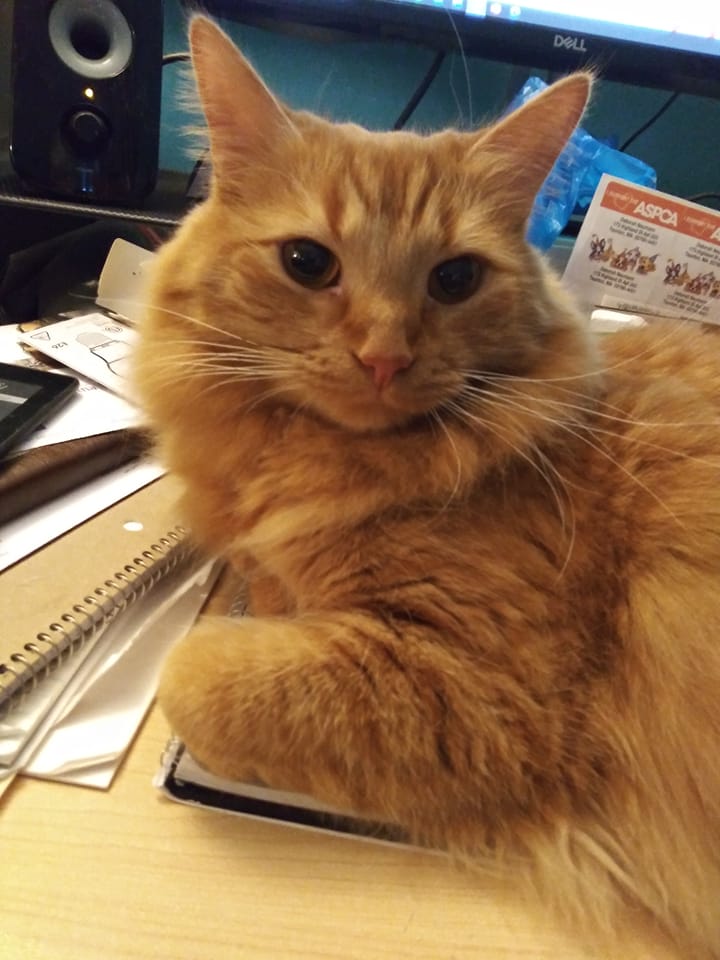
photo Credit Deb Neumann

Curse of the Shared Brain Cell: Life With an Orange Cat

Orange cats have a reputation. If you’ve ever spent time in the cat-loving corners of the internet, you’ve probably heard the joke: all orange cats share one collective brain cell. No one really knows where this idea started, but after living with one myself, I can confidently say—it feels true.

Orange cats aren’t just regular cats. They’re extra. They’re goofy, unhinged, and somehow both lazy and chaotic at the same time. Just look into their eyes—completely empty. Nothing going on in there.

Banner- photo credit Deb Neumann


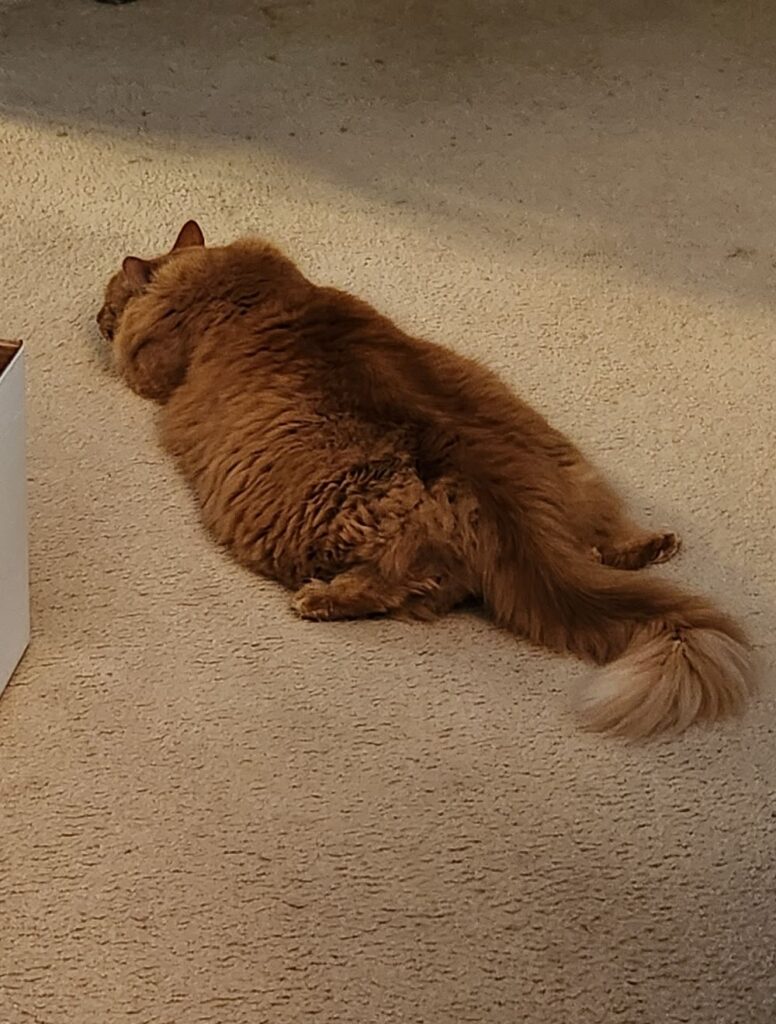
Take my orange cat, Banner, for example. He has recently developed a vendetta against bulletin boards. He cannot stand to see them on the wall. I live in constant fear that he’ll manage to pull out a push pin and try to eat it.

Playtime

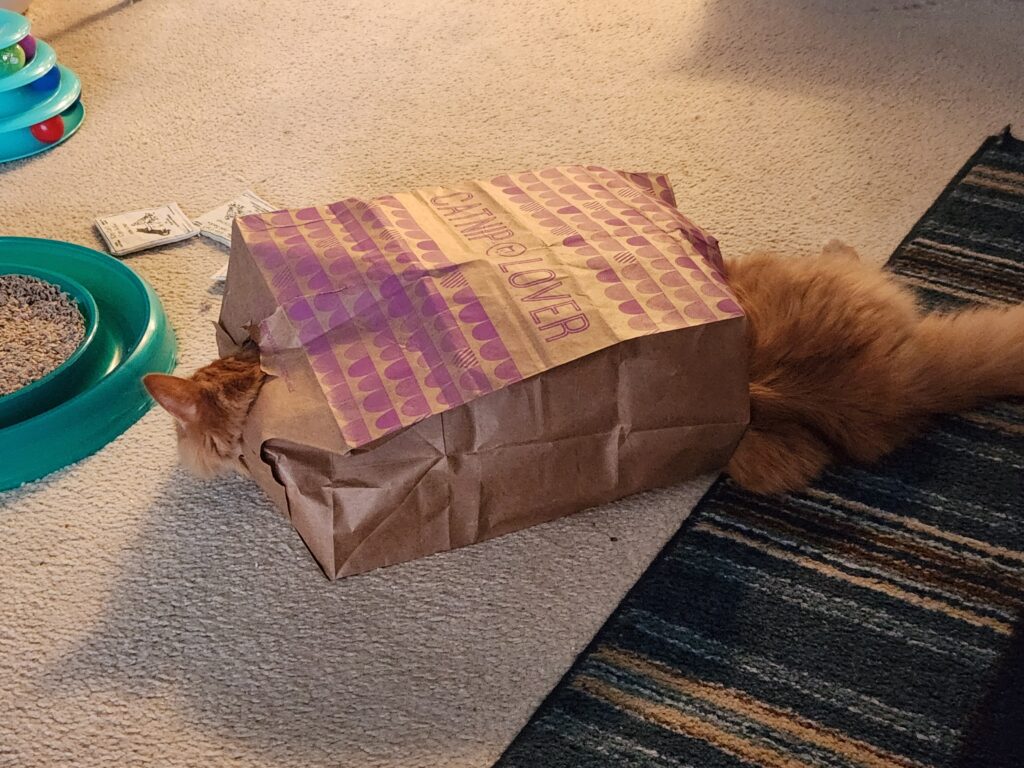
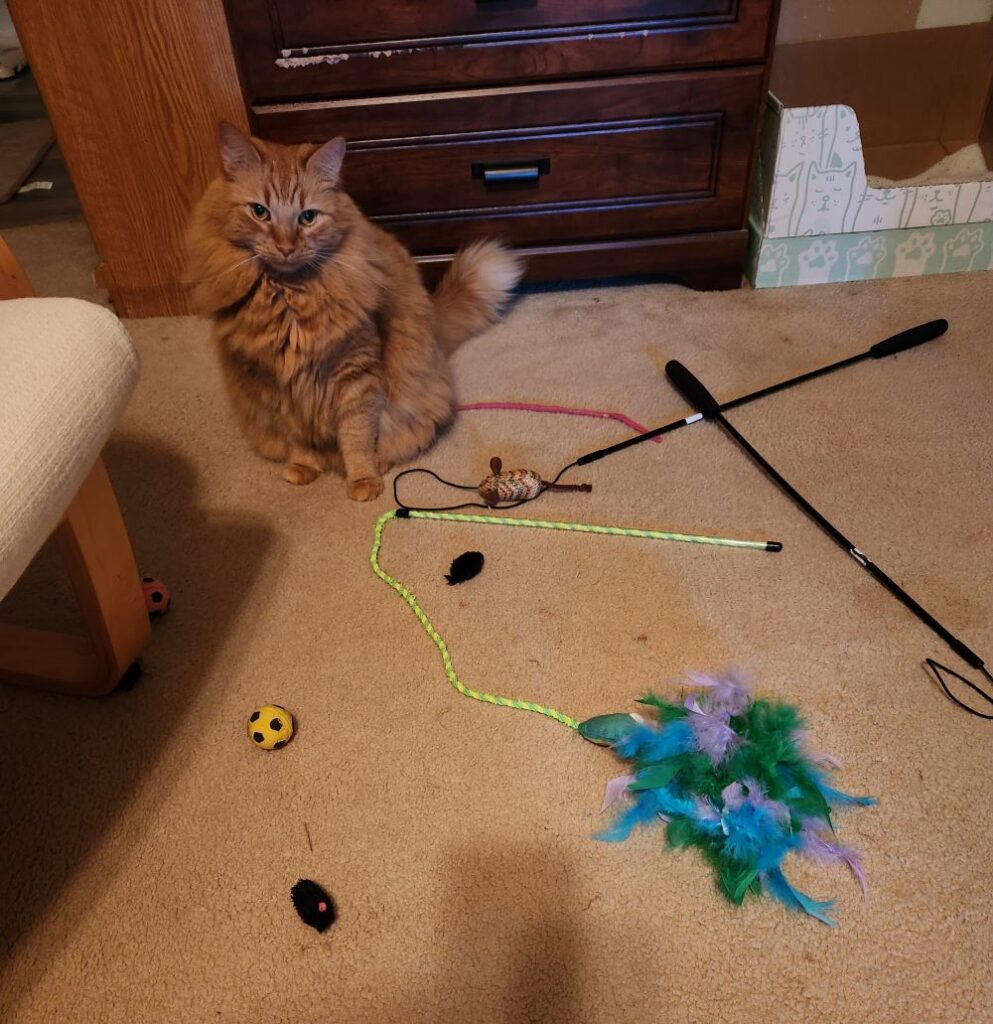
Banner’s approach to playtime is equally on-brand. Most cats love to chase and climb, but not him. He prefers to play from a reclining position, lazily batting at toys that dare to come close enough. On the rare occasion he does chase something, it’s like watching a chonky orange tank rumble across the floor. The cat tree? Fun when it was new. Now? Too much effort. A crinkly paper bag with a hole in the bottom? That’s the real prize.

Cat in the Bag – photo credit Deb Neumann

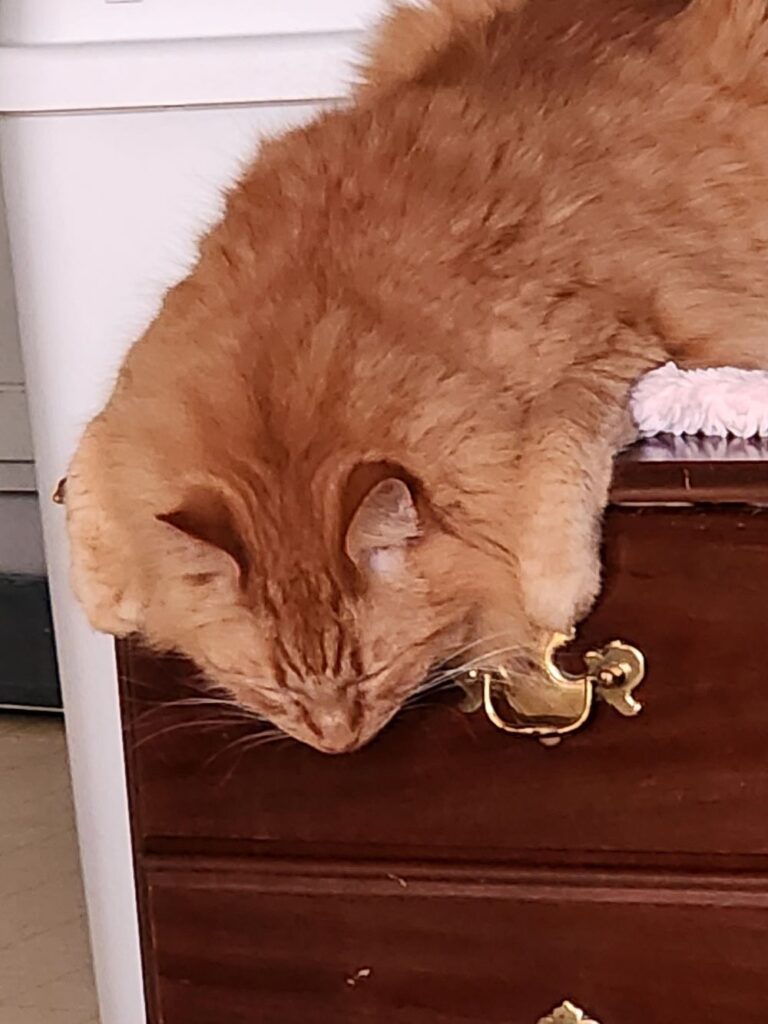
Then there’s his way of “relaxing.” Banner loves to drape himself across tables and ledges with his head hanging completely upside down, as if letting gravity feed the lone brain cell he’s been allotted. My black cat, Balboa, would never be caught in such a position—he has too much dignity for that nonsense.

Just Resting – photo credit Deb Neumann

And it’s not just Banner. The internet is full of orange cat chaos. My personal favorite? The orange cat who only lets his owner carry him upside down. Classic.

So yes, orange cats may have to share that one collective brain cell. But they also share something else—pure entertainment. Today might officially be Orange Cat Appreciation Day, but in my house, every day is. Banner keeps life interesting, and brain cell or not, I wouldn’t trade him for anything.

Kitty Chaos photo credit Deb Neumann


Winged monster in the Wild West—legend or nightmare come to life?


The Tombstone Thunderbird Mystery: 

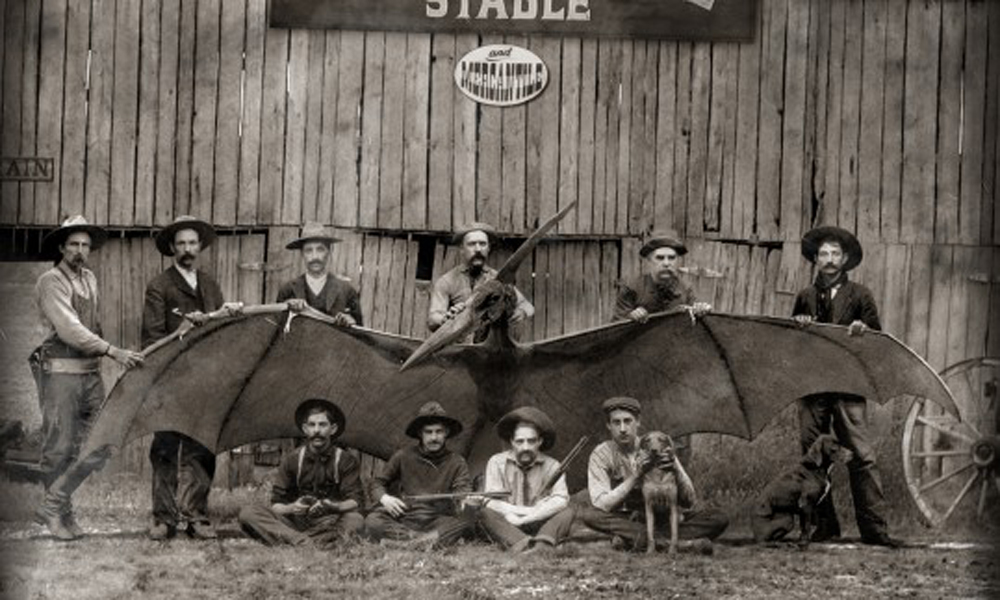
In the dusty town of Tombstone, Arizona—famous for its Wild West history—there’s a legend that continues to spark curiosity: the Tombstone Thunderbird. The story goes that in April 1890, two ranchers encountered and killed an enormous, birdlike creature near the Huachuca Mountains. According to reports, the creature had leathery wings resembling those of a bat, a body stretching nearly 20 feet long, and an appearance more like a prehistoric pterosaur than any bird we know today.

The tale gained traction when a local newspaper, the Tombstone Epitaph, allegedly published an article describing the capture. Some versions even claim that a photograph existed, showing men standing proudly in front of the creature with its wings stretched across a barn. This photograph has become one of the most enduring pieces of cryptid lore—people swear they’ve seen it, but no verifiable copy has ever surfaced.


Tombstone Thunderbird - True West Magazine

Photo True West Magazine

Skeptics argue that the story is pure folklore, born out of the era’s fascination with tall tales, frontier adventures, and the discovery of dinosaur fossils. Without physical evidence—bones, feathers, or that elusive photograph—the Thunderbird remains firmly in the realm of mystery. Still, the legend refuses to fade. It resurfaces in books on cryptozoology, TV documentaries, and late-night campfire stories told across the Southwest.

Fact, Folklore, or Something In Between?

Why does the Tombstone Thunderbird captivate us so much? Maybe it’s because it touches on something primal: the human desire to believe that the unknown still walks among us. In a world where satellites map every corner of the globe, stories like this remind us that mysteries can linger just beyond the edge of history.

Whether you see it as a piece of forgotten journalism, a tall tale, or a glimpse of something extraordinary, the Tombstone Thunderbird remains one of Arizona’s most fascinating unsolved mysteries.

Legend or Lie? The Tombstone Thunderbird

Legend or Lie

The Great Marshmallow Roast: Celebrating National Toasted Marshmallow Day

The Toasted Marshmallow

Every year on August 30th, we celebrate one of life’s stickiest pleasures—National Toasted Marshmallow Day. It’s the perfect excuse to gather around a campfire, skewer a fluffy marshmallow, and test your patience (or your fire safety skills).

11,800+ Marshmallow Fire Stock Photos, Pictures & Royalty ...

Stock Photo

There are two main schools of thought when it comes to marshmallow roasting. The first is the Golden-Brown Purist. These folks carefully hold their marshmallow above the flame, rotating it slowly like it’s a sugar rotisserie chicken. The result? A perfectly even golden crust with a soft, gooey center. These people probably iron their socks and alphabetize their spice racks.

20+ Golden Brown Toasted Marshmallow Stock Photos, Pictures ...

Stock photo

Then we have the Marshmallow Arsonists. You know who you are. You jam the marshmallow directly into the fire, watch it erupt into a sugar torch, panic, and then wave it around like you’re signaling planes to land. By the time the flames go out, you’ve created a charred husk filled with molten sugar lava. And yet, it still tastes amazing.

3,100+ Marshmallow Burning Stock Photos, Pictures & Royalty ...

Stock photo

Of course, the toasted marshmallow rarely travels solo. When paired with chocolate and graham crackers, it transforms into the legendary s’more. This humble creation is proof that life is better when it’s gooey, messy, and slightly over the top. One bite, and suddenly “just one more” becomes a campfire chant.

4,500+ Smores Stock Photos, Pictures & Royalty-Free Images ...

stock photo

But even eaten plain, a toasted marshmallow carries nostalgia. It’s childhood summers, crackling fires, sticky fingers, and maybe even a singed eyebrow or two. It’s the kind of simple pleasure that makes you laugh while trying not to burn your tongue.

So, however you roast—whether you’re a patient spinner or a marshmallow pyromaniac—today’s the day to celebrate. Grab a stick, light a fire, and toast to sweet, sticky chaos. Wet wipes optional, but highly recommended.

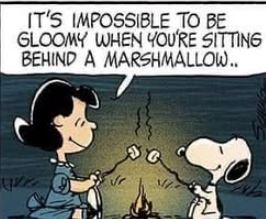
Snoopy

_____________________________________________________________________________________________________________

I’m part of the Amazon Associates program, which means I may earn from qualifying purchases. Order Here 

Clowns of the Sea

Puffins, Clowns of the Sea

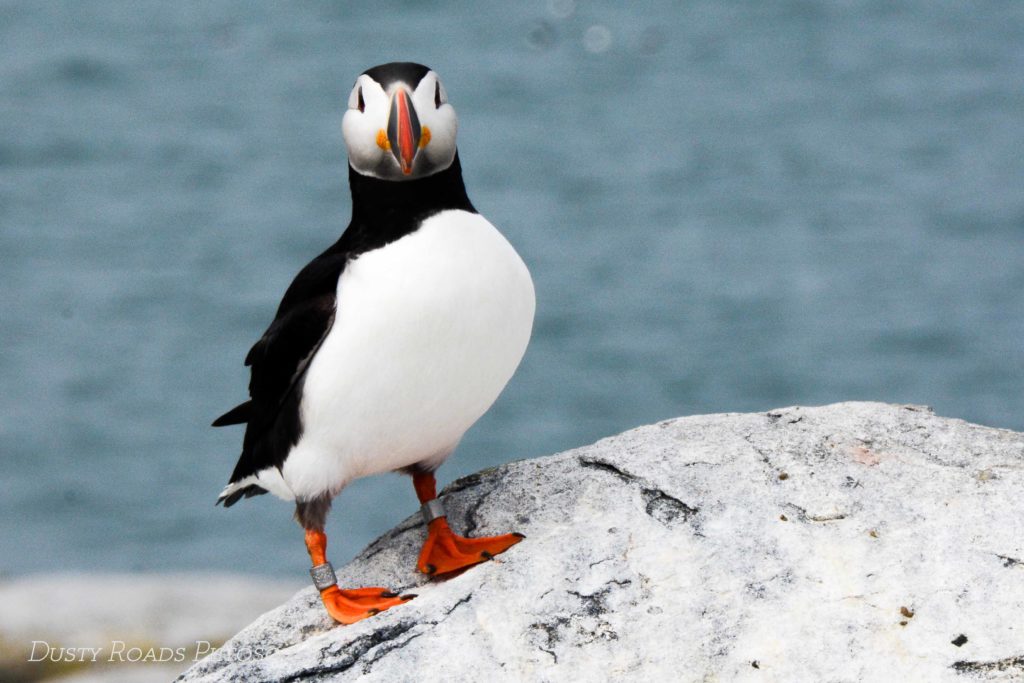
I love Puffins. Often called Clowns of the Sea, these charming seabirds earn their nickname thanks to their bright, multi-colored beaks, expressive facial markings, and pudgy little bodies. Add in their frantic wing-flapping and you’ve got a heartwarming, almost comical image that’s impossible not to adore. I love them so much that I embarked on a quest to see them live and in person—a surprisingly tricky endeavor on the East Coast of the USA.

Eastern Egg Rock, Maine – 2012

My first attempt was in 2012, when I joined an excursion to Eastern Egg Rock, a 7-acre island in Muscongus Bay, Maine, located about six miles east of New Harbor. It’s home to the world’s first restored seabird colony, including Atlantic Puffins. And it’s where I spotted my very first Puffin. They’re so little! Seeing one in the wild was a thrill, even if fleeting.

Puffin- Egg Island Maine 2012 photo credit Deb Neumann


Alaska – 2013

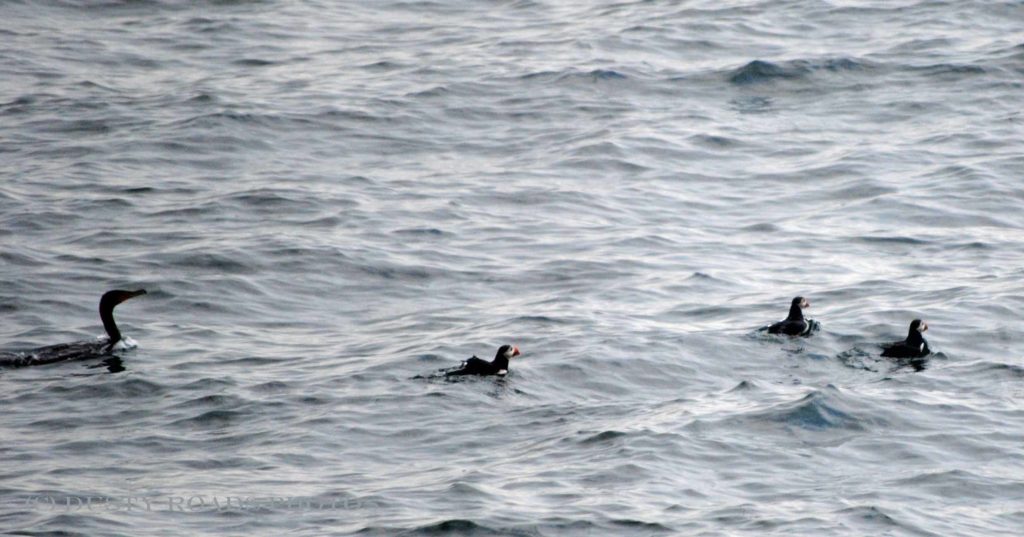
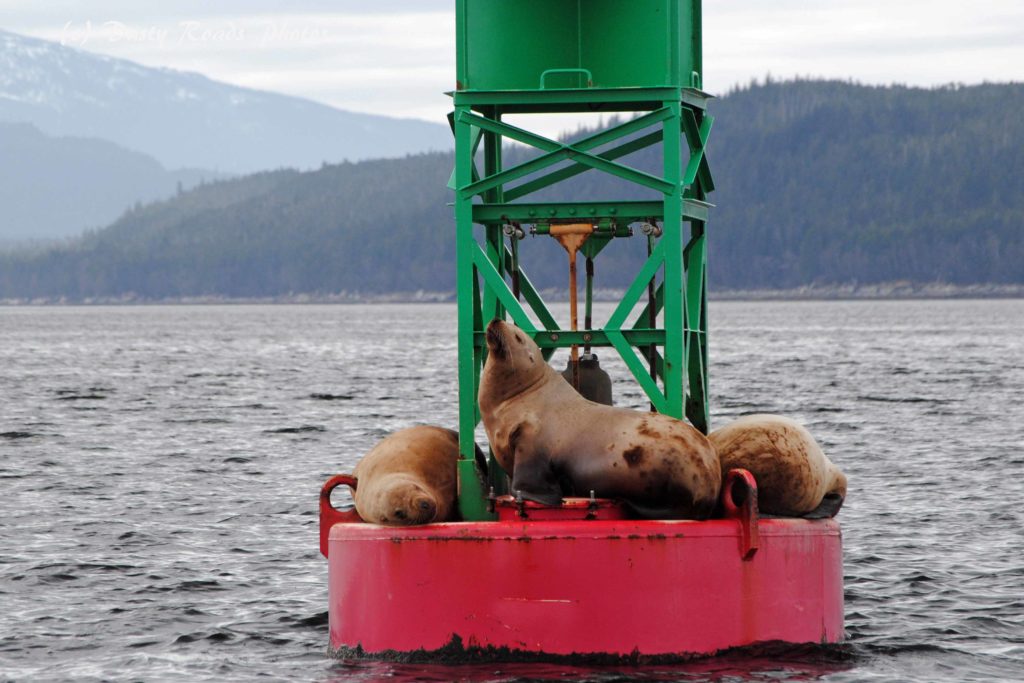
In 2013, I took a cruise to Alaska. I saw whales and sea lions, moose and caribou—even a couple of bears. But when the ship cruised past a raft of Puffins in Prince William Sound, I was curled up in my bunk, battling a bout of seasickness. Strike two on my Puffin quest.

Sea Lions Alaska 2013 Photo credit Deb Neumann

Machias Seal Island, Maine – 2016

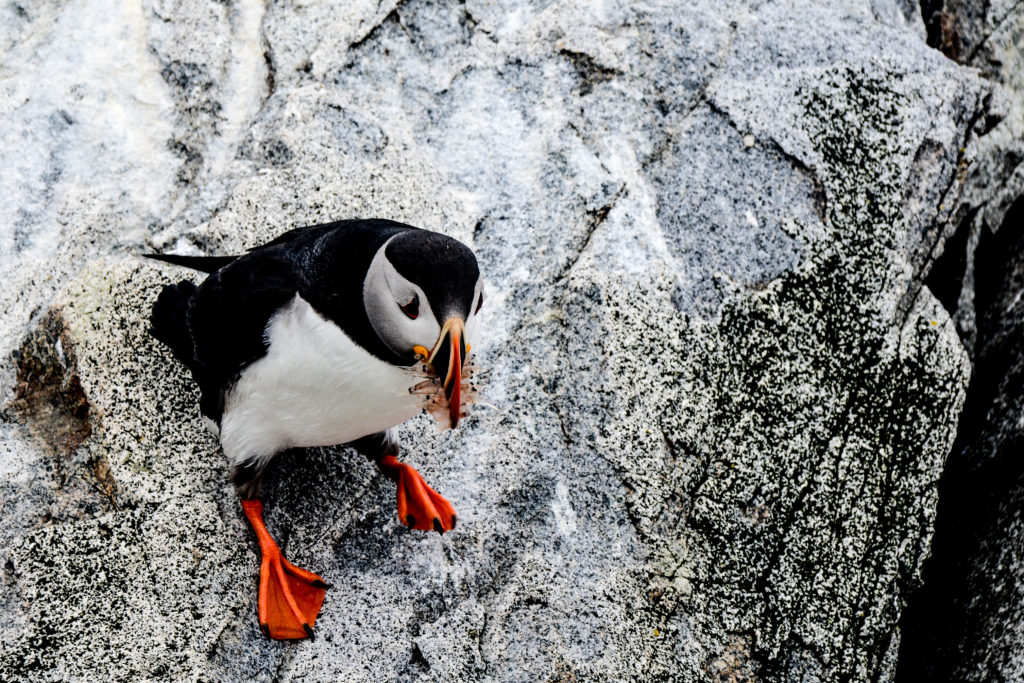
Then in 2016, I heard about a National Audubon trip to Machias Seal Island in the Bay of Fundy. Puffins? Yes, please—sign me up! This time, success. The trip was everything I’d hoped for. You can read all about it in my Around Dusty Roads post [linked here].

Machia Seal Island Puffin 2016 photo credit Deb Neumann


Puffling Season

So what got me thinking about Puffins today? I stumbled across a story from Iceland, where residents of a seaside town were reportedly throwing baby Puffins into the sea. The headline was alarming, so of course I had to dig deeper. Turns out, the town’s streetlights confuse fledgling Puffins—called Pufflings—making it difficult for them to find the ocean when they leave the nest. Since Puffins spend the next 3–4 years at sea before returning to land to mate, this disorientation could be disastrous. Thankfully, the townspeople created a Puffling Patrol, gently collecting the confused chicks and helping them reach the water safely. A beautiful example of community compassion and wildlife stewardship.

Puffin Photo credit Deb Neumann

Conclusion

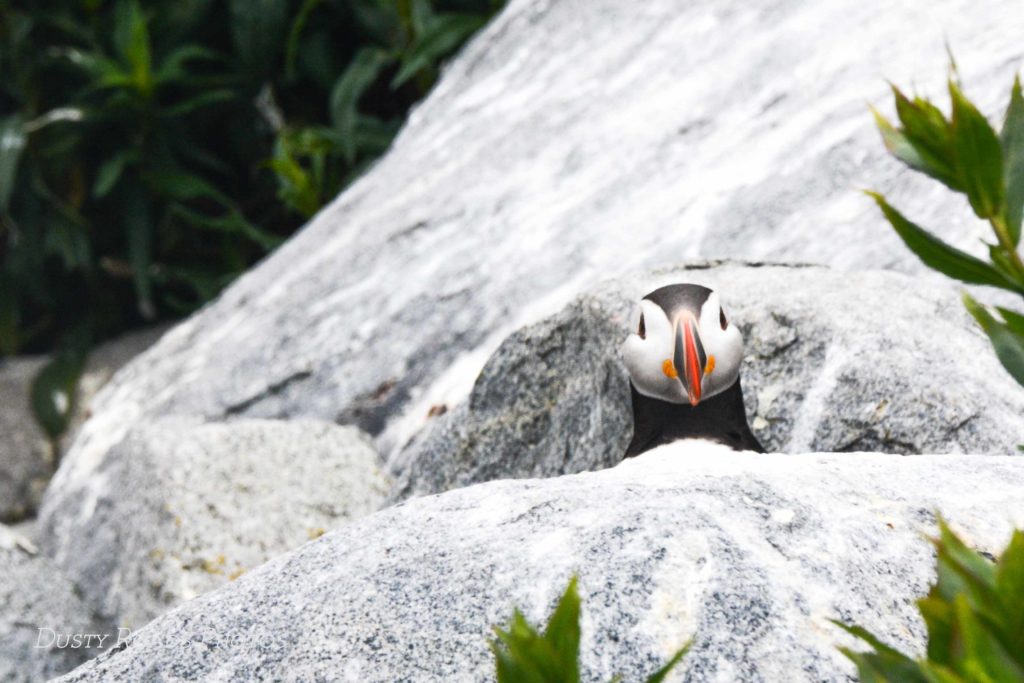
From Maine’s rocky islands to Iceland’s glowing coastlines, Puffins have a way of capturing hearts and stirring wonder. My journey to see them has been filled with detours, discoveries, and a deepening appreciation for these quirky little seabirds. Whether flapping frantically through the air or bobbing serenely on the waves, Puffins remind us that joy often comes in small, feathered packages—and that sometimes, the best adventures begin with a little obsession and a lot of heart.


Puffin Hide and Seek- photo credit Deb Neumann