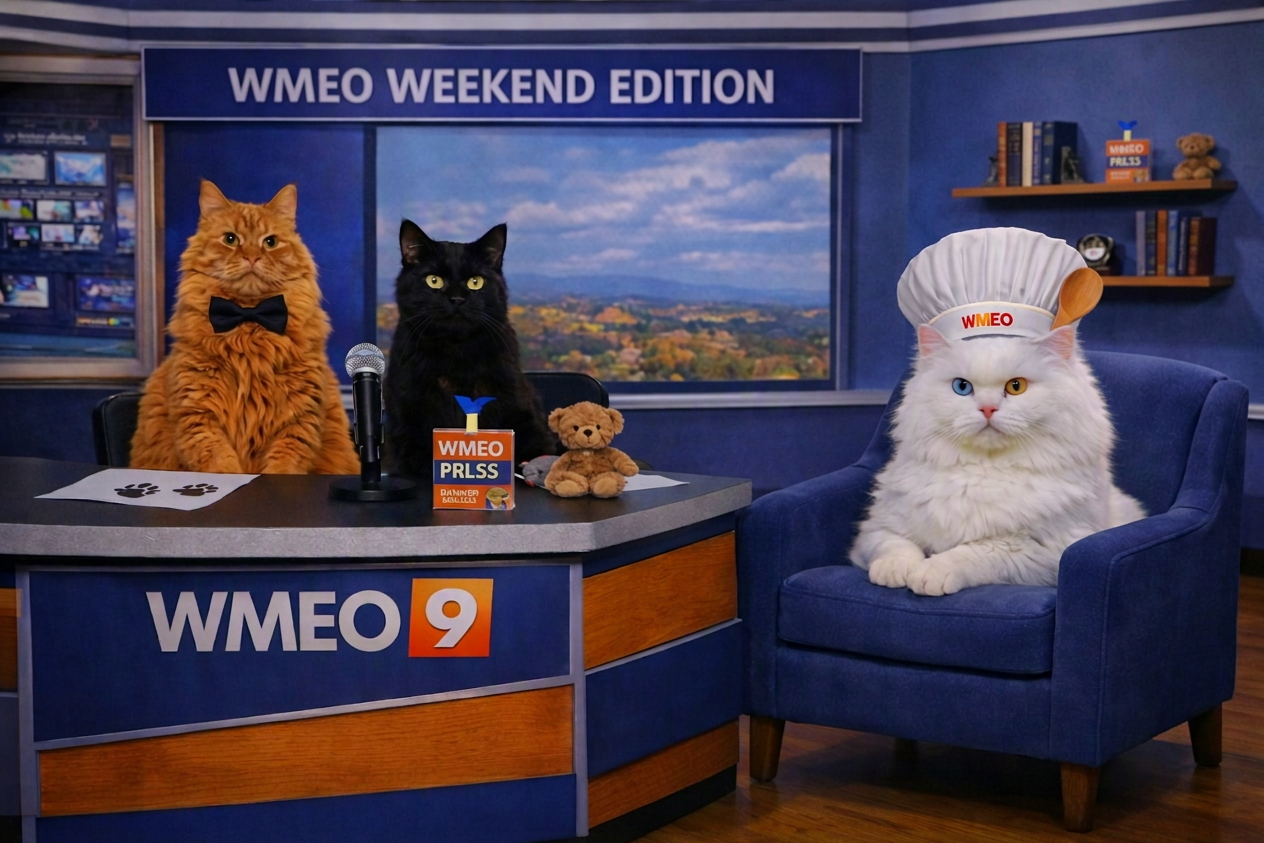
Kitty Shenanigans: The Continuing Saga of Life With Two Cats


Cat Wrestling to start the day off right. What more can be in store for me?

The Morning Mayhem Begins

What a morning. My two tiny terrors have been in rare form. Usually the day starts the same way: breakfast for both kitties, followed by a full‑speed race around the condo. I try not to be in my recliner when this happens, because it’s one of the main sections of their racetrack. They’re just as likely to launch off my head — leaving tufts of my gray hair behind — as they are to springboard off the back of the chair. It’s truly a dangerous place to sit once they’re wound up.

The Post‑Race “Recovery” Phase

After that comes the recovery phase. Once they’ve burned off that first burst of morning energy, they each find a spot for a quick nap while they wait for me to clean the litter box. They supervise this process closely. As soon as I finish, they each reclaim a box — I’ll spare you the explanation. Then they get their morning treats, and normally I get a little peace to write, read, or even sneak in a nap of my own.

Balboa, Agent of Desktop Chaos

But today? Today they rewrote the script.

It started with Balboa. As soon as he finished breakfast, he came over to my desk to “see what I was doing.” He stretched out across the desktop, looking perfectly relaxed. That was just to lull me into a false sense of security. The moment I moved my hand from mouse to keyboard, a paw shot out like lightning. He grabbed for the mouse. I grabbed back. My typing came to a halt. Balboa was not deterred. His paw moved from mouse to keyboard, and the next thing I knew, I had a whole blog post of kitty gibberish.

This back‑and‑forth went on for a while. I was getting nothing done, and Balboa was delighted with himself. Fortunately, he has a short attention span and eventually wandered off to find some other form of mischief.

Banner vs. The Fitbit: A Rivalry for the Ages

Enter Banner.

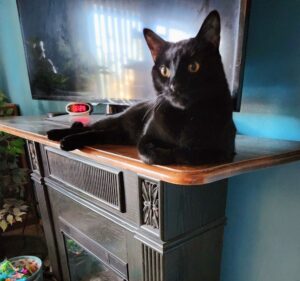
My Fitbit was on the charger — and somehow, Banner knew. My Fitbit is his nemesis. He tries to chew it off my arm, he finds it when I hide it in the medicine cabinet during my shower, and no matter which charging station I use, he senses it. He has some sort of sixth sense for wearable technology.

Thus began my efforts to distract a determined agent of chaos. Banner has a much longer attention span than Balboa, and this was turning into a full morning of distraction. Cat 1, Hooman 0. The Fitbit barely survived.

Eventually, I gave up trying to charge it and put it back on my wrist. Banner gave me a tail flip — the feline equivalent of a rude gesture — followed by a disgusted look before wandering off, muttering under his breath the whole way.

Temporary Peace… Probably

Back to my work… I hope.

I quietly snuck the Fitbit back onto the charger. Both cats finally settled down for their morning nap/recharge cycle. And now I wait, wondering what they’ll dream up next.

Tiger Panther box war

Living with cats is like living with tiny, furry project managers — always supervising, never helpful, and absolutely convinced the world revolves around their schedule.

Banner and Balboa would like you to know this post contains affiliate links. If you buy through them, I may earn a small commission — which they insist should go toward treats, toys, or whatever they’ve decided to knock off the counter next.


Hummingbirds Are Back: The Tiny Travelers of Spring Migration


April Slips Away… and the Hummers ArriveMale Ruby Throasted hummingbirds have a brilliant iridescent red throat that looks dark when it’s not in good light.

April is winding down and we’re looking May right in the eye. That means one thing for Massachusetts nature lovers: the hummingbird migration has officially begun. The earliest sighting this year popped up during the week of April 20 — a tiny flash of iridescence announcing spring’s true arrival.

These remarkable birds spent the winter basking in Central America or Mexico. Olé indeed.

Daylight Flyers With a Need for Nectar

Hummingbirds migrate during the day, which means you can spot them flitting among early‑blooming flowers in search of energy‑rich nectar. And speaking of energy, these little dynamos are astonishing.

  • They can travel up to 23 miles in a single day
  • During their Gulf crossing, they may cover up to 500 miles at once
  • Their average flight speed is 20–30 mph, and during courtship dives they can triple that

The Physics-Defying Hummingbird Body

To pull off these long‑distance feats, a hummingbird’s body runs like a high‑performance engine:

  • Heart rate: up to 1,260 beats per minute
  • Wingbeats: 15 to 80 flaps per second
  • Breathing: about 150 breaths per minute

Tiny birds, enormous stats.

Fun Facts About Our Feathered Friends

A few more delightful tidbits to impress your fellow bird‑watchers:

  1. They remember every feeder they’ve ever visited
  2. “Hummer” is both a giant SUV and a birder’s nickname for hummingbirds
  3. They’re awake during the day and sleep at night
  4. There are 350+ species of hummingbirds
  5. All hummingbirds are native to North or South America
  6. They love sugar (relatable)
  7. Natural nectar is clear — no need for red dye
  8. Make your own nectar: 4 parts water + 1 part white sugar, boiled and cooled
  9. They’re attracted to the color red
  10. They eat insects
  11. They visit 1,000 flowers a day
  12. Their wings beat thousands of times per minute
  13. They can’t walk or hop — their feet are for perching only
  14. They take about 150 breaths per minute
  15. A group of hummers is called a “charm”
  16. You can ID them with the free Audubon Bird Guide app

Get Your Yard Hummer‑Ready

So — are you ready for your feathered friends? Clean out that feeder, plant those nectar‑rich flowers, and roll out the red carpet. The tiny hummers are on their way, ready to grace your garden with their zip, sparkle, and charm. The first sighting in Plymouth, right down the raod, was April 22!

They really are happy little jewels flitting through the yard.

Welocme back little Hummers


Happy Earth Day


A Day to Celebrate Our Shared Planet

Every April 22, the world pauses—just for a moment—to honor the only home we’ve ever known. Earth Day began in 1970 as a national call for environmental protection, but by 1990 it had grown into a global movement, with organized events in 141 countries and a shared understanding that caring for the planet is something we all hold in common.

The Photo That Changed How We See Earth

One of the sparks that helped shape the early environmental movement wasn’t a speech or a law. It was a photograph.

In 1968, during the Apollo 8 mission, astronaut Bill Anders captured the now‑iconic “Earthrise” image: our blue planet rising above the gray lunar horizon. Small. Bright. Fragile. That single picture changed how millions of people saw the world. It reminded us that everything we love—every ocean, every forest, every city, every memory—exists on this one shimmering sphere floating in the dark. It’s hard not to feel something when you look at it.

More than 50 years after it was shot, Earthrise continues to be seen as one of the most iconic environmental photographs ever taken.

Earthrise photo by Bill Anders

Earth Day Close to Home: The Forever Farm

Closer to home, Earth Day feels a little more grounded.

The Forever Farm holds a special place in my heart. It was founded by my friend — and former supervisor — Nichole Botelho, one of those rare people who turns life’s lemons into something far sweeter. When the pandemic brought an unexpected layoff, she didn’t shrink from it. She dreamed bigger. What started as a quiet idea she once mentioned to me has grown into a thriving sanctuary for farm animals who deserve a second chance.

Celebrate Earth Day With the Forever Farm

And these aren’t the typical “cute and cuddly” rescues you see on posters. Nichole opens her arms to donkeys and pigs, chickens and roosters, and even a miniature horse named Miracle. Watching her take a dream and build it into a place of safety, healing, and hope has been nothing short of inspiring. The Forever Farm is a reminder that caring for the planet isn’t just about oceans and forests — it’s also about the creatures who share our daily world.

Small Actions, Big Impact

Earth Day doesn’t ask us to be perfect. It simply asks us to pay attention. To notice the beauty around us. To care a little more today than we did yesterday. And to remember that even small choices — recycling, planting, supporting local farms, protecting green spaces — add up when millions of people make them together.

A Moment to Reflect and Recommit

So here’s to Earth Day.
To the big blue marble in the sky.
To the places we love.
And to the people, like Nichole, who turn compassion into action and make this planet a little kinder for all who call it home.


Introducing MeoWant-A Cat Centric Partnership

MeoWant Joins the Family

I got invited to be an affiliate for Meowant, a company that leans into the techy side of cat care — think automated litter boxes, smart cleaning systems, a sleek pet fountain, air purifiers, and a grooming kit. If you’re someone who loves automation and gadgets that make pet care easier, they’ve got a surprisingly robust lineup. Check out the full line up here

A must have litter box for your cat. Makes cleanup a breeze

Around here, we’re still using our trusty old fountain (it has a few good years left in it), and automated litter boxes aren’t the best match for Banner’s… creative output style. But plenty of cat households swear by automated setups, and Meowant has several options for people who like their pet gear on the high‑tech side.

For now, I’m giving them a cozy little spot in Dusty’s Picks — a soft hello while we see where the partnership goes and whether their catalog grows into something that fits our home even better down the line. In the meantime thier web page has lots of cute cat pictures. Check it out here.


Massachusetts’ Quiet Wildlife Spectacle- the Herring Run

“Close‑up of river herring packed together as they swim upstream through shallow, rippling water during the Massachusetts herring run.”


The Herring Run in Massachusetts: Spring’s Quiet Wildlife Spectacle

Every spring in Massachusetts, something ancient stirs beneath the surface of our rivers. As the water warms, thousands of river herring — alewives and blueback herring — return from the Atlantic to the exact freshwater streams where they were born. This annual migration, known simply as the herring run, is one of New England’s most reliable signs that winter is finally loosening its grip.

It’s a small miracle that happens in plain sight, and once you know it’s happening, you start to notice the subtle excitement in the air: the gulls gathering, the osprey circling, the water suddenly alive with silver flashes.


What Exactly Is a Herring Run?

River herring are diadromous fish, meaning they split their lives between saltwater and freshwater. They hatch in ponds and streams, spend their early months growing there, then head out to sea. After several years in the Atlantic, instinct pulls them back home to spawn the next generation.

Massachusetts sees two species:

  • Alewife (early spring)
  • Blueback herring (late spring)

The run typically begins in late March or early April and peaks through mid‑May, depending on water temperature.


Why the Herring Run Matters

The run isn’t just a quirky local event — it’s a cornerstone of the coastal ecosystem. River herring are a crucial food source for:

  • Osprey
  • Herons
  • Striped bass
  • Bluefish
  • Seals
  • River otters
  • And now, increasingly, bald eagles

When the herring return, everything else wakes up too. It’s the ecological equivalent of turning the lights back on after winter.


🦅 Bald Eagles and the Herring Run

One of the most exciting changes in recent years has been the return of bald eagles to southeastern Massachusetts. After disappearing from the state for decades, they’ve made a dramatic comeback thanks to conservation efforts — and the herring run is one of the seasonal events that draws them in.

During the run, eagles:

  • perch in tall riverside trees
  • watch for slowed or struggling fish
  • swoop down to grab herring near the surface
  • occasionally steal fish from gulls (which the gulls do not appreciate)

Seeing an eagle over the river in April has become one of those “I can’t believe this is Massachusetts” moments.


A Tale of Two Coasts: Herring Run vs. Salmon Run

If you’ve ever watched the dramatic salmon runs in Alaska or the Pacific Northwest — the leaping fish, the roaring rivers, the bears lined up like they’re at a sushi conveyor belt — you might assume the herring run is the same thing on a smaller scale.

It is similar… but also wonderfully different.

🐻 Pacific Northwest: Bears

Salmon runs attract grizzlies who stand in the river and casually pluck salmon out of the air. It’s peak nature‑documentary energy.

🕊️ New England: Seagulls

Here?
We get seagulls. Loud, pushy, unapologetic seagulls.
They’re not majestic, but they are extremely committed to the drama.

It’s less “National Geographic” and more “local gossip at the river.”

💀 Salmon die after spawning — herring don’t

Pacific salmon make one heroic, exhausting journey upstream and then die, feeding the ecosystem.

River herring?
They spawn, shake it off, and head back to sea. They can repeat the trip several times over their lifespan.

📏 Scale: Epic vs. Intimate

Salmon runs can look like the river is made of fish.
Herring runs are quieter — thousands, not millions — and concentrated at fish ladders and narrow channels. You can stand a few feet away and watch individual fish make their climb.

🗓️ Timing

  • Herring: early spring
  • Salmon: late summer into fall

So while the Pacific Northwest is gearing up for berry season and bears, we’re pulling on light jackets and heading to the fish ladder with coffee.


Do People Eat River Herring?

Historically, yes — they were smoked, salted, pickled, and even used as fertilizer. But today, harvesting river herring is banned in Massachusetts due to population declines.

So the only ones feasting during the run are:

  • gulls
  • osprey
  • herons
  • bald eagles
  • stripers waiting downstream

It’s a wildlife buffet, not a human one.


Where to See the Herring Run

Some of the best spots in Massachusetts include:

  • Oliver Mill Park, Middleboro — one of the most popular and photogenic
  • Mystic River & Mystic Lakes Dam, Medford
  • Parker River, Newbury
  • Town Brook, Plymouth

Each has fish ladders, viewing platforms, and plenty of opportunities for photos.

I’ve been watching the herring run for years, and every spring it feels like the river wakes up all at once. The gulls start screaming, the water churns, and suddenly you realize winter is officially over.