Chocolate Cake: Because Summer Needs Dessert Too

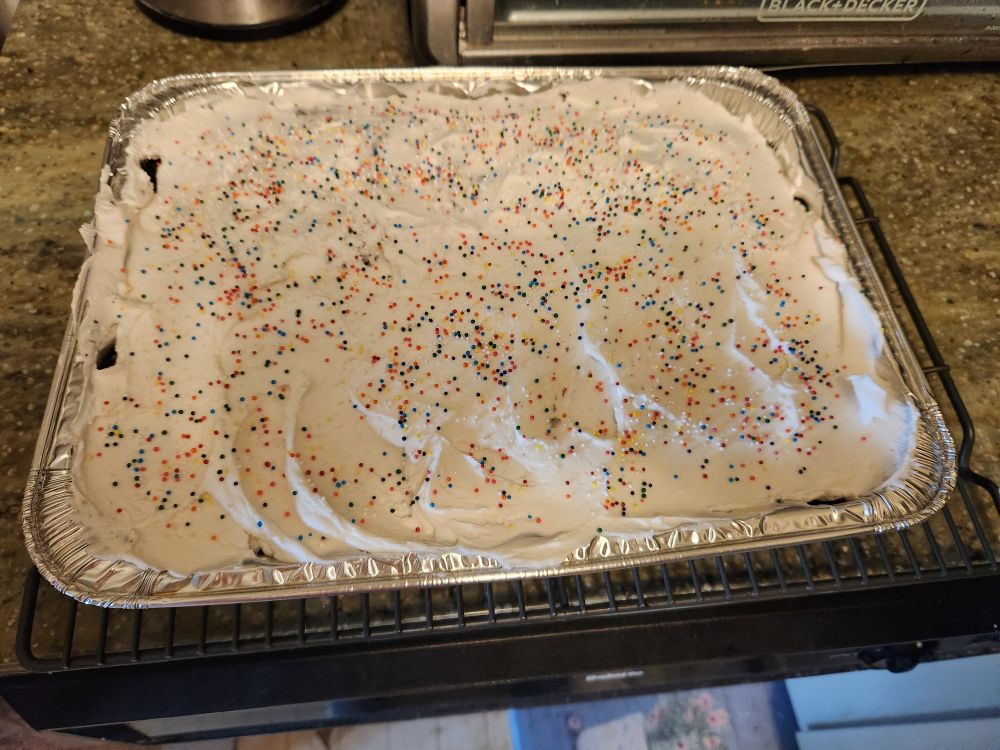
Freshly baked chocolate sheet cake covered in thick white frosting and rainbow sprinkles, resting on a cooling rack in a home kitchen.

A Chocolate Cake Kind of Day

Lately I haven’t been testing too many recipes. We’re deep into the summer months, which to me means hamburgers, hot dogs, and steak. I grew up with steak — my Dad loved it — but beef has been outrageous this year. So when my local supermarket had sirloins on sale three weeks in a row, well… there was no contest. Steak it was.

Lunch was a salad so I could enjoy my dinner without guilt. During this all‑too‑brief period of indulgence, I ignored the recipes landing in my email with startling regularity. Eventually I decided it was time to clear them out — and found a hidden gem I had to try.

Deliciously Moist Chocolate Cake

I am not adverse to using a box cake mix. They’re perfectly fine: open a box, toss in an egg and some oil, beat, bake, done. No muss, no fuss. I also hate frosting layer cakes (unless it’s carrot cake… ummmm cream cheese frosting). But I’m getting off track.

Buried in my emails was a recipe for a chocolate cake that I couldn’t resist.

Cake Ingredients

  • 1 ¾ cups flour
  • ¾ cup unsweetened cocoa powder
  • 1 ¾ cups granulated sugar
  • 2 teaspoons baking soda
  • 1 teaspoon baking powder
  • 1 teaspoon salt
  • 2 teaspoons espresso powder (optional)
  • ½ cup vegetable oil
  • 2 large eggs (room temperature)
  • 1 teaspoon vanilla extract
  • 1 cup buttermilk (room temperature)
  • 1 cup freshly brewed strong hot coffee or hot water

Instructions

Step 1: Preheat oven to 350°. Grease two 9‑inch cake pans (I used a 9×13 sheet pan because, as I said, I hate frosting layer cakes). If using round pans, line with parchment rounds and grease the parchment.

Step 2: Whisk flour, cocoa powder, sugar, baking soda, baking powder, salt, and espresso powder (if using) in a large bowl. Set aside.

Step 3: Using a stand or hand mixer fitted with a whisk attachment, mix oil, eggs, and vanilla on medium‑high until combined. (If you’ve got a strong arm, a hand whisk works too.) Add the buttermilk and mix until combined.

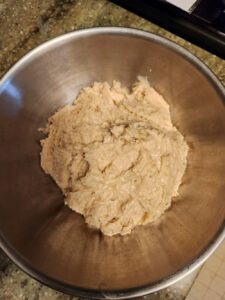
Step 4: Pour the dry ingredients into the wet. Add the hot coffee or water and whisk/beat on low until the batter is completely combined. Batter will be thin.

Step 5: For 9‑inch pans: divide batter evenly and bake 23–26 minutes, or until a toothpick comes out clean. For a 9×13 sheet pan: bake 35–40 minutes.

Step 6: Let the cake cool at least 1 hour, then frost with your favorite frosting.

What Makes This Cake Different?

For me, the biggest difference is the buttermilk. I went 60 years without ever using it, and now it seems I’m reaching for it at least once a week. This cake calls for a full cup.

If you don’t have buttermilk, here’s a DIY substitute: Add 2 teaspoons white vinegar or lemon juice to a measuring cup, then fill with room temperature whole milk to reach 1 cup. Let sit 5 minutes. It will curdle — that’s exactly what you want.

Coffee or espresso powder is common in chocolate cakes because it deepens the chocolate flavor. It does not make the cake taste like coffee. Still, I don’t like coffee — not even coffee ice cream — so I skipped the espresso powder and used hot chocolate instead of coffee. Hot water felt too bland.

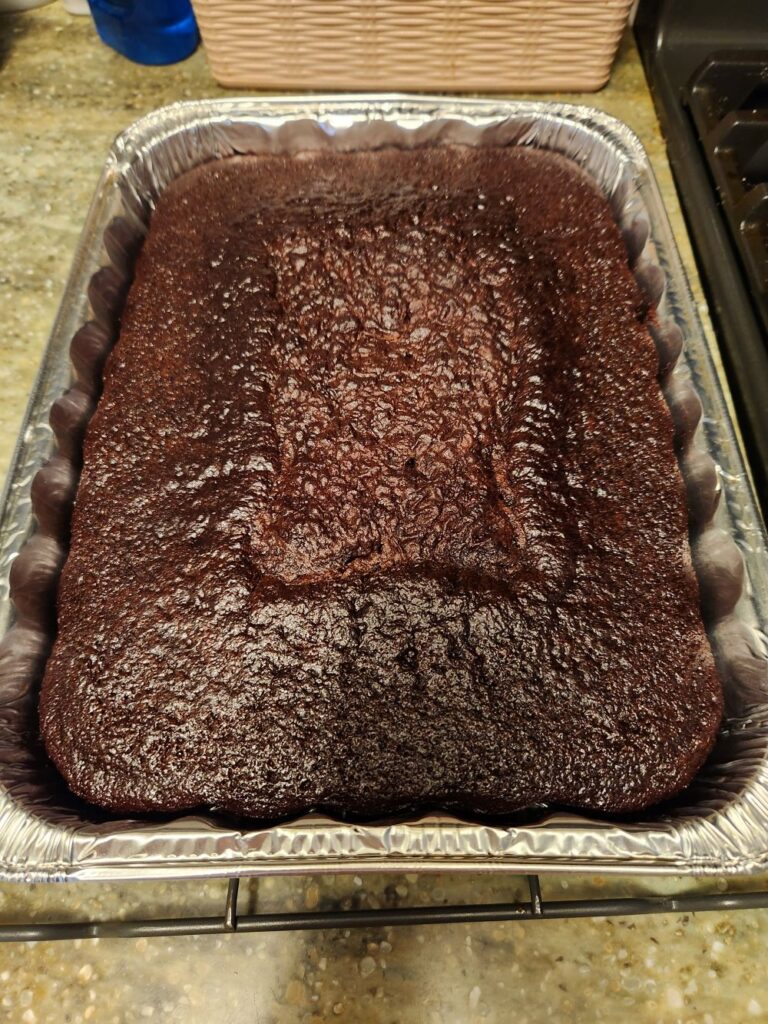
The recipe warned that the batter would be thin, and it was. Very thin. But I soldiered on. It also said the center might collapse even if the cake is fully baked because cocoa powder can’t support the weight of such a moist batter. Another good tip. So don’t beat yourself up if it looks like your cake fell. Just wait until you taste it.

Final Thoughts

I used traditional Crisco‑based birthday cake frosting instead of buttercream. It’s messy to clean up, but so rich and yummy that it’s worth every sticky bowl.

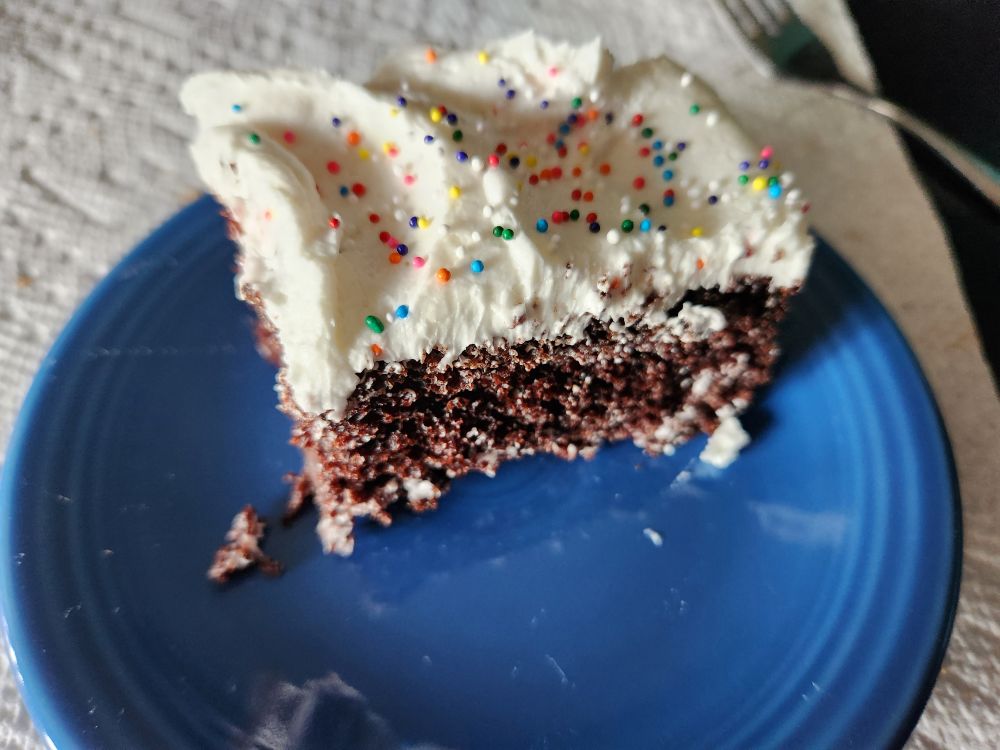
This cake is more involved than a box mix or even my usual from‑scratch cakes, but the difference is noticeable. They aren’t kidding when they say moist. The crumb is beautiful, and it holds together nicely.

This one is definitely going into my special‑occasion rotation.


Home Again, Home Again… for Donut Muffins

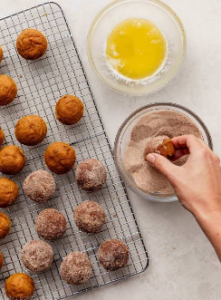
Mini cinnamon‑sugar donut muffins nestled in a parchment‑lined bowl, their tops glistening with sugar, with soft greenery and a white flower behind them.

From Road Trips to Donut Muffins

After weeks of writing about Boston, Cape Cod, whales, candy shops, and national parks, I’ve been thinking about that feeling you get when the traveling finally pauses. The suitcase goes back into its corner, the cats settle in around you, and home wraps itself around your shoulders like a familiar sweater. Exploring is wonderful — but coming home is its own kind of sigh.

So today, instead of another adventure, let’s step back into the kitchen and savor something warm and nostalgic: old-fashioned homemade donuts… or at least their modern cousin. I made mini donut muffins the other day, and they tasted exactly like cinnamon sugar donut holes — no frying oil required. Sometimes the sweetest part of traveling is the moment you return.

Those homemade donuts have been calling me ever since I had a crispy Old Fashioned from the Colonial Donut Kiosk in the lobby of Morton Hospital. That really took me back. It’s one of my favorite memories: watching my mom drop raw donuts — and the leftover holes — into hot oil. I wasn’t allowed anywhere near the pot (hot oil and kids don’t mix), but we were always ready to start sampling as soon as they were draining on paper towels.

I was almost at the point of trying to make some myself. I just needed to figure out what to do with the used oil.

While I pondered that dilemma, I ran across a recipe for mini donut muffins. Honestly, I wasn’t expecting much, but the recipe was simple and I hoped it would satisfy my craving. They turned out surprisingly good — good enough that I want to share them with you. So pull up a chair and pour yourself a cuppa. Imagine a plate of warm, tender mini muffins sitting right in front of you.

Donut Mini Muffins

Servings: 24 mini muffins

Ingredients

Muffins:

• ½ cup granulated sugar

• ¼ cup margarine, melted

• ¾ teaspoon ground nutmeg

• ½ cup milk

• 1 cup all-purpose flour

• 1 teaspoon baking powder

For Finishing:

• ¼ cup margarine, melted

• ½ cup granulated sugar

• 1 teaspoon ground cinnamon

Directions

  1. Preheat oven to 375°. Grease a 24-cup mini muffin tin.
  2. Make the muffins: Mix sugar, margarine, and nutmeg together in a large bowl. Stir in milk, then mix in flour and baking powder until just combined. Spoon into prepared muffin cups, filling each ½ full.
  3. Bake until the tops are light golden brown, 15–20 minutes. Remove from oven and transfer to a wire rack.
  4. Immediately place melted margarine in one bowl and mix sugar and cinnamon together in another.
  5. Dip the top of each warm muffin in melted margarine, then dip in the sugar mixture to coat. Let cool for 10 minutes before serving.


Notes • I used stick butter in place of margarine.

• I tried rolling the whole muffin in the butter and coating, like donut holes. It isn’t necessary — just dipping the tops gives a better balance.

• You won’t get a crispy exterior like deep-fried donuts, but the nutmeg and cinnamon will certainly give you a donut vibe.

Let me know how yours turn out.


Those Silly Kitty Cats Are at It Again


And a Four‑Year Mystery Is Finally Solved

Banner and Balboa, those silly kitties,  have a talent — not just for finding things, but for finding the exact things I don’t want them to find. Rubber bands, paper clips, bottle caps, the occasional bug… and yes, even my car keys. (If you missed Banner’s infamous key‑hiding caper, you can read the full story here: Tale of the Lost Keys — October 3, 2021.)

Their preferred playground is the middle of my tiny kitchen floor. Runner‑up: the bathtub. At least in the bathroom they’re out from underfoot.

Anyway, there has been a mystery in my house for more than four years. It only ever annoyed me when I wanted to use my food processor — and only when I wanted to grate carrots — so you can see why it wasn’t exactly top of mind.

The Food Processor Era Begins

I bought that food processor in a moment of weakness. A literal one. I had just shredded a five‑pound bag of carrots by hand for a carrot cake, and my arm was about to fall off. My thought was “There has to be an easier way.” I watch the Food Network. I watch the cooking shows. You drop ingredients in, press a button, and voilà — shreds, purées, grinds, blends. It was time to modernize.

I brought it home, plugged it in, dropped in a carrot or two, and it worked beautifully. Perfect shreds. Coleslaw here I come. I gave it a place of honor on the counter.

The Carrot Catastrophe

Now, I’m not always the most mechanical of people, and the next time I tried to shred carrots… mush. Tiny bits. Sand. What was going on?

I ran to my computer and watched YouTube videos. Looked simple. Tried again. Same result. Back to the old‑fashioned hand grater I went, but the food processor was still great for bread crumbs, crushing crackers, and grinding honey grahams for pie crusts.

Over the years I kept reviewing how‑to videos and giving carrots another try. No success.

Then one day, I had an epiphany. I Googled the parts of a food processor.

And there it was. The answer to my question. The missing part. The center shaft.


I only had the shaft with the blade. So when I put carrots in, they got shredded by the disc and then immediately chopped to bits by the blade underneath. I couldn’t remove the blade without having the center shaft to put in its place.

Head‑slap. Duh.


Enter: The Culprit

Okay all you culinary experts, stop laughing. I can explain.

Not long after I got Balboa, I found the little culprit in the kitchen playing with a plastic thing. I had no idea what it was — I thought it was something he found under the sink. He used to go in and out of there all the time, and I figured it was leftover from when the workers replaced the countertops.

Now that I realize what I’m missing, I recognize the thing as the shaft from the food processor.

Needless to say, it’s long gone. It was tossed even before the Great Kitchen Declutter.

Balboa posing in the middle of the kitchen with the food‑processor shaft he ‘liberated,’ looking very satisfied with himself.

The Wallet‑Smacking Finale

The worst part? That tiny plastic thingy costs almost as much as a new food processor to replace. Can you believe that.

One small moment of stupidity… one big bang on the wallet. But at least I finally know why I couldn’t shred carrots with my food processor.

When that part gets here, I may have to make a carrot cake to celebrate.


Pillsbury Cruffins

The Cruffin Man, Pop ‘n Fresh’s Cousin

Do you know the Cruffin Man,
The Cruffin Man, the Cruffin Man?
Oh, do you know the Cruffin Man
Who lives on Drury Lane?

The cruffin has been floating around culinary circles since at least 2013, when Kate Reid of Melbourne, Australia, started making waves with her version. So I suppose we can safely blame the Aussies for adding one more calorie‑packed breakfast treat to our diets.

The word cruffin is exactly what it sounds like — a croissant–muffin hybrid. Traditionally, it’s made by baking laminated dough in a muffin tin. Sounds fancy, but there’s a wonderful shortcut thanks to our old friend, the Pillsbury Dough Boy.

One of the best things Pillsbury ever did, in my opinion, was to take their crescent roll dough and turn it into sheets. No more trying to patch little triangles together to make one larger piece. Now you just pop the tube and roll it out.

I’m a latecomer to the cruffin game. I hadn’t even heard of them until a couple of months ago. Intrigued, I dug around and found a simple, no‑baking‑skills‑required recipe. The original makes 12, but you absolutely don’t have to go that big. You can make just four very easily — perfect for a single person. I’ll give you those tips after the recipe.


Freshly baked cruffin with crisp, swirled layers and cinnamon sugar on a blue plate.

Pillsbury Cruffins

Ingredients

  • ¾ cup granulated sugar
  • 1 tablespoon ground cinnamon
  • 3 cans (8 oz each) refrigerated Pillsbury Original Crescent Dough Sheet
  • 6 tablespoons butter, softened

Instructions

  1. Heat oven to 375°F. Grease 12 regular‑size muffin cups with shortening or spray with cooking spray. Place a large piece of heavy‑duty foil on the lower oven rack to catch any butter‑sugar drips. In a small bowl, mix sugar and cinnamon; set aside.
  2. Unroll 1 dough sheet on a lightly floured work surface. Using your fingers, pat the dough to even out the edges and flatten it into a 13×8‑inch rectangle.
  3. Spread 2 tablespoons softened butter evenly over the dough. Sprinkle 2 tablespoons of the cinnamon‑sugar mixture over the butter and gently press it in.
  4. Starting with the long side, roll the dough up tightly. Pinch the seam to seal so you have one long log.
  5. With a sharp knife, cut the log in half crosswise to form 2 shorter logs. Then cut each short log in half lengthwise to make 4 pieces.
  6. To shape each cruffin: hold the dough piece with the cut sides facing up. Starting at one end, wrap it into a spiral.
  7. Tuck the tail underneath and place in a muffin cup. Repeat with the remaining 2 dough sheets. Set aside the remaining cinnamon‑sugar mixture for rolling after baking.
  8. Bake 18–21 minutes or until golden brown. Using a fork or small icing spatula, immediately remove the cruffins from the muffin cups and roll them in the remaining cinnamon‑sugar mixture. Place on a cooling rack. Serve warm.

Notes

As you can see in the above picture I rolled 2 of the cruffins backward (or inside out by mistake) they still baked up beautifully. This resipe is very forgiving

  • Granulated sugar gives the classic cinnamon‑sugar flavor, but brown sugar works too.
  • Mix powdered sugar with a splash of milk to drizzle over the warm cruffins.
  • If you’re cooking for one (like me), you don’t need all 12. Use one dough sheet to make four cruffins and grease only four muffin cups.

And that’s the joy of these little cruffins — a fancy bakery moment without any of the fuss. They’re quick, they’re fun, and they make an ordinary morning feel just a little more special. If you give them a try, let me know how your spirals turn out. I’ll be over here humming the Cruffin Man song and brushing cinnamon sugar off my counter.


Meet Carter: The Five‑Year‑Old Chef Who Stole My Heart (and My Popover Loyalty)

Kid chef Carter in a dinosaur apron at the kitchen counter, happily declaring ‘Yummy, yummy, yummy’ during one of his cooking videos.


A Tiny Chef With Big Talent

I’ve made a wonderful discovery! If you like cooking, children, and British accents, have I got a treat for you. You know those kids’ baking shows where the contestants are 10 or 12 and already more skilled than most adults? Well, move over, junior chefs — I’ve fallen head‑over‑heels for a little five‑year‑old who could give the Pillsbury Doughboy a run for his money.

His name is Carter, and you have to watch his cooking videos.

Confidence, Charm, and “Yummy, Yummy, Yummy”

This tiny chef has confidence, presence, and technique that seem impossible for someone who still probably needs help tying his shoes. His signature phrase — delivered in the sweetest little British accent — is “Yummy, yummy, yummy.” And trust me, when he says it, you believe him.

He’s basically the Gordon Ramsay of the toddler set, minus the yelling. He narrates his steps like a pro, glances off‑camera to his dad for the occasional assist, and announces things like, “My Dad’s going to place this tray in the oven now,” as a pair of adult hands swoops in. It’s adorable and impressive all at once.

The Sizzle Heard ’Round the Kitchen

One of my favorite moments was when his dad poured batter into the hot tins and Carter leaned in with pure wonder and said something like:

“Ooooh, listen to that sizzle!”

It was such a small moment, but it captured everything that makes him so delightful — the curiosity, the excitement, the joy of discovery. You can’t watch him without smiling.

A Lesson in Yorkshire Pudding (From a Five‑Year‑Old!)

Believe it or not, I even learned something from him.

As you may know from previous posts, popovers are my thing. In the U.S., popover recipes often say “for popovers or Yorkshire pudding,” and I always assumed they were basically the same. Well, Little Carter set me straight. The difference isn’t the batter — it’s the pan.

In the U.S., popover pans are deep and cylindrical.
In the UK, a Yorkshire pudding tin is shallow and wide — more like a flattened muffin tin.

Carter showed how you pour the batter into smoking hot fat (his dad handled that part — safety first!) and the heat makes the batter sputter and climb the sides, forming that classic bowl shape. Same batter, different pan, totally different result.

Why You Need to Watch Him

I honestly don’t have the right words to fully describe this little chef. I’m amazed by his skill, his knowledge, and his on‑camera charm. You don’t have to like cooking shows to get a kick out of him — he’s pure joy in a tiny apron.

Do yourself a favor and check him out on Facebook.
Cooking With Carter.
You’ll be smiling before the video even ends.