A Connecticut Castle on a Hill


Gillette Castle: A Whimsical Hilltop Hideaway With Paw Prints in the Woodwork

There’s something magical about arriving at Gillette Castle and realizing it’s not just a stone fortress on a hill — it’s a window into the wonderfully eccentric mind of William Gillette, the actor who brought Sherlock Holmes to life. I went in expecting history and architecture. I did not expect to find cat carvings tucked into the woodwork… and only later did I learn that Gillette once lived here with seventeen cats. Suddenly, all those little details I photographed made perfect sense.

Cats of Gillette Castle

As someone who can barely get anything done with two cats “helping,” I can’t imagine managing a castle with seventeen furry supervisors. Banner and Balboa regularly sabotage my productivity — one breaks mice, the other warms his behind on the stovetop grill — so Gillette’s ability to build an entire castle while surrounded by a feline army feels downright heroic.

But that’s the charm of Gillette Castle: it’s grand, yes, but it’s also deeply personal, whimsical, and full of surprises. And once you know the man behind it, every odd detail becomes a clue in the story he left behind.


My First Glimpse: A Castle From the River

Long before I ever set foot inside Gillette Castle, I saw it from the water. I was on a Connecticut River cruise, standing on the deck, when the guide pointed up to a stone silhouette perched high above the trees. From that angle — looking up from the river — the castle feels almost mythical, like something out of a New England folktale. I remember thinking, I need to get up there.

That first glimpse stayed with me. So later, when I finally went searching for a way to reach the castle itself, it felt like following a breadcrumb trail from the river to the hilltop.


The Grounds: Stone Bridges, Quiet Ponds, and Wandering Paths

One of the loveliest surprises about Gillette Castle is that the experience begins before you reach the castle. The grounds are sprawling and peaceful, with winding trails that lead you through the woods and along the hillside. On the way up, there’s a beautiful stone bridge arching over a small pond — the kind of spot that makes you stop, breathe, and take a photo even if you weren’t planning to.

stone bridge over a quiet pond at Gillette Castle State Park in early spring”

The pathways twist and meander, offering little glimpses of the castle through the trees as you climb. It’s the kind of place where you can wander without a plan, discovering quiet corners, scenic overlooks, and bits of Gillette’s personality tucked into the landscape.

By the time you reach the castle itself, you’ve already stepped into his world.


Who Was William Gillette?

Before you can appreciate the castle, you have to appreciate the man — because Gillette Castle isn’t just a home, it’s a personality carved in stone.

William Gillette was a stage actor best known for portraying Sherlock Holmes, and he approached life with the same mix of precision, curiosity, and theatrical flair that made his Holmes famous. He was an inventor, a tinkerer, a showman, and a man who loved comfort just as much as he loved drama. If something could be improved, he improved it. If something could be made whimsical, he made it whimsical. And if something could be designed to amuse his cats… well, he absolutely designed it to amuse his cats.

Gillette didn’t just build a house on a hill. He built a world that reflected exactly who he was — clever, eccentric, playful, and just a little mysterious.


Why It Was Originally Called the Seventh Sister

Before it became “Gillette Castle,” the estate had a quieter, more poetic name: The Seventh Sister. The castle sits on the southernmost hill of a chain known locally as the Seven Sisters, a series of ridges overlooking the Connecticut River. Gillette built his home on the seventh hill — the final “sister” — and named his estate accordingly.

Only later, when the state purchased the property, did the public nickname “Gillette Castle” become official. But the original name still lingers in the landscape, like a whisper from the past.


Inside the Mind of a Whimsical Genius

Once you step inside, you realize quickly that Gillette didn’t build a castle to impress people — he built a castle to amuse himself. Every corner has a surprise, every detail has a story, and every room feels like a puzzle waiting to be solved.

Tiffany Lamps Made From Broken Bottles

Gillette loved color and light, but he didn’t want ordinary stained glass. Instead, he commissioned lamps made from broken bottle fragments, arranged like jewels. They glow with a warm, uneven shimmer — imperfect, playful, and completely unique.

A Heated Bed (Yes, Really)

Long before electric blankets were a thing, Gillette engineered a heated bed. Comfort was an art form to him, and he wasn’t shy about innovating.

Secret Doors, Trick Locks, and Mechanical Oddities

Gillette designed all the castle’s locks himself — and they’re famously confusing. Some doors slide. Some pivot. Some open in ways that make you question your spatial awareness. It’s part stagecraft, part engineering, and part mischievous delight.


🐾 The Cats of Gillette Castle

This is where the castle becomes a home — and where my photos suddenly gained meaning.

Seventeen Cats and a Man Who Loved Every One of Them

Gillette adored cats. Not casually — wholeheartedly. At one point, he lived with seventeen of them, each with their own personality and privileges. They roamed the castle freely, supervised guests, and likely contributed to the same kind of “help” Banner and Balboa provide me.

Cat Carvings and Feline Motifs

The carved woodwork I photographed — the scroll work with cats tucked into the details — wasn’t decorative whimsy. It was intentional. Gillette incorporated feline imagery throughout the home as a tribute to the animals he loved.

Custom Cat Toys and Cat‑Friendly Features

Gillette didn’t stop at carvings. He designed custom toys, cozy perches, and playful features for his cats. It’s the kind of devotion that makes you feel instantly connected to him.


Visiting Today

Gillette Castle is one of those places that feels both grand and intimate. The stone exterior looks imposing from a distance, but inside, the home is warm, quirky, and full of personality. The views over the Connecticut River are spectacular, the trails are peaceful, and the house itself is a treasure hunt of oddities.


It’s the kind of place where you can spend an hour or an entire afternoon, depending on how much you love details — and I am absolutely a detail person.


A Castle With Heart (and Paw Prints)

Gillette Castle isn’t just a historic site. It’s a portrait of a man who loved creativity, comfort, and cats in equal measure. Once you know his story, every odd feature becomes a clue, every carving becomes a wink, and every room feels like a page from his life.

And honestly?
As someone who writes in the early morning and mid‑afternoon — the only times when my own cats aren’t actively sabotaging my workflow — I might appreciate Gillette more than most. He built a castle around his cats. I’m building a blog around mine. It feels like a very New England kind of kinship.


Is the Great American Road Trip Running Out of Road?


**🚗Road Trip, the call of a generation

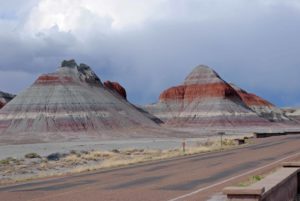
Rt 66 in arizona has a load of attractions including more modern ones like Mater from Cars

A Cross‑Country Daydream from Route 66 to Route 20**

America’s Love Affair With the Open Road

With gas prices climbing and no relief in sight, it’s fair to wonder whether the classic American road trip is slowly becoming an endangered species. Then again, air travel isn’t exactly a walk in the park these days either.

Still, before we declare the road trip obsolete, it’s worth pausing to appreciate the romance, freedom, and pure Americana that grew out of our national love affair with the automobile.

The Mother Road: Route 66

One iconic road immediately comes to mind — and I’m pleased to say I’ve explored a small slice of it.

Route 66, the legendary “Mother Road,” was established in 1926 and stretched 2,448 miles from Chicago to Santa Monica. It wound through Missouri, Kansas, Oklahoma, Texas, New Mexico, and Arizona, carrying generations of dreamers westward.

Though officially decommissioned, roughly 85% of the route is still drivable. Vintage neon signs, retro diners, quirky roadside attractions, and weathered motels still line the way, offering a nostalgic glimpse into a bygone era.

America’s Longest Road: Route 20

If Route 66 is the most famous, Route 20 is the heavyweight champion. At 3,365 miles, it’s the longest road in the United States — and it starts right here in Boston.

A Route 20 adventure would take you through 12 states and across the entire country, ending in Newport, Oregon. Along the way, you could:

  • Stroll the Boston Esplanade
  • Visit the Basketball Hall of Fame in Springfield
  • Wander the Finger Lakes of New York
  • Detour to Niagara Falls
  • Swing up to Lake Placid, home of the 1980 “Miracle on Ice”

Then it’s onward through Pennsylvania and into Ohio, where Cedar Point awaits with some of the best roller coasters in the nation. Once you catch your breath, Route 20 rolls into Indiana and the Indiana Dunes National Park.

Across the Heartland and Into Big Sky Country

In Illinois, Route 20 carries you straight through Chicago before crossing the Mississippi River into Iowa.

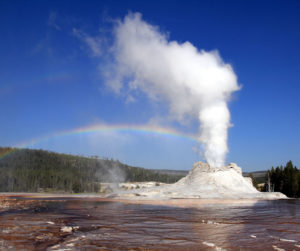
Then comes Wyoming — Big Sky Country at its finest. You’ll pass through Lost Springs, the least populated municipality in America, and you’re just a side trip away from Yellowstone. Keep an eye out for bison; they don’t yield.

Getting ready to pass by

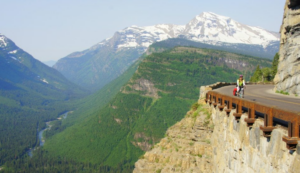
Montana only gets about ten miles of Route 20, but it’s close enough to tempt you toward the famous Going‑to‑the‑Sun Road, a bucket‑list drive if ever there was one.

The Final Push to the Pacific

Idaho brings a breather in Boise before the home stretch. The last state is Oregon, but don’t be fooled — there are still 451 miles to go before you reach Newport and the Pacific Ocean.

Quite the road trip indeed.

And Then… Maybe the Overseas Highway?

Once I’ve conquered Route 20, maybe I’ll head south to Florida for the Overseas Highway — 113 miles and 42 bridges ending at the Southernmost Point in Key West. A completely different kind of road trip, but just as iconic.

So… Is the Road Trip Doomed?

Maybe gas prices will rise. Maybe travel will keep changing. But the American road trip isn’t just about miles or money — it’s about freedom, curiosity, and the irresistible pull of the horizon.

As long as there are roads to follow and stories to chase, I don’t think the great American road trip is going anywhere.


Chasing Giants: A Lifetime of Whale Watching From New England to Alaska and Hawaii

The Early Years: Cape Ann and the Thrill of Discovery

For years I chased humpback whales up and down the New England coast. This was no small feat for someone with a tendency toward seasickness, but the call of the ocean—and the promise of seeing those magnificent creatures—was stronger than my stomach. One of my earliest and most unforgettable trips was out of Gloucester, heading toward Stellwagen Bank. I was new to Massachusetts then, freshly transplanted from New York and convinced I wouldn’t be here long. So I crammed every adventure I could into those first months.

Now, nearly fifty years later, I’m still here. And that Cape Ann whale watch remains one of the highlights of my early Massachusetts life.

That day, we found ourselves surrounded by humpbacks bubble‑net feeding—so close to the boat you felt like you could reach out and touch them. (We didn’t, of course.) For years afterward, people insisted that New England humpbacks don’t bubble‑net feed. I always love when nature proves the experts wrong. It’s a reminder of how much we’ve learned—and how much we’re still learning.

Boston and Plymouth: Rituals on the Water

I tried a few whale watches out of Boston next. Bigger boats, higher decks, great views—fun, but nothing quite matched the raw magic of that Cape Ann trip.

Eventually I migrated south to Plymouth and became a regular on Captain John’s Boats. Those summer trips became a ritual. It was on one of those outings that I photographed my first breaching whale—a moment that still ranks among my favorite memories.

Hawaii: The Heart’s Home

My whale watching didn’t stop at New England. I found the home of my heart in Hawaii and made annual February trips for years. February is peak migration season, and I often watched whales right from the breakfast table.

I joined the Pacific Whale Foundation and went on their photography expeditions. That’s where I captured my first baby‑whale breach and listened to whale songs through hydrophones dropped over the side of the boat. Pure magic.

Breaching Humpback Calf

It’s just a baby

Alaska: Cold, Raw, and Unforgettable

Then there was Alaska—nothing warm or tropical about that trip. It was cold, wet, raw, and absolutely worth it. The boat was smaller, the whales cruised close to the surface, and we always knew where to look when we heard the whoosh of their breath.

Alaska offers something New England and Hawaii don’t: variety. Humpbacks, orcas, gray whales, belugas—and if luck is really on your side, maybe even a narwhal or a sperm whale. Spring can be beautiful there, but in 2013 we went in May, which turned out to be too early for sunshine. My advice? Aim for June or later.

Why It Matters

No matter where you go—New England, Hawaii, Alaska—whales are magnificent creatures deserving of every conservation effort we can muster. Their importance is so universal that even the Star Trek universe built a whole movie around saving them. (Star Trek IV: The Voyage Home, for fellow fans.)

If the Federation thinks whales are worth saving, who am I to argue?
Live long and prosper.


Hidden Gems Across Massachusetts

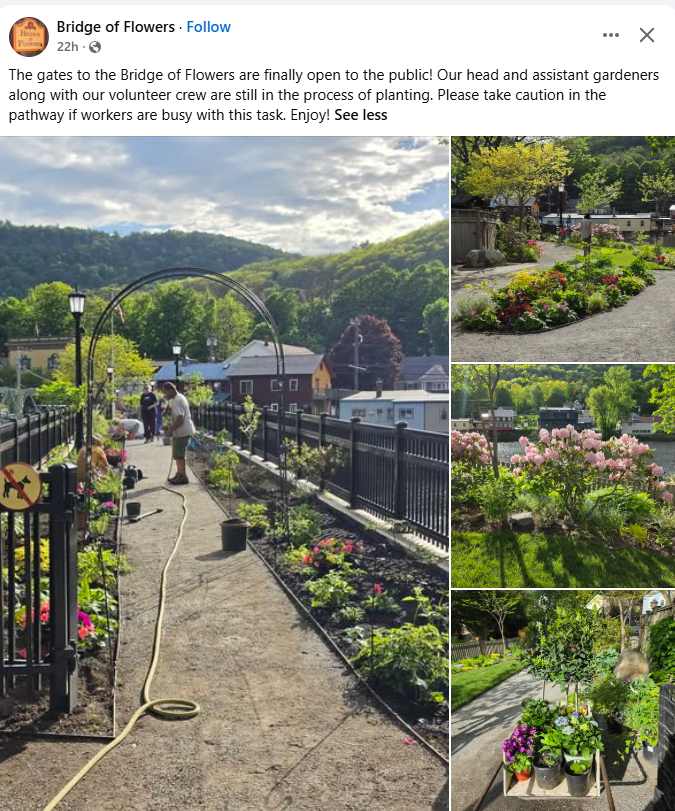
Bridge of Flowers is a truly magnificent concept. Its a lovely place for a visit


Four Massachusetts Spots Worth Rediscovering (or Discovering for the First Time)

Every now and then I stumble across an article that reminds me just how much there is to see right here in Massachusetts. You can live in a place your whole life and still find new corners, new stories, and new surprises tucked away in familiar towns. It got me thinking about the places I’ve visited, the ones I’ve written about, and the ones still sitting on my “someday” list.

Here are four Massachusetts spots that deserve a little extra love — whether you’ve been there before or, like me, are still discovering them.


🌾 Old Sturbridge Village

I visited Old Sturbridge Village long before I started this blog, sometime before 2011. It’s one of those places that stays with you. I even mentioned it in my early post “Itchy Feet” from November 7, 2011.

“No, it’s not athlete’s foot. I’ve been around home too much. I’m getting restless and need to go exploring.”
(Internal link: https://arounddustyroads.com/2011/11/07/itchy-feet/)

Old Sturbridge Village is a living museum in Sturbridge, Massachusetts, recreating rural New England life from the 1790s through the 1830s. It’s actually the largest living museum in New England, spread across more than 200 acres of historic buildings, working farms, and costumed interpreters who bring the past to life.

One of the things I’ve always loved about OSV is the way the demonstrations feel so authentic — from blacksmithing to cooking over an open hearth — all done in period clothing. I just missed their maple sugaring season this year, which started on February 18, but that’s one of the experiences I’d love to go back for someday.

Even though it’s been years since my last visit, Old Sturbridge Village is one of those places that reminds me why I love exploring New England. There’s always something new to learn, even in a place dedicated to the past.


🌸 Bridge of Flowers

The Bridge of Flowers is one of those places that feels almost magical, and I first wrote about it way back on May 20, 2011, in a post called “Turner Falls, Flowers and Pot Holes.” At the time, I admitted it had been years since my first visit — and I even misremembered the location. I thought it was in North Adams, but it’s actually in Shelburne Falls.
(Internal link: https://arounddustyroads.com/2011/05/20/turner-falls-flowers-and-pot-holes/)

The Bridge of Flowers is truly one of a kind. Originally built around 1908 as a trolley bridge, it spans the Deerfield River between the towns of Shelburne and Buckland. When the trolley line was abandoned in 1928, the concrete bridge sat unused until Antoinette and Walter Burnham proposed a bold idea: turn the old trolley span into a giant flower garden. By 1929, their vision became reality.

Today, the 400‑foot, five‑arch bridge is planted with over 500 varieties of flowers, all chosen to ensure blooms from early spring straight through late fall. Volunteers tend every inch of it, keeping the bridge vibrant and colorful throughout the growing season.

I included some of my original photos in that 2011 post. They’re probably buried in my 10,000‑plus image archive. Even so, the memories are still vivid. The Bridge of Flowers is a place that stays with you.


🎨 Norman Rockwell Museum

I’ve lived in Massachusetts my whole life, and somehow I’ve never made it to the Norman Rockwell Museum in Stockbridge. I know it’s one of those places everyone talks about — especially around the holidays when Rockwell’s paintings seem to pop up everywhere — but it’s still on my “someday” list.

The museum houses the world’s largest collection of Rockwell’s work, including his famous Saturday Evening Post covers. Even if you’re not an art buff, there’s something comforting and familiar about his style. His paintings feel like snapshots of small‑town America, full of humor, nostalgia, and little moments that say more than words ever could.

I’ve heard the grounds are beautiful too, especially in summer and fall. Maybe this will be the year I finally make the trip. It’s funny how you can live in a state for decades and still have places left to explore.


🌿 Long Hill Estate

This one genuinely surprised me — I had never even heard of Long Hill Estate until I came across the article that inspired this post. It’s in Beverly and managed by The Trustees, which already tells me it’s going to be beautiful. They have a knack for preserving some of the most scenic spots in Massachusetts.

From what I’ve learned, Long Hill is a former family estate with formal gardens, woodland trails, and a historic home. The gardens are supposed to be stunning in spring and summer, filled with color and carefully tended plantings. It sounds like the kind of place you wander through slowly, camera in hand, soaking in the quiet beauty.

Now that it’s on my radar, I’m adding it to my “must‑visit” list. I love discovering new places close to home — especially ones I somehow missed all these years.


🌤️ Final Thoughts

Massachusetts may be a small state, but it’s packed with history, beauty, and surprises. Whether it’s a place I visited years ago, a spot I’ve written about, or a destination I’ve only just discovered, there’s always something new waiting just around the corner.

Have you been to any of these places?
Which ones are your favorites — or still on your list?


Plymouth Rock: The Legend, the Letdown, and the Lovely Town Around It


The Most Overrated Tourist Attractions? Let’s Talk About Plymouth Rock

So I saw another list, but we’re not going to dig through it all. I’m just going to pick and choose a few choice comments. The list was The U.S. Tourist Attractions That People Regret Visiting the Most. As a travel enthusiast, I felt it was my duty to share a few of my thoughts.

Since I’m in Massachusetts and only a couple of towns over from Plymouth, I thought I’d chat about Plymouth Rock.

What was on the list? Well, without taking the time to bore you with details, here’s the lineup:

  1. Times Square, NYC, New York
  2. Skywalk, Grand Canyon, Arizona
  3. SeaWorld, Orlando, Florida
  4. Salem Witch Museum, Salem, Massachusetts
  5. Hollywood Walk of Fame, Los Angeles, California
  6. Broadway, Nashville, Tennessee
  7. Duval Street, Key West, Florida
  8. Pat’s King of Steaks, Philadelphia, Pennsylvania
  9. Roswell, New Mexico
  10. Ocean City Boardwalk, Ocean City, Maryland
  11. Mystery Spot, St. Ignace, Michigan
  12. Plymouth Rock, Plymouth Harbor, Massachusetts
  13. Navy Pier, Chicago, Illinois
  14. Calico Ghost Town, San Bernardino County, California
  15. World of Coca-Cola, Atlanta, Georgia
  16. Fisherman’s Wharf, San Francisco, California

So now you have the whole list—let me talk about Plymouth Rock.


Plymouth Rock: The Legend, the Letdown, and the Lovely Town Around It

As a kid, the idea of Plymouth Rock is irresistible. It’s practically mythological—the rock where the Pilgrims supposedly stepped ashore in 1620. You picture something massive, dramatic, maybe glowing with historical importance. At the very least, something you could stub your toe on.

Then you finally go see it and… well… it’s a medium-sized rock in a granite gazebo, sitting behind iron bars like it’s in time-out. You stand there thinking, This? This is the rock? And yet, thousands of people come every year to have the same moment of quiet confusion.

But here’s the twist: the story behind the rock is far more interesting than the rock itself. And Plymouth—thankfully—is full of genuinely lovely places that make the trip worthwhile.


The Real Story Behind the Rock (Which Is Better Than the Rock)

  • No Pilgrim ever mentioned a rock. Not in 1620, not in 1621, not ever. The first written reference appears more than a century later.
  • The legend began in 1741, when an elderly church elder insisted he remembered hearing from earlier generations that this was the landing spot.
  • The rock has been moved several times, and each move made things worse:
    • 1774: Townspeople tried to relocate it and accidentally split it in half.
    • 1834: The top half was hauled to the town square for display.
    • 1880: The halves were reunited at the waterfront, but not quite perfectly—hence the famous crack.
  • The “1620” carving? Added in the 1800s, long after the Pilgrims were gone.

So the rock you see today is more of a symbol than an artifact. And symbols can be powerful… even if they’re smaller than expected.


What Makes Plymouth Worth the Trip

Plymouth itself is charming, historic, and absolutely worth a visit—even if the rock leaves you shrugging.

  • Brewster Gardens — A pretty little park right off the waterfront with footbridges, flowers, and shady paths. It’s the kind of place you wander into and think, “Oh, this is lovely.”
  • The Massasoit Statue — Overlooking the harbor, honoring the Wampanoag leader who forged a peace treaty with the Pilgrims. The view from up there is one of the best in town.
  • The Mayflower II — A full-scale reproduction of the original ship. It’s surprisingly immersive, and the interpreters do a fantastic job bringing 1620 to life.
  • Plimoth Patuxet Museums — If you want the real, nuanced history—not the postcard version—this is where it lives.

Plymouth isn’t overrated. Historic Plymouth Rock is.


And Now for Something Actually Exciting: Captain John Boats

Once you’ve stared at the rock for the obligatory 30 seconds, you’re only steps away from one of the best things Plymouth has to offer: Captain John’s whale watches.

For nearly 50 years, these trips have been part of my life—breaching humpbacks, sea spray, the thrill of spotting that first tail flick. It’s the perfect contrast to the stillness of the Rock. If Plymouth Rock leaves you wanting more, Captain John’s will give you a show the Pilgrims never dreamed of.


Wrapping It Up

So yes—Plymouth Rock may be one of the most overrated attractions in America, but Plymouth itself is a gem. It’s a place where history, beauty, and the Atlantic all meet. Go for the Rock if you must… but stay for everything else. And if you time it right, you might just end your day with a whale tail against the horizon.

Breaching Whale