
Boston Marathon

And They're off. The runners start the grueling 26 mile Bosotn Marathon


A Brief History of the Boston Marathon

The Boston Marathon isn’t just a race — it’s a piece of living Massachusetts history. First run in 1897, it holds the title of the world’s oldest annual marathon, inspired by the marathon event at the first modern Olympic Games in 1896. What began with just 15 runners has grown into one of the most iconic road races in the world, drawing elite athletes, charity runners, and more than half a million spectators every year.

Milestones That Shaped the Race

1918: A Military Relay

During World War I, the marathon wasn’t run in its traditional form. Instead, it became a 10‑man military relay, a patriotic adaptation that kept the spirit of the race alive during wartime.

1969: The Move to Patriots’ Day Monday

In 1969, organizers shifted the race from its traditional April 19 date to the third Monday in April, bringing it in line with the modern Patriots’ Day schedule. That’s how Marathon Monday was born.

1972: Women Officially Allowed to Compete

Although Roberta Gibb completed the race unofficially in 1966 and Kathrine Switzer famously ran with a bib in 1967, 1972 marked the first year women were officially welcomed into the field. It changed the race forever.

1980: The Rosie Ruiz Scandal

One of the most infamous moments in marathon history came in 1980, when Rosie Ruiz was initially crowned the women’s winner — only to be disqualified after it was discovered she hadn’t run the full course. It remains one of the most talked‑about sports scandals in Boston lore.

Heartbreak Hill

No discussion of Boston is complete without Heartbreak Hill, the legendary climb in Newton. The name dates back to 1936, when defending champion Johnny Kelley caught up to Ellison “Tarzan” Brown on the hill — only for Brown to surge ahead and win. Kelley’s heartbreak gave the hill its name, and runners have been bracing for it ever since.

2013: The Marathon Bombing

The darkest chapter in the race’s history came in 2013, when two bombs exploded near the finish line, killing three people and injuring more than 260. The city’s response — resilience, unity, and the now‑famous “Boston Strong” — became part of the marathon’s identity. The race has carried that spirit forward every year since.

2020: A Virtual Marathon

For the first time in its history, the Boston Marathon was not held in person in 2020. Due to the COVID‑19 pandemic, the race shifted to a virtual format, allowing runners to complete 26.2 miles on their own routes. It was a reminder that the marathon is as much about determination as it is about location.

Why the Boston Marathon Endures

The Boston Marathon is more than a race — it’s a tradition woven into the fabric of Massachusetts. From Hopkinton to Boylston Street, every mile carries stories of determination, heartbreak, triumph, and community. It’s a race that honors its past while evolving with the times, and every April, it reminds us what endurance — and Boston — are made of.


A Typically Boston Conclusion

The Boston Marathon is a really big deal in a city that loves its sports with its whole heart. From the Red Sox to the Bruins to the Celtics to the Pats, Boston shows up — loudly, loyally, and without hesitation. And on Marathon Monday, the city shows up in a way that feels almost sacred. Streets fill, cowbells ring, strangers cheer for strangers, and the whole region leans into one long, collective heartbeat.

It feels fitting that my Patriots’ Day post goes live on April 17, covering the full Lexington and Concord weekend, while this Marathon post lands on April 20 — right as runners are making their way toward Boylston Street. Two traditions, two days, each carrying its own history and emotion.

Patriots’ Day honors where Massachusetts began.
The Boston Marathon celebrates who we are now.

And honestly, only Boston could pull off a weekend where muskets at dawn and world‑class athletes share the same spotlight — and somehow, it all feels perfectly natural.


National Cat Lady Day: I Was Born Ready


Long live the Cat Ladies.
Endorsed by the Feline Nap Authority.

 National Cat Lady Day

Today is National Cat Lady Day, which is really just a polite way of saying “the cats were already in charge, but now it’s official.”

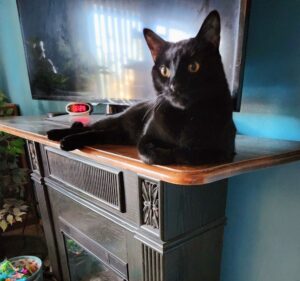
Banner and Balboa have graciously allowed me to observe the holiday by:

  • Providing snacks on demand
  • Serving as a heated lap accessory
  • Accepting that every chair is a cat chair
  • And remembering that I am merely the staff

If you, too, have ever canceled plans because a cat fell asleep on you, congratulations — you’re celebrating correctly.

Long live the Cat Ladies.
Endorsed by the Feline Nap Authority.


America Runs on Dunkin

Why America Runs on Dunkin. Move over Starbucks


☕ Dunkin’ vs. Starbucks: A Very Boston Love Story

Why Dunkin’ Is Practically a State Symbol

In Massachusetts, “grabbing a coffee” is basically code for “heading to Dunks.” We don’t even bother with the full name anymore — it’s just Dunks, like it’s a cousin we see every day. And with close to 1,100 Dunkin’ locations across the state, outnumbering Starbucks 4‑to‑1, it’s not exactly hard to find one. Honestly, you could blindfold someone, spin them around, and they’d still bump into a Dunkin’ before they hit a mailbox.

Starbucks? That’s for Visitors

Look, Starbucks has its place… mostly in airports and places where people say “cof-fee” instead of “caw-fee.” But here? In Boston? Walking into a Starbucks feels like announcing you think Tom Brady was “pretty good, I guess.” It’s not wrong, but it’s definitely suspicious.

Starbucks drinks come with names longer than the Mass Pike. Meanwhile, Dunkin’ gives you a medium regular and sends you on your way. No dissertations required.

Dunks Is a Lifestyle, Not a Beverage

Dunkin’ is woven into the daily rhythm of New England life — early‑morning commutes, post‑game pick‑me‑ups, and that comforting moment when the person behind the counter knows your order before you open your mouth. It’s the only drive‑thru where you’ll see someone in pajama pants, a Bruins hoodie, and flip‑flops in January, and no one bats an eye.


The Commercials Are Basically Local Cinema

And the ads? Pure gold.
We’ve got Gronk and Big Papi singing like they’re auditioning for a musical nobody asked for.

We’ve got Ben Affleck showing up like the unofficial mayor of Dunkin’, running the drive‑thru, handing out orders, and looking like he’s living his best life. And yes, yes that is Tom Brady.  These aren’t commercials — they’re documentaries of the Boston soul.

So… Who Wants a Dunks Run

Starbucks may have its fans, but here in Massachusetts, Dunkin’ isn’t just coffee. It’s identity. It’s culture. It’s home.

And now I kinda want a donut.


Bing Wallpaper does it again! Portland Head Light

Bing Wallpaper does it again!

Once again I have to sing the praises of Bing Photography. I’ve mentioned it here before — from razorbills to green sea turtles, their wildlife shots are breathtaking — but this morning they surprised me with an old friend on my desktop: a true New England icon.

Portland Head Light, the oldest lighthouse in Maine and one of the most photographed in the Northeast, was waiting for me when I logged on.

Portland Head Light an Iconic symbol of the rugges Maine Coastline

Here’s what greeted me this morning…
And here’s one of my photos of this spectacular lighthouse.

Not too shabby for an old amateur.”


To Break or Not to Break- the Great Spaghetti Debate

Lovely long strands of spaghetti with meat sauce. Looks good


🍝 The Great Spaghetti Myth: Why We’re Told Not to Break It (and What Really Happens in the Pot)

Every home cook has heard it at least once — usually from a cookbook, a TV chef, or a well‑meaning relative:

“Never break spaghetti.”

It’s one of those kitchen commandments that gets passed down like gospel, even though most of us have no idea why. I certainly didn’t. I just knew that if I wanted the pasta to fit in my pot, I snapped it in half and moved on with my life.

Then one day I watched a cooking show where the chef placed long, elegant strands of spaghetti into a potPot too small? Lets get to the bottom of the great debate of boiling water… and left the top half sticking straight out like a pasta bouquet. As the bottom softened, the noodles slowly slid into the pot on their own, as if obeying some ancient culinary law.

It looked dramatic. It looked professional.
It also made absolutely no sense to me.

Wouldn’t the bottom half overcook while the top half was still raw?
Turns out — yes. Yes, it would.

So let’s bust this myth properly.


🍝 Myth #1: “Don’t break spaghetti — it’s wrong.”

This one comes straight from Italian culinary tradition. In Italy, pasta shapes are treated with the same respect we give to Thanksgiving turkey or Grandma’s cast‑iron skillet. Long pasta is meant to stay long because:

  • it twirls better
  • it holds certain sauces better
  • it creates a specific eating experience

Breaking it is seen as messing with the design.
But here’s the truth: there’s no practical kitchen disaster waiting for you if you snap a noodle. It’s mostly cultural, not scientific.


🍝 Myth #2: “Let the spaghetti stick out of the pot — it will slide in evenly.”

This one is pure TV magic.

Here’s what actually happens:

  • The submerged half starts cooking immediately.
  • The exposed half stays stiff and dry.
  • The bottom softens, bends, and eventually pulls the top down.

But by the time the top half finally joins the party, the bottom has already been cooking for a minute or two. That means uneven texture unless you’re stirring constantly — which, by the way, TV chefs are doing, just off‑camera.

So no, the “half‑in, half‑out” method doesn’t create some perfect, even cook. It just looks good on screen.


✔️ So what should you do?

The real technique — the one Italian cooks actually use — is simple:

  1. Put the spaghetti in whole.
  2. Let the ends stick out for 20–30 seconds.
  3. As soon as the submerged part softens, gently bend the rest into the water.
  4. Stir early and often.

That’s it. No snapping required, no dramatic pasta fountain, no uneven cooking.


🍝 Or… you can take the modern shortcut

If you don’t want to break spaghetti and you don’t want to deal with the Leaning Tower of Pasta routine, there’s a third option:

You can now buy “Pot‑Sized Spaghetti.”

It’s literally spaghetti that’s already cut to fit a standard pot.
No snapping.
No bending.
No half‑in, half‑out noodle acrobatics.

Just drop it in and go.

Purists may clutch their pearls, but honestly? It’s brilliant for busy home cooks who just want dinner on the table without a philosophical debate about noodle length.


🍽️ The Bottom Line

You can break spaghetti if you want.
You can leave it long if you prefer.
You can even buy the pot‑sized version and skip the whole issue entirely.

But now you know the why behind the myth — and the real science behind what’s happening in the pot.

And honestly? That’s half the fun of cooking: discovering that the rules we’ve been following forever sometimes have more to do with tradition than technique.

Mangia!