 Graves Light: Boston Harbor’s Outer Sentinel
Lighthouses have always been the quiet guardians of the coast — part warning, part welcome, standing where the sea turns unpredictable. In my last post, Boston Light played the role of the harbor’s warm lantern, guiding ships safely home. Just a few miles away, though, another tower tells a very different story. Graves Light, perched on a scatter of ledges at the edge of the deep‑water channel, wasn’t named for sailors’ graves at all, but for Rear Admiral Thomas Graves, an early Massachusetts figure. Its job has always been the opposite of Boston Light’s: not to beckon ships inward, but to warn them away from danger.
A Lighthouse Built for the Hard Work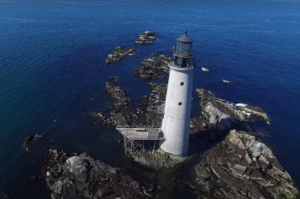
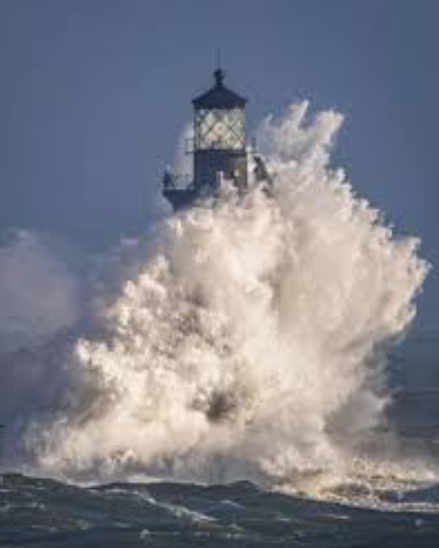
Completed in 1905, Graves Light is the tallest lighthouse in Boston Harbor and by far the most exposed. Its granite blocks were quarried in Rockport and pinned into the ledge like a stone corkscrew — because anything less would have been torn apart by the Atlantic. This tower wasn’t built for charm. It was built to take a beating.
And it still does.
Still Active — Even in Private Hands
In 2013, Graves Light made headlines when it was sold at auction for $933,888, becoming one of the most expensive lighthouse sales in U.S. history. The new owners restored the tower itself — floors, windows, dock, solar power — but the light and fog signal remain federal property.
The U.S. Coast Guard still operates:
- the modern beacon
- the fog horn
- the official charted signal: Fl (2) W 12s
So yes, Graves Light is still an active aid to navigation, even though the building is privately owned. The tower belongs to people; the warning still belongs to the sea.
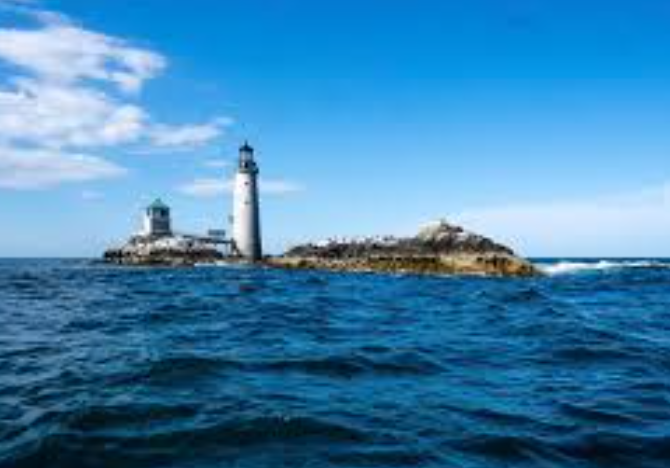
Two Lights, Two Jobs
Graves Light and Boston Light sit on opposite sides of the deep‑water channel — only about 3.5 miles apart, but doing completely different work.
- Graves Light stands on the outer edge, flashing its stern warning:
“Danger here — avoid the ledges.” - Boston Light waits farther in, offering the softer message:
“Safe water ahead — welcome to the harbor.”
Mariners once treated them as a sequence: clear the danger, then follow the welcome home.
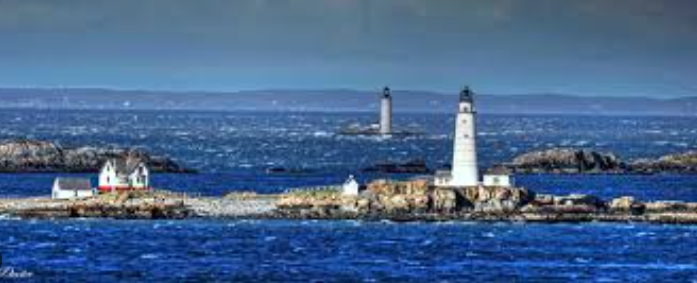
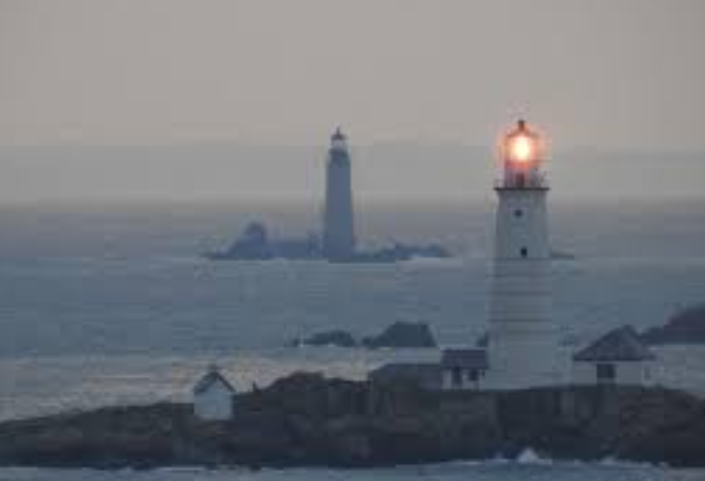
Boston Light and Graves Light, two guardians of Boston harbor
The Zoo Ship Wreck of 1938
One of the strangest events tied to Graves Light came in 1938, when the steamer City of Salisbury ran aground near the ledges in thick fog. Its cargo?
A traveling zoo shipment — monkeys, parrots, pythons, cobras, and other exotic animals.
Most survived, and newspapers gleefully reported “snakes loose in Boston Harbor.” Graves Light has seen its share of storms, but that day it witnessed a circus.
A Hollywood Cameo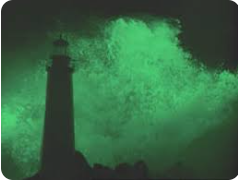
Graves Light even had a moment on the silver screen. It appears in the storm sequence of the 1948 film Portrait of Jennie, where the tower is cast as a brooding, windswept sentinel. Even if you’ve never seen the movie, it’s a fun bit of trivia — one of the few times this rugged lighthouse slipped into Hollywood’s imagination.
A Sentinel You Can Still See Today
If you take one of the harbor or lighthouse cruises, you’re almost guaranteed to see both Boston Light and Graves Light in a single sweep of the horizon. Coming out from the harbor, you first pass the civilized silhouette of Boston Light, with its keeper’s house and outbuildings tucked neatly on Little Brewster Island. And just beyond it, rising straight from the gray Atlantic, stands Graves Light — taller, starker, and far more ominous. One welcomes you in; the other warns you away. Seen together, they tell the whole story of Boston Harbor in two towers.