The Beaver vs Human Conundrum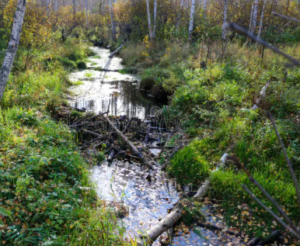
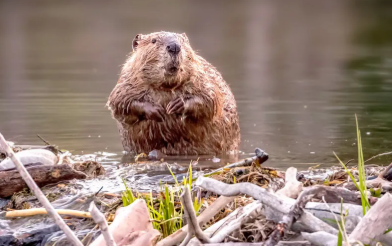
Growing up in New England, we had a beaver colony on our property that turned our backyard into a yearly battleground. The beavers kept damming a small brook and flooding the area, and my mother — armed with determination and whatever tools she could grab — kept tearing the dam down. The beavers rebuilt. She tore it down again. They rebuilt faster. This went on year after year, a stubborn standoff between one determined woman and a colony of equally determined engineers.
Eventually, the beavers disappeared. Maybe my mother finally won. Maybe Fish & Game quietly stepped in and relocated them. All I know is that today, the old homestead is beaver‑free.
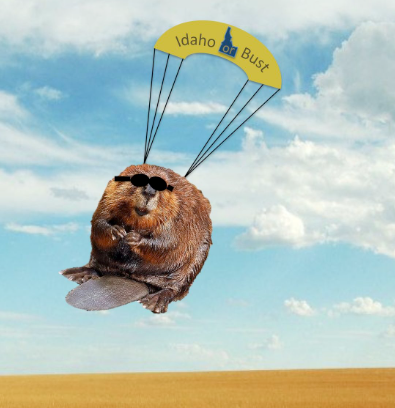
But while our family’s beaver drama played out the usual way, Idaho took a very different approach. A much more dramatic approach. An approach involving… parachutes.
Beavers in the Sky: Idaho’s 1948 Airborne Solution
After World War II, Idaho faced its own beaver problem. Development was booming around Payette Lake and McCall, and beavers — being beavers — were busy damming streams, flooding yards, and chewing through anything that resembled a tree. Removing the dams didn’t work. Moving the beavers by truck wasn’t possible. The Chamberlain Basin, the perfect relocation site, had no roads leading into it.
So Idaho Fish & Game got creative.
🪂 The Parachute Plan
With surplus WWII parachutes sitting in storage, a Fish & Game employee named Elmo Heter devised a plan that sounds like folklore but is absolutely true: parachute the beavers into the wilderness.
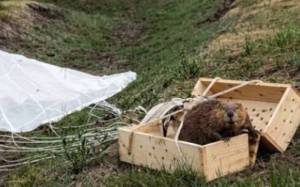 Heter designed special wooden boxes that would hold a beaver securely during the drop and pop open on impact. Then came the test subject — a beaver affectionately named Geronimo.
Geronimo was dropped again and again to perfect the technique. He survived every jump. He even seemed unfazed by the whole experience, which is impressive for an animal that normally prefers to stay on the ground building dams.
Once the system worked, Idaho loaded up the rest of the beavers — more than 70 of them — and parachuted them into the Chamberlain Basin.
🦫 Did It Work?
Amazingly… yes.
All but one beaver survived the drop. The relocated colonies thrived. And the Chamberlain Basin became a beaver paradise — full of streams,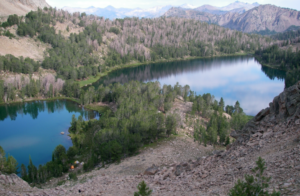 ponds, and wetlands shaped by their engineering.
In 2015, Idaho Fish & Game released archival footage showing the actual parachute drops — tiny wooden boxes drifting down like odd little airborne packages carrying very confused beavers.
🌲 A Conservation Story With Lift
The Beaver Drop wasn’t just a quirky stunt. It was early, innovative wildlife management — a humane solution to a growing conflict. Instead of killing the beavers, Idaho found a way to give them a new home, even if it meant dropping them from the sky.
And it worked.
Final Thoughts
From my mother’s annual dam‑tearing battles in New England to Idaho’s airborne beaver brigade, the Beaver vs Human Conundrum has always required creativity. Sometimes that creativity looks like persistence with a shovel. And sometimes it looks like parachutes drifting over the Chamberlain Basin.
Either way, it’s a reminder that wildlife management can be messy, surprising, and occasionally hilarious — but when done right, it gives animals a second chance and ecosystems room to thrive.
Share this:
- Share on Tumblr (Opens in new window) Tumblr
- Print (Opens in new window) Print
- Share on X (Opens in new window) X
- Share on Facebook (Opens in new window) Facebook
- Share on Pinterest (Opens in new window) Pinterest
- Share on Reddit (Opens in new window) Reddit
- Share on LinkedIn (Opens in new window) LinkedIn