The Kitchen Experiment Gone Wrong

Cookie Season Shenanigans

‘Tis the season for flour on the counter, chocolate smudges on my apron, and ambitious cookie dreams. This year’s challenge? A Stuffed Turtle Cookie. I’ve seen a few recipes floating around, but none quite capture the magic of my beloved Turtle candy—pecans, caramel, and chocolate in perfect harmony. Of course, finding Kraft caramels has been like spotting a unicorn, so Werther’s soft caramels stepped in as the understudy.

The Great Caramel Stuffing Adventure

Picture this: chocolate dough rolled into balls, flattened, and layered with a caramel center. Sounds promising, right? I sealed the edges, popped them in the oven, and out came… well, let’s call them “practice cookies.” Add pecans and they’d be Turtle-inspired, but the texture wasn’t quite the showstopper I imagined.

Ice Cream Sandwich Chaos

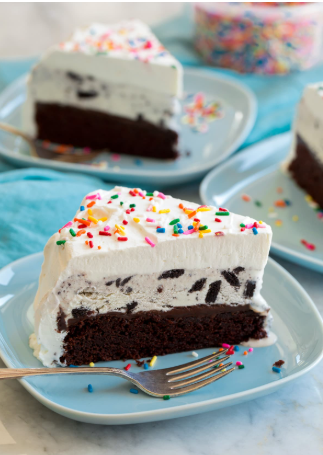
Never one to waste a batch, I turned the leftovers into ice cream sandwiches with Caramel Cup ice cream. Messy? Absolutely. Tasty? Sort of. The plot twist? The caramel centers froze solid, transforming each bite into a jaw workout. Who knew dessert could double as strength training?


Back to the Test Kitchen

Not every experiment earns a spot on the holiday cookie tray, but that’s half the fun. Each attempt brings me closer to the perfect Turtle Cookie. Until then, I’ll keep testing, keep laughing, and keep wishing for a volunteer squad to help me eat my “oops” batches.

Taste-Testers Wanted

So here’s my challenge: who’s brave enough to join me in the next round of cookie experiments? I promise plenty of laughs, a few sticky fingers, and maybe—just maybe—the birth of the ultimate Turtle Cookie.


Holiday Feasts of Yesteryear


🎄 When Peacock Was the Turkey

Ah, the holidays. Today we gather around golden turkeys, honey-glazed hams, and pumpkin pies. But if you think your great-aunt’s fruitcake is the strangest thing to hit the holiday table, history begs to differ. Let’s take a stroll down the dusty roads of festive feasts past—where the menu was equal parts impressive, bizarre, and slightly terrifying.

🦚 Turkey’s Flashy Cousin: The Roasted Peacock

Forget the humble turkey. Medieval nobles wanted something with flair—literally. Enter the roasted peacock, served with its dazzling feathers reattached after cooking. Imagine carving into your holiday bird while it stares back at you in full technicolor glory. Talk about dinner with a side of intimidation.

🐑 Scandinavian Smalahove: Sheep’s Head Supper

Meanwhile, in Norway, Christmas meant Smalahove—a sheep’s head, boiled or smoked, served with potatoes. Yes, the whole head. Cheeks were considered the delicacy, while the eyes were… well, let’s just say they were reserved for the bravest at the table. Forget “who gets the drumstick”—this was more like “who dares take the eyeball.”

🍲 Plum Broth: Sweet Meets Savory

If you thought mixing cranberry sauce with gravy was bold, meet plum broth, a 17th–18th century concoction. The recipe called for a leg of beef and a slice of mutton boiled together with prunes and spices. The result? A dish that was part soup, part dessert, and entirely confusing. Imagine sipping beefy prune juice by the fire while carolers sing outside.

🎁 What We Can Learn

Holiday feasts of the past remind us that tradition is always evolving. What seems normal today—turkey, stuffing, mashed potatoes—might look downright tame compared to roasted peacock or sheep’s head. And who knows? Maybe in 200 years, people will laugh at our obsession with pumpkin spice.

So this season, when you’re staring down a plate of fruitcake, remember: it could be worse. It could be prune-flavored beef broth.


Kitchen Tools Part 2

Kitchen Tools Part 2

Back in November—just before that big cooking holiday—I shared a few favorite kitchen tools as gift ideas. Since then, I’ve had time to reflect, experiment, and expand my list of must‑haves. Consider this Part 2 of my kitchen essentials journey.

My Must‑Have Kitchen List

  1.  Digital Kitchen Scale

    Precision matters. A scale takes the guesswork out of measuring, and in baking, accuracy can be the difference between “good” and “wow.” You can order from Welcoming Haven Here

  2.  Rolling Pin

    I’ve tried patting dough down by hand, even rolling it with a can. Trust me—nothing compares to a well‑balanced rolling pin. My wooden one has become a loyal companion, though marble and silicone versions are out there too. Shop Rolling pins at Amazon here

  3.  Pastry Brush

    For years I used a bristly brush that looked like it belonged in a shaving kit. Then a silicone pastry brush appeared on my counter—game changer! I use it for egg washes, grilling, glazing, and more. Easy to clean, no bristle drama. order here

  4. Pastry Mat or Board

    Confession: I don’t own one yet, but it’s on my wish list. Rolling dough on parchment paper is a struggle. A pastry mat offers a non‑stick, flat surface that keeps counters clean and dough intact. You can order one here

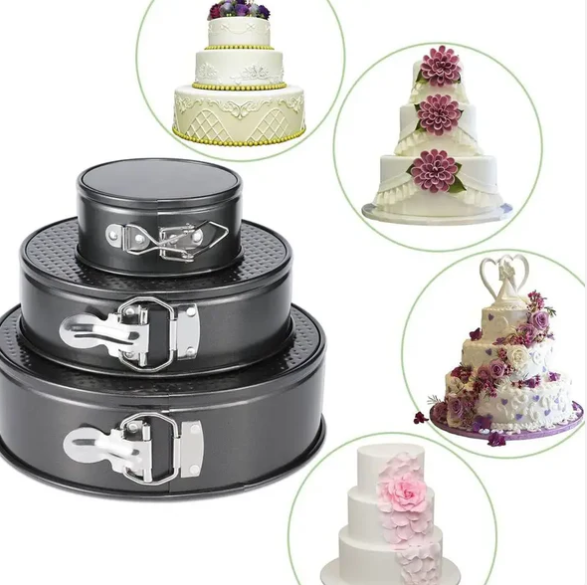
  5. Cooling Racks   

    I upgraded from flimsy little squares to heavy‑duty racks, and wow—what a difference. Cookies, breads, and cakes cool evenly, with plenty of air circulation. Cleanup is simple, too. Available at Welcoming Haven here

  6. Whisk & Silicone Spatulas…

    A sturdy whisk helps you quickly blend batters, whip cream, or aerate eggs for fluffier cakes and pastries. I have a dozen (at least)  of different sizes. Meanwhile, silicone spatulas are perfect for scraping every bit of that delicious batter from bowls or folding in delicate mixtures like foamy egg whites into decadent chocolate for a mousse creation. Find them at Welcoming Haven here.


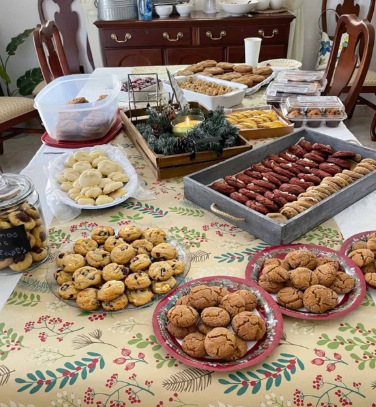
I’ve got more tools to share, but for now I’m off to bake cookies for the annual cookie exchange. What’s on your own must‑have list?


Disclosure:

Some of the links on this site are affiliate links. This means that if you click on a link and make a purchase, I may earn a small commission at no extra cost to you. These commissions help support the content I create and keep this site running.
I only recommend products and tools that I believe add value and that I would use myself. Your trust is important, and I strive to provide honest, helpful information.

Turkey Talk

🦃 Why Are Domestic Turkeys White?

A Totally Serious Interview with Two Turkeys

Reporter: Welcome to Turkey Talk Live! Today we’re asking the burning question: why are domestic turkeys white while wild turkeys strut around in earthy browns and blacks? Let’s hear it straight from the birds themselves.


Domestic Turkey (fluffing feathers):

“Listen, I didn’t choose this look. Humans bred me this way. Apparently, white feathers make me look ‘cleaner’ once I’m… you know… processed. Dark pinfeathers are like having spinach stuck in your teeth—nobody wants to see that on the holiday table. So voilà, I’m the snow‑white centerpiece. Fashion? Nah. It’s all about marketing.”


Wild Turkey (adjusting camo plumage):

“Meanwhile, I’m rocking these rich browns and blacks because I actually need to survive. Ever tried hiding from coyotes in a white feather coat? Forget it. My colors help me blend into the forest floor. I’m basically the ninja of the turkey world. Domestic cousin here couldn’t camouflage in a mud puddle if it tried.”


Domestic Turkey (sighing):

“True. I can’t fly well, I’ve lost most of my wild instincts, and honestly, if you dropped me in the woods, I’d probably ask for Wi‑Fi. But hey, I’m great at sitting still and looking plump, basically the couch potato of the poultry world. Humans love that.”


Wild Turkey (smirking):

“And I love not being dinner. So while you’re busy auditioning for the Thanksgiving table, I’ll be over here blending in with the leaves.”


Reporter’s Wrap‑Up

Domestic turkeys are white because humans bred them for a cleaner, more marketable look. Wild turkeys are dark because nature bred them for survival. One is hiding from predators, the other is hiding from gravy. It’s just the result of centuries of humans saying, “Hmm, this bird would look better if it matched the tablecloth.”

Looking Back at the Rich History of the Presidential Turkey Pardon

Yes,, I know Thanksgiving was last week but Gobble and Waddle are still giving thanks if they have any idea of the fate they escaped.

A Lighthearted Tradition Amid Serious Times

Every November, the White House sets aside politics for a moment of levity: the presidential turkey pardon. This year, President Donald Trump granted clemency to Gobble and Waddle, continuing a tradition that has become as quintessentially American as pumpkin pie. The ceremony, now in its 78th year, offers humor, gratitude, and a touch of whimsy against the backdrop of Washington’s otherwise weighty affairs.

Lincoln’s First Act of Mercy

The roots of the turkey pardon stretch back to 1863, when President Abraham Lincoln spared a bird at the request of his young son, Tad. The turkey, affectionately named Jack, was destined for the family’s Christmas table until Tad intervened. Lincoln’s compassion set the stage for what would later evolve into a national ritual.

Truman’s Myth and Kennedy’s Gesturetom turkey

Though often credited with beginning the tradition, Harry Truman never officially pardoned a turkey. The Truman Library confirms that the birds presented to him in the late 1940s were likely eaten. The first modern gesture of mercy came from John F. Kennedy in 1963, when he famously said, “Let’s keep him going,” sparing a 55-pound bird just days before his assassination.

Reagan, Bush, and the Formalization of the Pardon

In the 1980s, Ronald Reagan began sending turkeys to farms rather than the dinner table, joking about “pardons” during the Iran-Contra scandal. But it was George H.W. Bush in 1989 who officially declared a presidential pardon, ensuring the bird’s survival. Since then, every president has upheld the tradition, with Barack Obama pardoning the most—16 turkeys during his two terms.

Life After the White House

Pardoned turkeys don’t simply fade into obscurity. Many retire to farms, universities, or agricultural centers, serving as quirky ambassadors for American farming. Gobble and Waddle, this year’s stars, will enjoy retirement at North Carolina State University’s Prestage Department of Poultry Science. Meanwhile, millions of other turkeys—about 46 million each Thanksgiving—still meet a far less fortunate fate.

A Tradition of Humor and Humanity

From Lincoln’s compassion to Bush’s formal proclamation, the turkey pardon reflects both the lighter side of presidential power and the enduring appeal of Thanksgiving. It’s a reminder that even in the halls of government, there’s room for humor, kindness, and a nod to the nation’s agricultural roots.


Sources: TIME, CBS News, Yahoo News, USA Today, History.com, Wikipedia