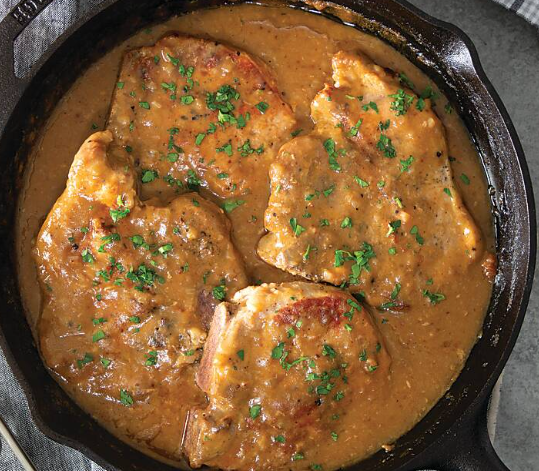
Cast Iron Pan–Roasted Chicken Breasts


Another Cast Iron Skillet Recipe

I can’t believe I have another cast iron skillet recipe to share—and this one is so simple it’s almost laughable. Honestly, I don’t know why I never thought of it before.

Chicken is a staple in my house. It’s usually cheaper than beef and always easy to find. I keep chicken breasts or tenders wrapped and frozen so I can thaw them for a quick meal. Roast chicken, schnitzel, chicken and broccoli… the list goes on.

Recently I read a cooking article claiming that roasting chicken breasts in a cast iron pan gives you juicier, more tender results than using a baking dish. I’ll admit, I raised an eyebrow. But I do love my cast iron pans, so of course I had to try it. And I bet you know where this is going—the expert was right. Cleanup was a breeze, too.

They offered all kinds of variations, but for my test run I kept it simple. No cheese, no breadcrumbs—just a naked chicken breast with a little salt and pepper.


Cast Iron Pan–Roasted Chicken Breasts

Ingredients

  • 2 bone‑in chicken breasts (I only had boneless and they worked perfectly)
  • Salt and pepper
  • 1 tablespoon butter
  • 1 tablespoon oil

Instructions

  1. Preheat oven to 425°.
  2. Preheat your cast iron pan on the stovetop for a few minutes (a 10‑inch pan fits two breasts).
  3. Generously salt and pepper the skin side of the chicken breasts.
  4. Add butter and oil to the pan at the same time.
  5. When the butter and oil are melted and hot, place the chicken in the pan, skin side down.
  6. Let it sear for a few minutes.
  7. Season the other side with salt and pepper.
  8. Flip the chicken and let the second side sear for a minute or two.
  9. Transfer the pan to the oven and roast for 20–30 minutes, or until the chicken reaches an internal temperature of 165° (use an instant‑read thermometer).
  10. Let the chicken rest for 5 minutes before slicing.


I served mine over boil‑in‑bag rice cooked in water flavored with chicken broth. Add the sliced chicken, a squeeze of lemon juice, and voilà—a meal to remember. The chicken was juicy and flavorful, the salt and pepper formed a beautiful crust, and my well‑seasoned cast iron pan wiped clean without a fuss.

This one is definitely joining my dinner rotation.


Old‑Fashioned Goulash (or Whatever You Call It)


What Is This Dish, Anyway?

I’ve been making a simple mix of tomatoes, hamburger, and macaroni for years, and for the longest time I never knew what to call it. I watched my mother make it more times than I can count, and she always called it Goulash. So naturally, I did too.

Then I moved to Massachusetts — and suddenly people looked at me like I had three heads when I said “Goulash.”

The Massachusetts Goulash Confusion

Here in southeastern Massachusetts, I kept running into versions made with stew beef and mountains of paprika. Hearty, rich, and often described to me as a Hungarian dish. Hungarian goulash is a slow-cooked, rich broth-based dish

A dear friend of mine made yet another version. Hers was closer to mine but still not quite the same. She called it American Chop Suey, and it used tomato soup and tomato paste for thickness. Delicious — but not what I make.

My Version: Simple, Light, and Definitely Not Paprika‑Heavy

My own dish is SIMPLE. No cheese, no tomato paste, no baking. It ends up with a thinner sauce — almost soup‑like — but not quite a soup either. (Yes, I checked. There are actual “Hamburger Soup” recipes online, and nope, that’s not it.)

Then I stumbled across something called Old Fashioned Goulash, a Midwest classic. And finally — finally — I found something close to what I’ve been making all along.

So here’s a comparison. Maybe one of these versions will become a favorite in your kitchen too.


Old Fashioned Goulash (Midwest Style)

Ingredients

  • 1 pound elbow macaroni
  • 2 pounds ground beef
  • 1 onion, chopped
  • 3 cloves garlic, minced
  • 1 tablespoon Worcestershire sauce
  • 2 (15 oz) cans tomato sauce
  • 2 (14.5 oz) cans petite diced tomatoes
  • 1 ½ tablespoons Italian seasoning
  • 2 teaspoons salt
  • ½ teaspoon black pepper
  • 1 cup shredded cheddar cheese

Directions

  1. Preheat oven to 350°.
  2. Bring a large pot of water to a boil. Cook macaroni for 3 minutes, then drain.
  3. Heat a large skillet over high heat. Add ground beef and onions. Cook 6–7 minutes until browned; drain fat.
  4. Add garlic and cook 1 minute until fragrant.
  5. Stir in Worcestershire sauce, tomato sauce, and diced tomatoes.
  6. Add Italian seasoning, salt, and pepper. Taste and adjust.
  7. Mix in the cooked macaroni and cheddar cheese.
  8. If your skillet is oven‑safe, bake 20–25 minutes until bubbly. Otherwise, transfer to a casserole dish and bake.

My Simple Version of Old Fashioned Goulash

Ingredients

  • 1 small onion, chopped
  • 1 small green bell pepper, chopped
  • 2 tablespoons vegetable oil
  • 1 pound hamburger
  • 1 cup elbow macaroni
  • 1 (26 oz) can diced tomatoes
  • Salt and pepper to taste

Directions

  1. Bring a large pot of water to a boil. Cook macaroni according to package directions, using the shorter cook time.
  2. Heat a Dutch oven over medium heat. Add oil, onions, and green peppers.
  3. Add hamburger, breaking it up as it cooks. Season with salt and pepper. Cook 7–8 minutes until browned.
  4. Add diced tomatoes and stir well.
  5. Let the mixture simmer. When it’s hot, add the cooked macaroni and combine. Simmer about 5 minutes.
  6. Serve with garlic bread or Texas toast.


Final Thoughts

Without the cheese, you’ll get a very different dish — but that’s the fun of cooking. Every family has its own version, its own name, and its own memories tied to it.

I’d love to hear what you call this dish and how you make it.


The Five‑Second Rule and Other Delicious Lies We Tell Ourselves


✨ The Myths, Legends, and Laughs of Kitchen Folklore

There are a few myths and legends that sneak into everyday food handling. One that comes to mind immediately is the Five‑Second Rule. Ever heard of it? I seem to run into it constantly. I’ve even heard it mentioned in TV programs like The Simpsons—and believe it or not, Julia Child herself once scooped up dropped food on camera. She never said the rule out loud, but that moment alone helped cement it in modern kitchen culture.

The Five‑Second Rule: Convenient, Comforting… and Completely Wrong

For anyone who’s never watched TV or has their head buried like an ostrich, the Five‑Second Rule is the belief that food dropped on the floor is safe to eat if you pick it up within five seconds.

Unfortunately, science has rained on that parade. Studies show bacteria can transfer to food almost instantly. How much depends on the food, the surface, and how dirty that surface is. The myth sticks around because it’s a handy excuse not to waste food—but it’s not exactly a food‑safety strategy.

Understanding the risks helps us make better choices and reminds us that hygiene matters more than wishful thinking.

The Jelly‑Side‑Down Curse

Another favorite saying is that toast always lands jelly‑side down. Don’t laugh—think about it. I always assumed the extra weight of the butter or jelly caused the flip… or maybe it’s just a breakfast version of Murphy’s Law.

But there’s actually physics behind it. Toast usually starts jelly‑side up on a plate. When it slips, it only has time to rotate about half a turn before hitting the floor—landing jelly‑side down. Not bad luck. Just gravity with a sense of humor.

The Pancake Theorem: The First One’s Always a Dud

There’s a whole plethora of kitchen sayings, but one of my favorites is the Pancake Theorem:
“The first one’s always a dud.”

As someone who struggled for years to make the perfect pancake, I can confirm this one from personal experience. I’m happy to report that with improved kitchen skills, I now make pancakes from scratch—company‑worthy ones, no less—and I’ve finally overcome the first‑pancake curse.

Why does that first pancake misbehave? A few reasons: the pan isn’t evenly heated yet, the oil hasn’t settled, and the batter is still adjusting to the temperature. So the first one comes out pale, blotchy, or shaped like a map of New Jersey. It’s folklore backed by kitchen physics.

A Final Bite

So, my friend, tuck these sayings away for a quick kitchen chuckle. Just don’t rely on the Five‑Second Rule. That’s one myth best left on the floor—preferably with the jelly‑side down.


No-Bake Chocolate Peanut Butter Bars

One More Recipe… I Couldn’t Resist

I know, I know — I said I was going to take a little break from cooking posts. Around Dusty Roads is more than a recipe corner, after all. But when something this easy and this delicious crosses my path, how am I supposed to keep it to myself?

So here we are. One more. I promise it’s worth it.

Do you love peanut butter? Do you have a sweet tooth that wakes up the moment you see those peanut butter eggs at Easter or the Christmas tree–shaped Reese’s? If you’re nodding along, this one’s for you. It’s rich, it’s nostalgic, it’s no-bake, and it’s dangerously simple.

While I was digging through Turtle Fudge recipes for Valentine’s Day, I stumbled across this gem: No-Bake Chocolate Peanut Butter Bars. The only real “work” involved is giving your biceps a little workout while mixing — so grab your trusty wooden spoon and channel your inner “Get Ready to Rumble!”


No-Bake Chocolate Peanut Butter Bars

Ingredients

  • ½ cup (8 Tbsp.) salted butter, melted
  • 1 cup graham cracker crumbs (about 8 full sheets)
  • 2 cups confectioners’ sugar
  • 1 cup + 2 tablespoons creamy peanut butter, divided
  • 1 cup semi-sweet chocolate chips

Peanut butter mix should look like this

Instructions

  1. Line an 8- or 9-inch square baking pan with aluminum foil or parchment paper; set aside.
  2. In a medium bowl, mix the melted butter, graham cracker crumbs, and confectioners’ sugar. Stir in 1 cup of peanut butter, then press the mixture evenly into the prepared pan.
  3. Melt the remaining 2 tablespoons of peanut butter with the chocolate chips — microwave or stovetop both work. Stir until smooth, then spread over the peanut butter layer.
  4. Chill in the refrigerator until completely firm, at least 2 hours. Let sit at room temperature for about 10 minutes before cutting.
  5. Store leftovers tightly covered in the fridge for up to a week.

almost as good as the pro’s

You can find the original recipe and extra notes over at Sally’s Baking.


No-bake, no guilt… unless you eat the whole pan. Not that I’d know.

If you give these a try, let me know how they turn out. I love hearing your tweaks, triumphs, and taste‑tester reviews.


Happy Valentine’s Day


Sweet Words for Your One and Only

Need something heartfelt to say to your special someone this Valentine’s Day? Sometimes the perfect words are already out there, waiting to be borrowed. Here are a few romantic gems:

  • “You are my heart, my life, my one and only thought.” —Arthur Conan Doyle
  • “In all the world, there is no heart for me like yours.”
  • “Whatever our souls are made of, his and mine are the same.” —Emily Brontë
  • “You are my sun, my moon, and all my stars.” —E. E. Cummings

I’m partial to that last one — it’s simple, poetic, and swoon‑worthy — but you know your sweetheart best. Pick the one that will make their heart go pitter‑pat.


Homemade Fudge for Valentine’s Day

Words are lovely, but chocolate? Chocolate seals the deal.

As many of you know, I’m a caramel‑and‑pecan girl through and through. I’m forever chasing the perfect “Turtle” recipe, so instead of classic chocolate fudge, I’m sharing a Caramel Turtle Fudge that’s perfect for Valentine’s Day. It’s rich, gooey, and guaranteed to win you some extra points.

This recipe comes courtesy of Dash of Sanity.


Caramel Pecan Turtle Fudge

Ooey‑gooey caramel layered between rich chocolate and sprinkled with chopped pecans — this fudge is a candy lover’s dream come true.

Ingredients

  • 14 ounces caramel pieces (I use Kraft Caramels)
  • 1 heaping tablespoon heavy cream (evaporated milk works too)
  • 2 cups semi‑sweet chocolate chips
  • 1 can sweetened condensed milk (14 ounces)
  • 1/4 teaspoon sea salt
  • 1 tablespoon vanilla extract
  • 1 1/2 cups chopped pecans

Instructions

  1. Line a 9×9 or 8×8 baking dish with parchment or wax paper. If you don’t have either, just grease the pan and set aside.
  2. Combine unwrapped caramels and heavy cream in a microwave‑safe bowl. Heat in 30‑second intervals, stirring between each, until smooth.
  3. In a medium saucepan, combine chocolate chips, sweetened condensed milk, and salt. Heat over medium, stirring constantly, until melted and smooth.
  4. Stir in pecans and vanilla.
  5. Pour half the fudge mixture into your prepared pan.
  6. Pour the caramel layer over the fudge.
  7. Top with the remaining fudge and swirl gently with a knife.
  8. Cover and refrigerate for about 2 hours, or until set.

A Sweet Finish

Once it’s firm, cut it into squares, tuck them into a pretty box, tie on a red ribbon, and pair with flowers and candlelight. It’s simple, thoughtful, and delicious — the perfect Valentine’s Day gesture.

Happy Valentine’s Day!